An AI marketing strategy that doesn’t deliver results feels like a broken promise. You were told AI would save time and boost sales. Instead, your campaigns just sit there, quiet and underperforming.
This frustration is common. A marketing manager named Meera rolled out AI tools across her entire campaign process. Ad copy, emails, even audience targeting, all AI-generated. But her conversion rates barely moved.
Meera almost blamed the technology. Then she dug into her process and found nine specific mistakes quietly killing her results. Fixing them changed everything.
This article walks through those same nine reasons. By the end, you’ll know exactly why your AI marketing strategy might be underperforming, and how to turn it around.
Learn more
AI Marketing Tools in 2026: The Ultimate Guide to Automating Content, Ads & Business Growth
Why So Many AI Marketing Strategy Efforts Fail
AI tools are powerful, but they aren’t magic. Without the right setup, they simply speed up mistakes instead of fixing them.
Here’s what usually goes wrong:
- Teams skip strategy and jump straight to automation
- AI output gets used without human review
- Campaigns lack clear goals before AI even gets involved
Meera realized her team had fallen into almost every one of these traps.
Learn more
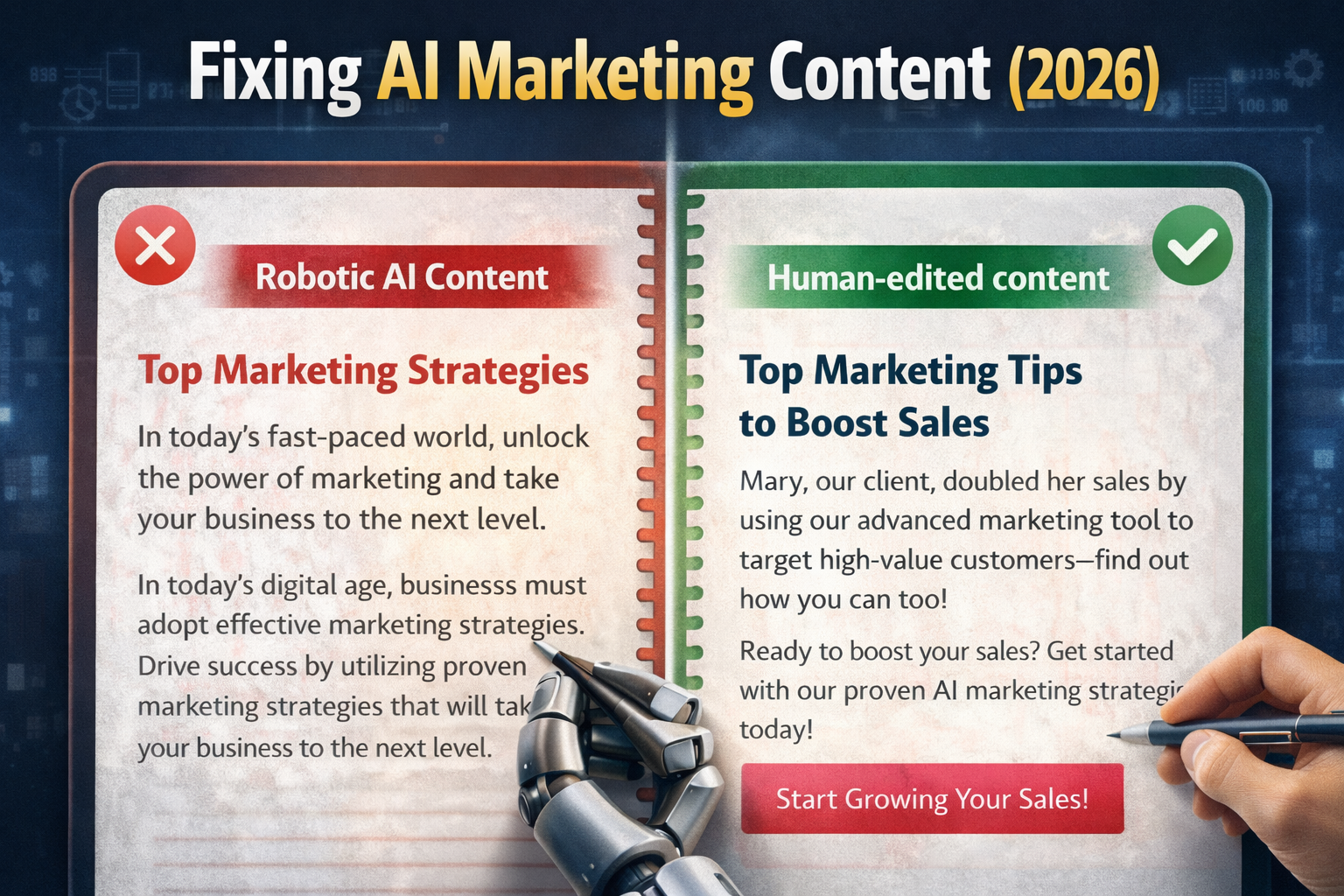
Why AI Marketing Content Sounds Robotic (And How Experts Fix It in 2026)
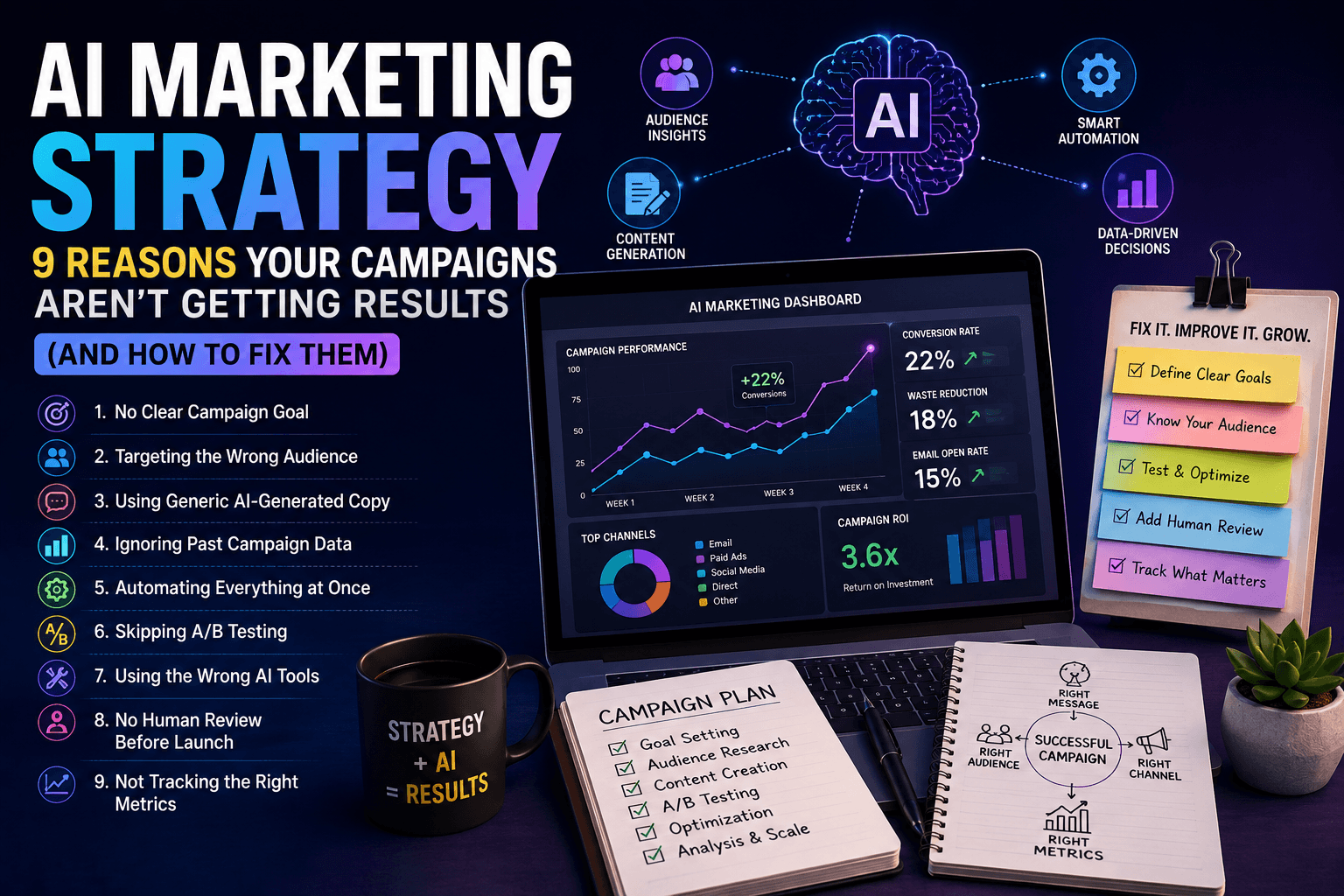
9 Reasons Your AI Marketing Strategy Isn’t Getting Results
Here are the exact issues Meera found, and how she solved each one.
1. No Clear Campaign Goal Before Using AI
Jumping straight into AI tools without a goal leads to scattered, unfocused content.
Fix it: Define one clear goal, like leads or sales, before generating any content.
2. Targeting the Wrong Audience
AI can personalize content, but only if you feed it the right audience data.
Fix it: Build a clear customer profile first. Feed that data into your AI tools.
3. Using Generic AI-Generated Copy
Unedited AI copy often sounds robotic and forgettable to real customers.
Fix it: Rewrite key lines in your brand’s natural voice before publishing.
4. Ignoring Data From Past Campaigns
Many teams start fresh with AI instead of learning from previous results.
Fix it: Feed AI tools your past campaign data to guide smarter suggestions.
5. Automating Everything at Once
Full automation without testing often multiplies mistakes across every channel.
Fix it: Automate one channel first. Measure results before expanding further.
6. Skipping A/B Testing
Publishing AI content without testing wastes the chance to find what truly works.
Fix it: Run two versions of each campaign. Let real data pick the winner.
7. Using AI Tools Not Built for Marketing
General AI tools may lack marketing-specific features like audience segmentation.
Fix it: Choose tools designed specifically for marketing campaigns and analytics.
8. No Human Review Before Launch
AI mistakes, like tone issues or factual errors, often slip through unnoticed.
Fix it: Add one human review step before any campaign goes live.
9. Not Tracking the Right Metrics
Watching vanity metrics like views hides whether campaigns actually convert.
Fix it: Track conversions and revenue, not just engagement numbers.
Learn more
Why AI Marketing Campaigns Fail (Real Case Study & Fixes in 2026)
How to Fix These Mistakes in Your AI Marketing Strategy
Meera didn’t fix every issue overnight. She worked through them one at a time.
Here’s the simple process she followed:
- Review your last three campaigns for these nine mistakes.
- Pick the two most common issues.
- Fix those first, then measure the results.
- Add one new fix to each future campaign.
This steady approach helped her team improve without feeling overwhelmed.
Real Results After Improving Your AI Marketing Strategy
Within two months, Meera’s team saw a clear shift in performance.
- Conversion rates rose by 22%, since campaigns matched real audience needs.
- Ad spend waste dropped by 18%, thanks to better targeting and testing.
- Email open rates improved by 15%, after adding a human review step.
These numbers came from comparing three months before and after the fixes.
Conclusion: Build an AI Marketing Strategy That Actually Works
A strong AI marketing strategy isn’t about using more tools. It’s about using them with clear goals, real data, and a human touch.
Start by reviewing your last campaign for these nine mistakes.
Like Meera, you can turn a frustrating, underperforming process into a strategy that finally delivers real results
FAQs
A. Common reasons include unclear goals, generic AI copy, and skipping human review before launch. Fixing even two or three issues often improves results fast.
A. No. AI tools work best when guided by clear goals, audience data, and human oversight, not as a replacement for strategy.
A. Test every major campaign with at least two versions. This helps you learn what truly works before scaling up.
A. Focus on conversions and revenue, not just views or clicks. These numbers show real business impact.
A. Many teams see noticeable improvement within four to eight weeks after fixing their top two or three issues.
Content
Claude finished the responsehiThought for 1sThought for 1sHi there! What can I help you with today?Write a high-quality SEO-optimized article on the topic “[Product Video ROI: How to Measure If Your Videos Are Actually Increasing Sales]”. Follow all the instructions below carefully: SEO & Structure
pasted
Write a high-quality SEO-optimized article on the topic “[Product Video ROI: How to Measure If Your Videos Are Actually Increasing Sales]”. Follow all the instructions below carefully: SEO & Structure The article must focus on solving a real problem and be written in a case-study style. The intr
pasted