
Freelance scams can cost you weeks of unpaid work, stolen personal information, and lost confidence. Many freelancers think scams only happen to beginners, but even experienced professionals get caught when a fake client looks convincing.
A graphic designer named Bilal learned this lesson after receiving what looked like the perfect project. The client offered a generous budget, praised his portfolio, and wanted to start immediately. Everything seemed legitimate until the client disappeared after asking Bilal to complete a “small test project” for free.
Bilal realized too late that he had spent hours working for someone who never intended to hire him. After researching common scam tactics, he changed how he evaluated every new client.
This article explains the biggest freelance scams, the warning signs Bilal now watches for, and the simple steps you can take to protect yourself before accepting any project.
Learn more
What Are Freelancing Platforms and How Do They Work?
Why Freelance Scams Are Becoming More Common
The freelance industry continues to grow every year, attracting both genuine clients and dishonest people looking to exploit freelancers.
Scammers often target freelancers because:
- Many projects begin online.
- Clients and freelancers may never meet.
- Payments happen digitally.
- New freelancers are eager to build experience.
Bilal discovered that scammers usually rely on urgency and excitement to stop freelancers from asking important questions.
Learn more
Freelance Profile Optimization: 11 Changes That Help You Get More Invitations
Why Bilal Almost Became a Victim of Freelance Scams
Bilal focused only on the high budget.
He ignored several warning signs because he didn’t want to lose the opportunity.
The fake client:
- Offered unusually high payment.
- Avoided video calls.
- Refused to use a trusted freelance platform.
- Requested free work before signing any agreement.
Looking back, the red flags were obvious.
Learn more
No Orders on Fiverr Freelance? Why Your Gig Isn’t Ranking (2026 Fix)
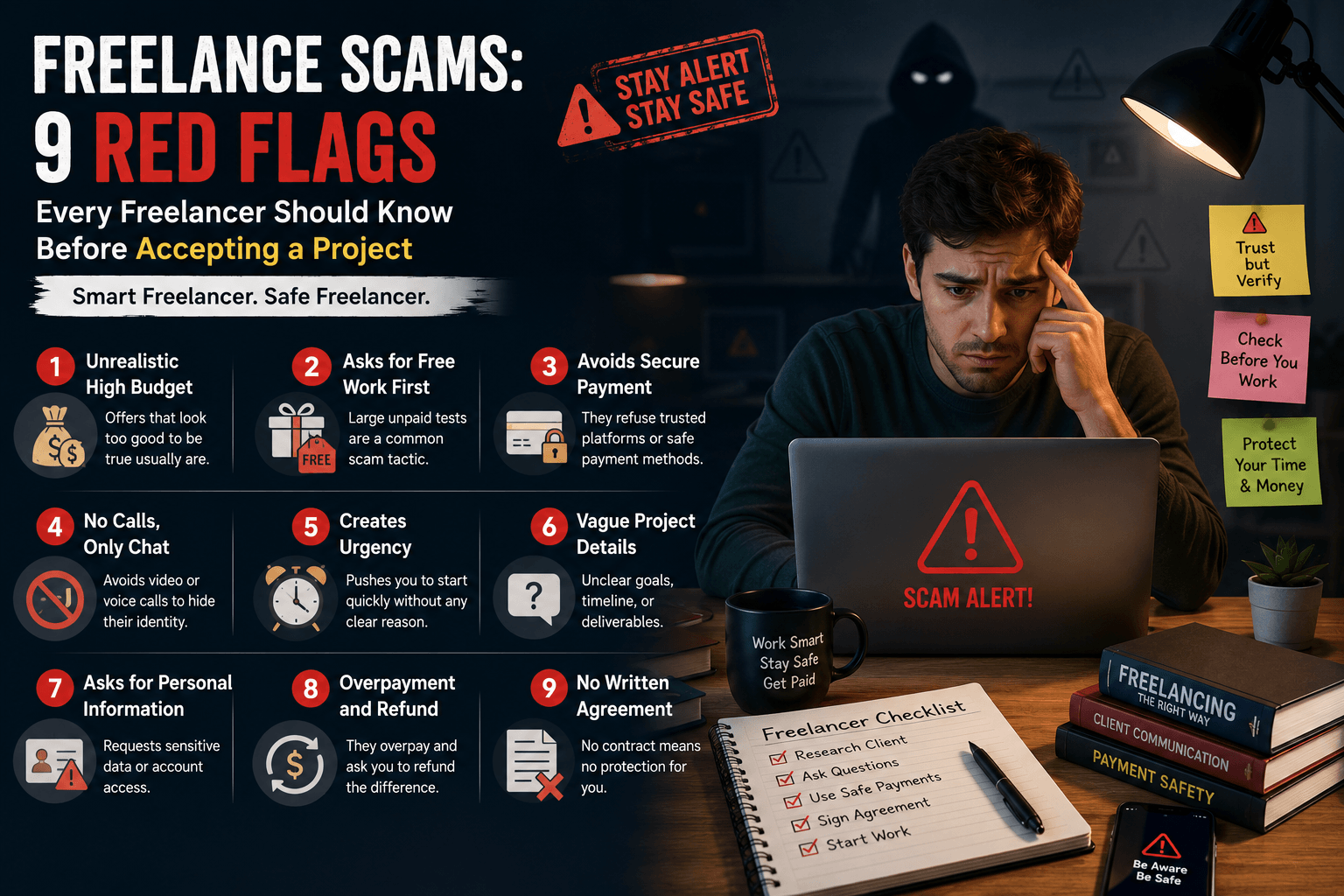
9 Freelance Scam Red Flags Every Freelancer Should Know
1. The Client Offers an Unrealistically High Budget
If the offer sounds too good to be true, it deserves extra attention.
Protect yourself:
- Compare rates with similar projects.
- Ask detailed questions about the work.
- Don’t let excitement replace caution.
2. They Want Free Work Before Hiring You
A small paid test is normal.
A large unpaid project is often a scam.
Protect yourself:
- Limit free samples.
- Share portfolio work instead.
- Charge fairly for test assignments.
3. They Refuse to Use Secure Payment Methods
Legitimate clients usually accept trusted payment systems.
Be cautious if someone insists on unusual payment methods.
Protect yourself:
- Use secure freelance platforms.
- Request milestone payments.
- Never rely on promises alone.
4. The Client Avoids Video or Voice Calls
Some legitimate clients prefer text.
However, refusing every form of live communication may be a warning sign.
Protect yourself:
- Request a short introduction call.
- Verify their identity if possible.
5. They Create Constant Urgency
Scammers often pressure freelancers.
Examples include:
- “Start today.”
- “No time for contracts.”
- “We must finish immediately.”
Urgency reduces careful thinking.
6. The Project Description Is Extremely Vague
A professional client usually knows what they need.
If every answer creates more confusion, slow down.
Protect yourself:
Ask for:
- Project goals
- Timeline
- Deliverables
- Budget
- Success expectations
7. They Ask for Personal or Financial Information
Never share sensitive information before trust has been established.
Avoid sharing:
- Bank passwords
- Identity documents without reason
- Verification codes
- Personal login credentials
Legitimate clients rarely request these.
8. They Overpay and Ask for a Refund
This is one of the oldest online payment scams.
The scammer sends fake proof of payment, then asks you to return part of the money.
Later, the original payment disappears.
Protect yourself:
Never refund money until funds are fully cleared.
9. There Is No Written Agreement
Professional clients appreciate clarity.
Scammers often avoid contracts because they never intend to honor them.
Protect yourself:
Always confirm:
- Scope
- Timeline
- Payment schedule
- Revisions
- Ownership rights
Even a simple written agreement protects both sides.
The S.A.F.E Framework for Avoiding Freelance Scams
A simple way to remember scam prevention is the S.A.F.E Framework for Freelance Scams.
S – Screen the Client
Research their company, website, and online presence.
A – Ask Questions
Clarify expectations before starting.
F – Formalize Everything
Use contracts, milestone payments, and written communication.
E – Evaluate Every Red Flag
Never ignore warning signs because the payment looks attractive.
Many experienced freelancers follow this process before accepting every project.
How Bilal Changed His Client Screening Process to Avoid Freelance Scams
Bilal didn’t stop freelancing.
He simply became more careful.
He now:
- Researches every client.
- Uses written agreements.
- Accepts milestone payments.
- Verifies client identity.
- Declines suspicious offers.
- Uses trusted freelance platforms whenever possible.
These habits dramatically reduced risky situations.
What Happened After Avoiding Freelance Scams
Since improving his screening process, Bilal noticed several positive changes.
- He attracted more serious clients.
- Payment disputes became rare.
- His confidence increased during client conversations.
- He spent less time chasing fake opportunities.
Many experienced freelancers report the same result: spending a few extra minutes checking a client often saves days or even weeks of frustration later.
Common Mistakes That Lead to Freelance Scams
Don’t make these common mistakes:
- Starting work without payment terms.
- Ignoring obvious warning signs.
- Trusting every high-paying offer.
- Accepting large unpaid tests.
- Sharing sensitive information.
- Rushing because of client pressure.
- Skipping written agreements.
Small precautions prevent big problems.
Conclusion: Stay Alert and Protect Yourself From Freelance Scams
Freelance scams are becoming more sophisticated, but most follow predictable patterns. Learning to recognize these warning signs can protect your time, income, and reputation.
Before accepting your next project, take a few minutes to verify the client, ask questions, and confirm payment terms. Like Bilal, you can avoid costly mistakes by making smart decisions before the work begins.
Internal Link Suggestion: Link to related articles such as “How to Set Client Expectations Before Every Project” or “Client Communication Mistakes That Cost Freelancers High-Paying Clients.”
FAQs
A. Look for warning signs such as unrealistic budgets, vague project details, requests for free work, and refusal to use secure payment methods.
A. Yes. Scammers often target beginners because they may be eager to gain experience and less familiar with common scam tactics.
A. Yes. A written agreement clearly explains payment, deadlines, and project scope, helping protect both you and your client.
A. Trusted freelance platforms, milestone payments, and secure online payment services generally provide better protection than informal payment arrangements.
A. Yes. Even experienced freelancers can be targeted. Staying cautious and checking every new client carefully is the best way to avoid scams.