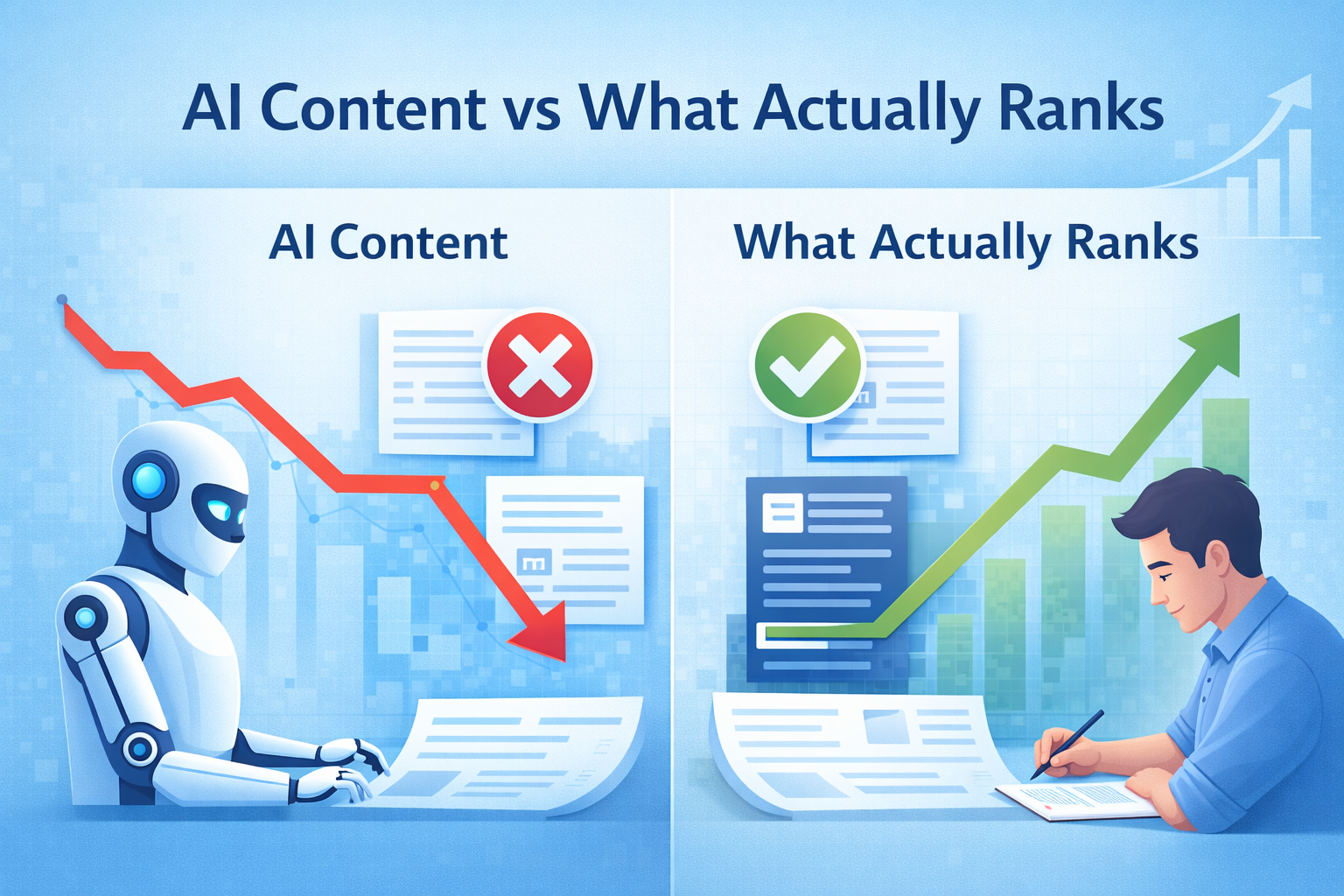
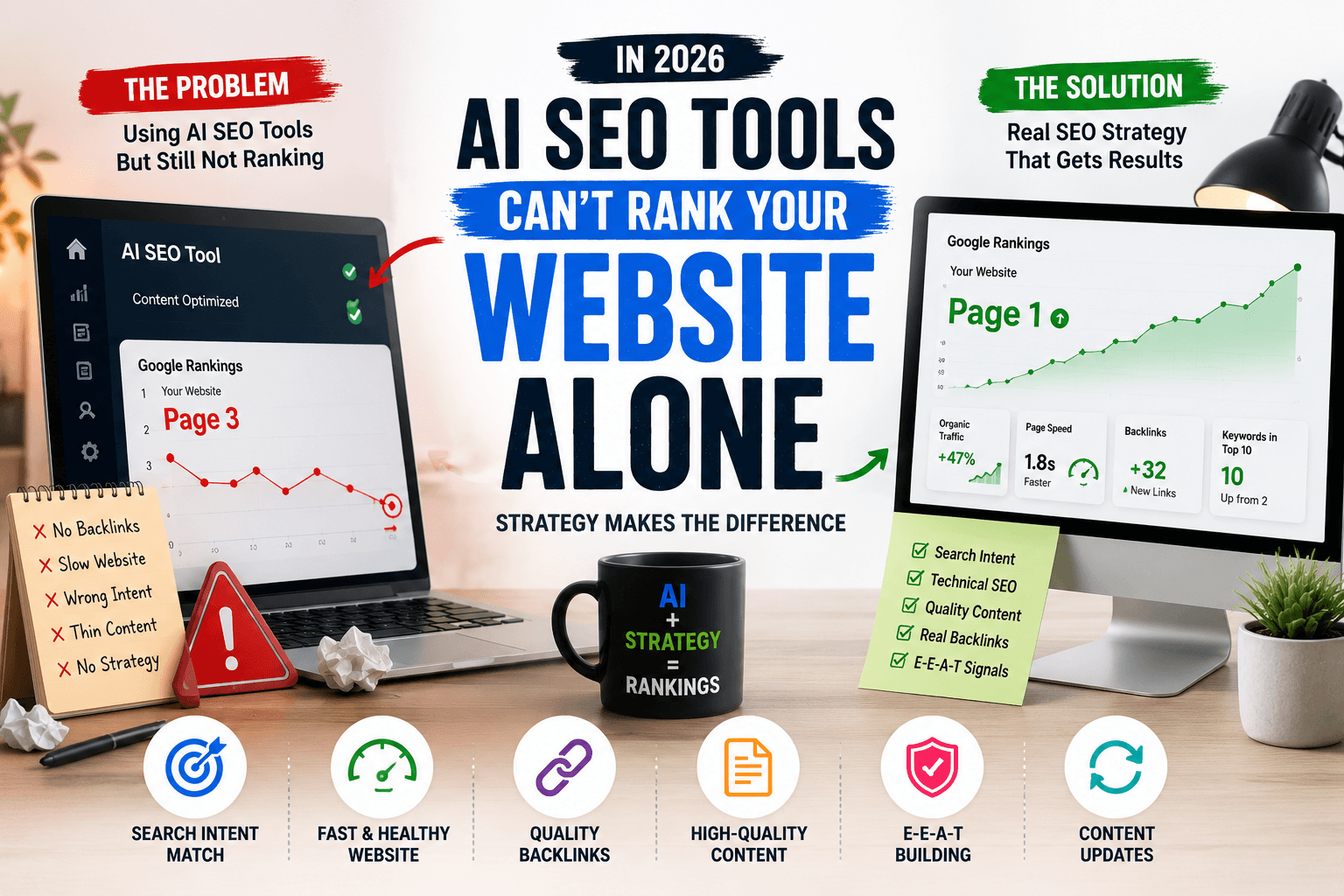
AI SEO tools promised to make ranking easier than ever. So why does your website still sit on page three of Google?
This frustration hit a small business owner named Bilal hard. He subscribed to three different AI SEO tools. He published AI-optimized articles every week. Traffic barely moved.
Bilal almost blamed the tools themselves. Instead, he dug into how his site was actually performing, and found the real problem wasn’t the AI software. It was how he was using it.
This article explains why so many websites still don’t rank in 2026, despite using AI SEO tools, and exactly what Bilal changed to finally see results.
Learn more
SEO in 2026 Complete Guide to Ranking on Google for Beginners and Small Businesses
Why AI SEO Tools Don’t Guarantee Higher Rankings
AI SEO tools are excellent at generating content and suggestions quickly. But speed isn’t the same as strategy.
Here’s what most tools can’t do on their own:
- Understand your specific audience’s real search intent
- Build genuine backlinks or brand trust
- Fix deeper technical issues slowing down your site
Bilal’s tools were producing content fast, but his site still had slow load times and thin backlink profiles underneath.
Learn more
Why AI Generated Content Is Failing in 2026 (And What Actually Ranks Now)
The Real Reasons AI SEO Tools Don’t Help Most Websites Rank
Here are the exact issues Bilal uncovered after reviewing his site with a fresh eye.
Reason 1: Content Matches Keywords, Not Search Intent
AI tools optimize for keywords well, but sometimes miss what searchers actually want to find.
Fix it: Read the top-ranking pages for your keyword. Match their format and depth, not just their words.
Reason 2: Technical SEO Gets Ignored
Great content on a slow, poorly structured site still struggles to rank.
Fix it: Check site speed, mobile usability, and broken links regularly, alongside your content work.
Reason 3: No Real Backlink Strategy
AI can write content, but it can’t build genuine relationships or earn links on its own.
Fix it: Reach out to relevant sites for guest posts or partnerships to build real authority.
Reason 4: Publishing Too Much, Too Fast
Flooding your site with AI content without quality checks can hurt trust signals.
Fix it: Slow down. Review and edit each piece before publishing, rather than mass-producing content.
Reason 5: Ignoring E-E-A-T Signals
Search engines reward content that shows real experience and expertise, not just keyword coverage.
Fix it: Add author bios, real examples, and credible sources to every article.
Reason 6: Not Updating Older Content
New AI-generated posts often get priority, while older ranking pages go stale.
Fix it: Refresh outdated articles regularly with updated facts and improved structure.
Learn more
Topical Authority Strategy in 2026: How Small Sites Beat Big Competitors
How Bilal Fixed His AI SEO Strategy
Bilal didn’t stop using AI SEO tools. He changed how he used them.
Here’s the process that worked:
- Used AI tools for research and first drafts only.
- Edited every article to match real search intent.
- Fixed technical issues slowing his site down.
- Built two to three genuine backlinks per month.
This balanced approach combined AI speed with real SEO fundamentals.
Real Results After Fixing These Issues
Within three months, Bilal’s website saw a clear turnaround.
- Organic traffic increased by 47%, after aligning content with search intent.
- Average page load time dropped by 1.8 seconds, improving user experience.
- Ten new keywords reached page one, up from just two before the changes.
These results came from comparing Google Search Console data before and after the changes.
Conclusion: Get More From Your AI SEO Tools
AI SEO tools aren’t the problem in 2026. Using them without strategy is what holds most websites back.
Start by reviewing your top pages for search intent, technical health, and real backlinks.
Like Bilal, you can combine the speed of AI SEO tools with proven SEO fundamentals, and finally start climbing the rankings.
FAQs
A. AI tools help with content speed, but rankings also depend on search intent, technical health, and real backlinks.
A. No. They work best as part of a strategy that includes technical fixes, backlink building, and human editing.
A. Review and refresh key articles every few months to keep facts current and maintain strong search rankings.
A. Some tools flag basic issues, but fixing site speed, mobile usability, and structure usually needs manual review.
A. Publishing large amounts of unedited content without checking search intent or fixing underlying technical issues.