Google ranking factors can feel like a locked door, even when your content is genuinely good. You wrote something helpful. You checked every SEO box. It still sits on page two.
An agency owner named Nadia knew this struggle well. Her team wrote strong, well-researched articles for clients. Some ranked beautifully. Others, just as good, barely showed up anywhere.
Nadia dug into the difference between her winning and losing articles. She found 11 quiet mistakes explaining why some great content never reached page one.
This article shares those same 11 mistakes. By the end, you’ll understand the Google ranking factors that actually matter, and exactly how to fix what’s holding your content back.
Learn more
SEO in 2026 Complete Guide to Ranking on Google for Beginners and Small Businesses
Why Understanding Google Ranking Factors Matters
Google uses hundreds of signals to decide what ranks. Most creators only focus on a handful, like keywords and word count.
Here’s what commonly gets overlooked:
- Page experience signals, like speed and mobile usability
- Content structure that search engines can easily parse
- Trust signals like author expertise and credible sources
Nadia’s underperforming articles were missing several of these signals, even though the writing itself was strong.
Learn more
Topical Authority Strategy in 2026: How Small Sites Beat Big Competitors
11 Google Ranking Factors Mistakes That Stop Good Content from Ranking
Here are the exact mistakes Nadia found across her team’s lower-performing content.
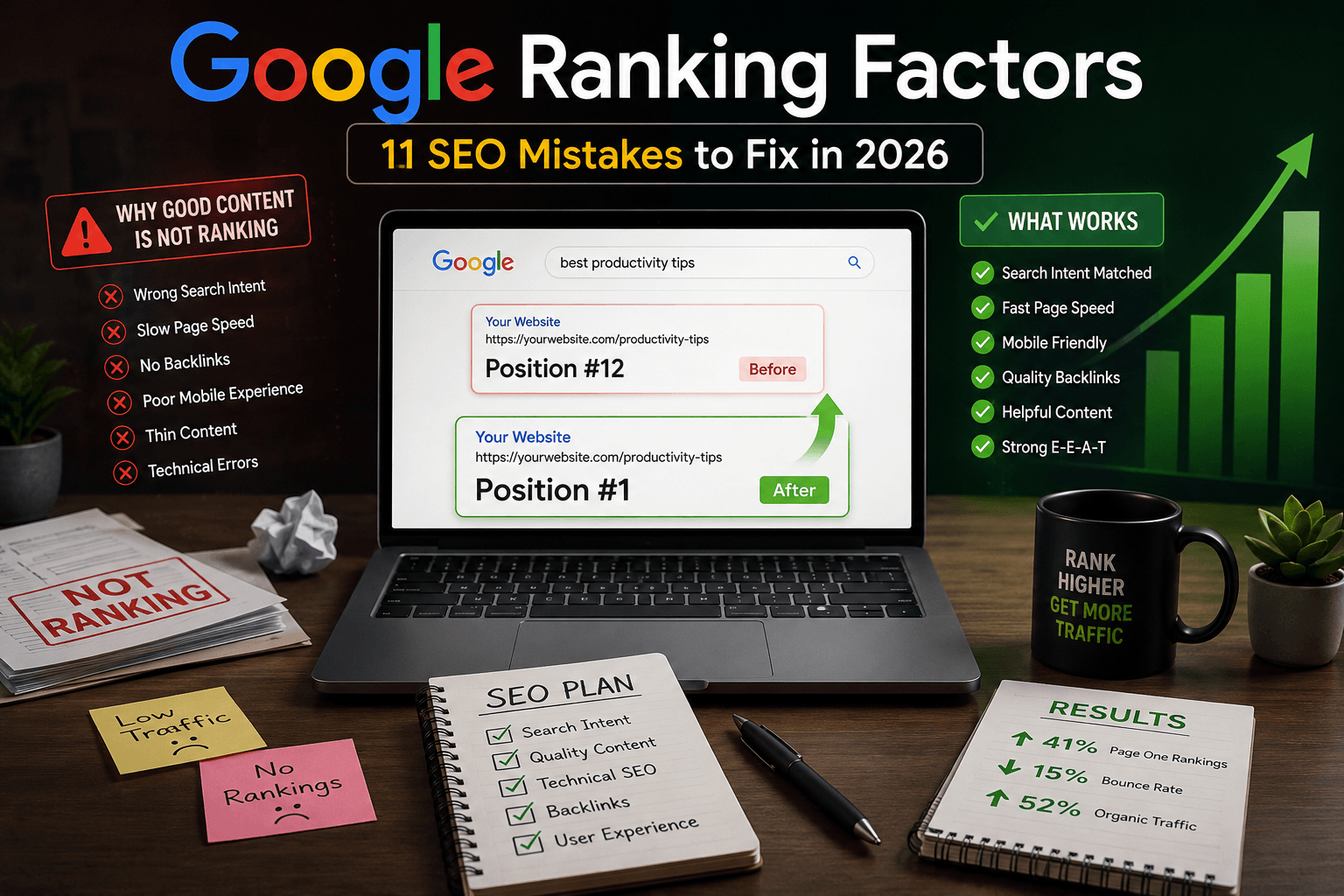
Google Ranking Factors: Ignoring Search Intent
Ranking for a keyword means nothing if the content doesn’t match what searchers actually want.
Fix it: Study the top results for your keyword before writing a single sentence.
2. Weak or Missing Title Tags
A vague or keyword-stuffed title tag can hurt both clicks and rankings.
Fix it: Write clear, specific titles that match the keyword naturally.
3. Slow Page Speed
Google favors fast-loading pages, since slow sites frustrate users.
Fix it: Compress images and remove unnecessary scripts to improve load times.
4. Poor Mobile Experience
Most searches happen on mobile. A clunky mobile layout hurts rankings directly.
Fix it: Test your pages on multiple devices and fix any usability issues.
5. Thin or Shallow Content
Short articles often can’t compete with detailed, well-researched competitors.
Fix it: Add real examples, data, and deeper explanations to thin pages.
6. No Internal Linking Strategy
Pages with no internal links are harder for search engines to discover and understand.
Fix it: Link related articles together naturally throughout your content.
7. Missing or Weak Backlinks
Backlinks remain one of the strongest trust signals search engines use.
Fix it: Build relationships for genuine guest posts and partnerships over time.
8. Duplicate or Thin Metadata
Repeated titles and descriptions across pages confuse search engines and users alike.
Fix it: Write unique, specific metadata for every page on your site.
9. Ignoring E-E-A-T Signals
Content without clear author expertise or credible sources struggles to earn trust.
Fix it: Add author bios, real credentials, and links to trustworthy sources.
10. Outdated Content
Old, unrefreshed pages slowly lose ground to newer, more current competitors.
Fix it: Update key statistics and examples in your top pages every few months.
11. Ignoring Technical SEO Errors
Broken links, crawl errors, and indexing issues quietly block visibility.
Fix it: Run regular technical audits to catch and resolve hidden problems.
Learn more
Internal Linking Strategy That Boosts Rankings in 2026 (Most Sites Ignore This)
How Nadia Improved Her Google Ranking Factors Strategy
Nadia didn’t rewrite everything at once. She built a repeatable review process instead.
Here’s what her team now does before publishing:
- Check search intent against the top-ranking pages.
- Review technical health, speed, and mobile usability.
- Add author credentials and credible sources.
- Build internal links to related articles.
This checklist turned inconsistent results into steady, predictable rankings.
Real Results After Improving Google Ranking Factors
Within three months, Nadia’s team saw a clear shift in performance.
- Page-one rankings increased by 41%, after aligning content with search intent.
- Average bounce rate dropped by 15%, thanks to better mobile experience.
- Organic traffic grew by 52%, as technical issues were resolved across the site.
These results came from comparing client analytics before and after the changes.
Conclusion: Master the Google Ranking Factors That Matter Most
Good content alone isn’t always enough. Understanding the Google ranking factors behind visibility helps your best work actually get seen.
Start with one fix, like reviewing search intent or improving page speed.
Like Nadia, you can turn overlooked content into pages that consistently reach page one.
FAQs
A. Search intent, content quality, page experience, and trust signals like backlinks and author expertise remain key ranking factors.
A. Yes. Even strong content can underperform due to technical issues, weak backlinks, or mismatched search intent.
A. Most sites see measurable changes within three to six months after fixing key ranking issues.
A. Yes. Backlinks remain a strong trust signal, helping search engines gauge a page’s credibility and authority.
A. Start with search intent and page speed. These two areas often bring the fastest, most noticeable improvements.