YouTube copyright claims can appear just minutes after your video goes live. You’re excited to share your content, but then you see a copyright claim, and your heart sinks.
If this has happened to you, you are not alone. Thousands of creators face YouTube copyright claims every single day, even when they believe they have done nothing wrong.
The good news is that most copyright claims are avoidable. Once you understand why they happen, you can protect your channel, safeguard your revenue, and keep creating with confidence.
In this guide, you’ll learn the real reasons behind YouTube copyright claims and discover practical, legal ways to avoid them before they affect your channel.
Learn more
How to Start a YouTube Channel from Scratch in 2026
What Are YouTube Copyright Claims, Really?
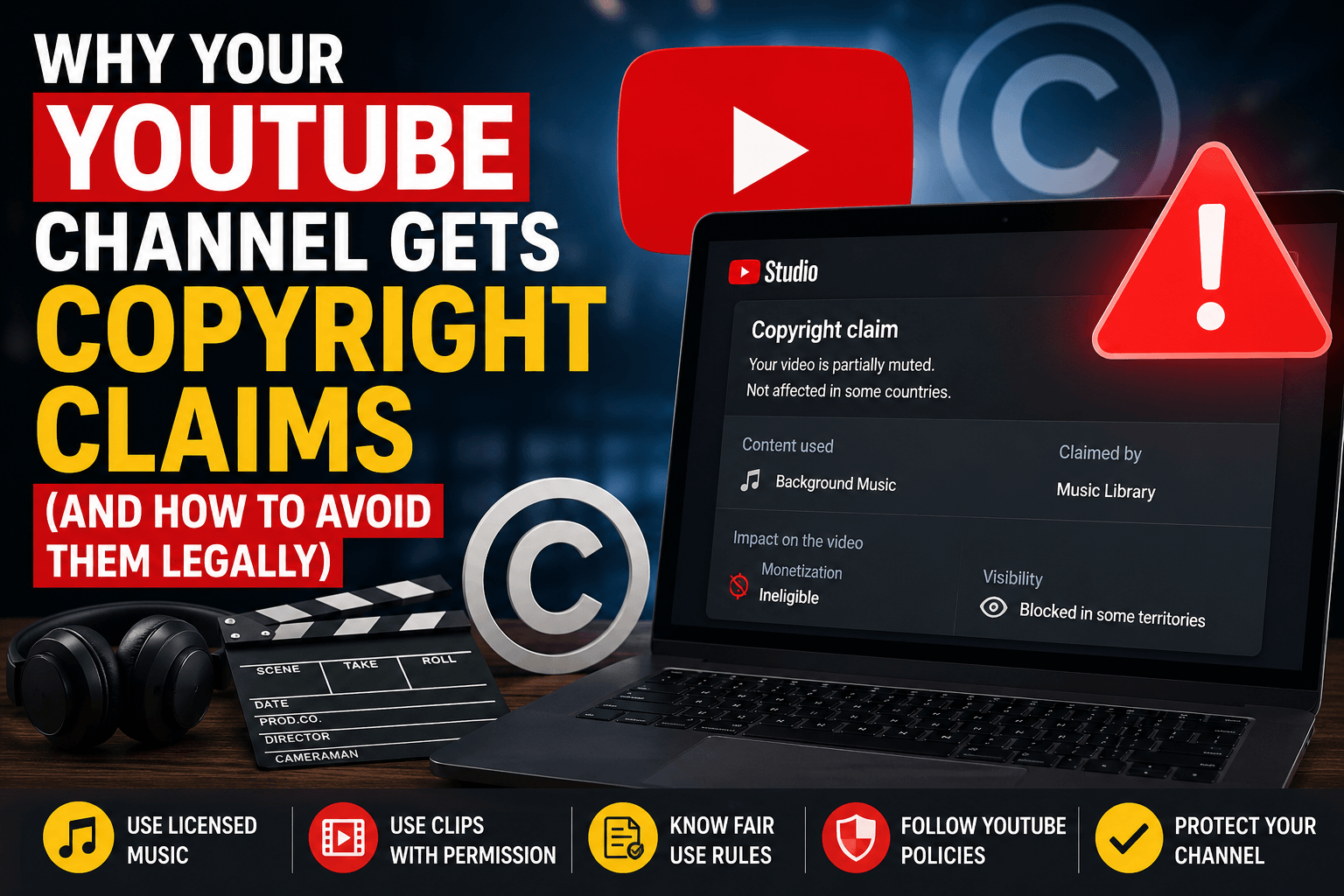
A copyright claim happens when YouTube’s system, called Content ID, detects copyrighted material in your video. This could be music, video clips, or even a short sound effect.
Unlike a copyright strike, a claim usually does not remove your video. But it can:
- Block your video in certain countries
- Take away your ad revenue
- Mute parts of your audio
- Give credit (and money) to the original owner
Many creators confuse claims with strikes. Strikes are more serious and can lead to channel termination. Claims are common and often fixable.
Learn more
Running Out of Content Ideas for Your YouTube Channel? Here’s What Actually Works in 2026
Top Reasons You Get YouTube Copyright Claims
Understanding the cause is the first step to solving the problem. Here are the most common triggers.
1. Using Background Music Without a License Causes YouTube Copyright Claims
This is the number one reason for youtube copyright claims. Even ten seconds of a popular song can trigger Content ID.
For example, a travel vlogger once added a trending song for “vibes.” Within minutes, the video was claimed, and all ad revenue went to the music label.
2. Reusing Clips From Movies or TV Shows
Reaction videos and movie reviews often use short clips. Even a five-second clip can be enough for a claim, because Content ID scans for matches automatically, not fairness.
3. Using Someone Else’s Video Footage
Re-uploading or editing another creator’s footage, even with credit, can still trigger a claim. Giving credit does not equal permission.
4. Live Streams With Background Audio
Playing music at a live event, in a store, or during a stream can cause instant claims. The system detects sound in real time.
5. Using “Royalty-Free” Music Incorrectly
Some “free” music still requires attribution or has usage limits. Skipping these rules is a common, avoidable mistake.
Learn more
Your YouTube Shorts Are Not Getting Views? Here’s What You’re Doing Wrong in 2026
How to Avoid YouTube Copyright Claims Legally
You do not need to stop creating. You need smarter habits. Here is how top creators protect their channels.
Use YouTube Audio Library
YouTube offers a free library of music and sound effects made for creators. These tracks are safe to use and clearly labeled.
Buy Licensed Music From Trusted Platforms
Sites like Epidemic Sound, Artlist, and Soundstripe offer affordable licenses. One small monthly fee can protect your entire channel.
Understand Fair Use (But Don’t Rely on It Blindly)
Fair use allows limited use of copyrighted material for commentary, criticism, or education. But fair use is a legal defense, not a guarantee. It is judged case by case.
To strengthen a fair use claim:
- Add original commentary or analysis
- Use only short, necessary clips
- Avoid using the clip as your main content
Always Check Before You Use Footage
Ask yourself these questions before adding any outside media:
- Do I have permission or a license?
- Is this covered under Creative Commons?
- Am I adding real value, not just copying?
If you are unsure, it is safer to skip it.
Monitor Your Channel With YouTube Studio
YouTube Studio shows you copyright notices under the “Copyright” tab. Checking this weekly helps you catch problems early.
What to Do If You Already Got YouTube Copyright Claims
Getting a claim is not the end of your channel. Here is what you can do:
- Read the claim details in YouTube Studio to see what content matched.
- Trim or replace the flagged section if possible.
- Dispute the claim only if you have real proof of rights or fair use.
- Learn and adjust your future content habits.
A well-known tech reviewer once shared that after facing early copyright issues, switching fully to licensed music removed 90% of his claim problems within a month.
Building a YouTube Copyright Claims Prevention Habit
Avoiding youtube copyright claims long-term comes down to consistency. Successful creators build simple systems:
- A pre-upload checklist for every video
- A trusted list of safe music sources
- Regular checks on channel copyright status
Small habits like these save hours of stress later.
Conclusion
Youtube copyright claims can feel scary, especially when you are just trying to grow your channel. But most claims come from a few avoidable mistakes, like unlicensed music or unauthorized clips.
By using licensed music, understanding fair use, and checking your content before upload, you can protect your channel and your income. Start today: review your next video with fresh eyes, and build habits that keep your channel safe for the long run.
FAQs
A. A claim alone usually does not hurt your channel’s ranking. However, repeated claims can affect your reputation and revenue.
A. Yes, you can dispute a claim if you believe it is a mistake or your use qualifies as fair use. Provide clear proof to support your case.
A. Not always. Some royalty-free tracks require attribution or have specific usage rules, so always read the license terms.
A. A claim usually affects revenue or availability, while a strike is more serious and can lead to video removal or channel termination.
A. It depends on the copyright owner. Some claims are removed quickly after a dispute, while others may stay until the content is changed or removed.