A freelance portfolio with zero paid projects can still land real clients, even though that feels impossible when you’re staring at an empty page. Every freelancer starts here, even the ones who now charge premium rates.
A freelance writer named Fatima faced this exact wall. She had strong writing skills, but no paid client work to show for it. Every job posting asked for “samples,” and she had nothing to send.
Fatima almost gave up before applying anywhere. Instead, she built a small portfolio using projects she created herself, without waiting for a paying client to say yes first.
This article shows you exactly how to build a freelance portfolio that wins clients, even with zero paid experience, using the same approach Fatima used to land her first real projects.
Learn more
What Are Freelancing Platforms and How Do They Work?
Why a Freelance Portfolio Matters More Than a Resume
Clients hiring freelancers care about one thing: can you solve their specific problem.
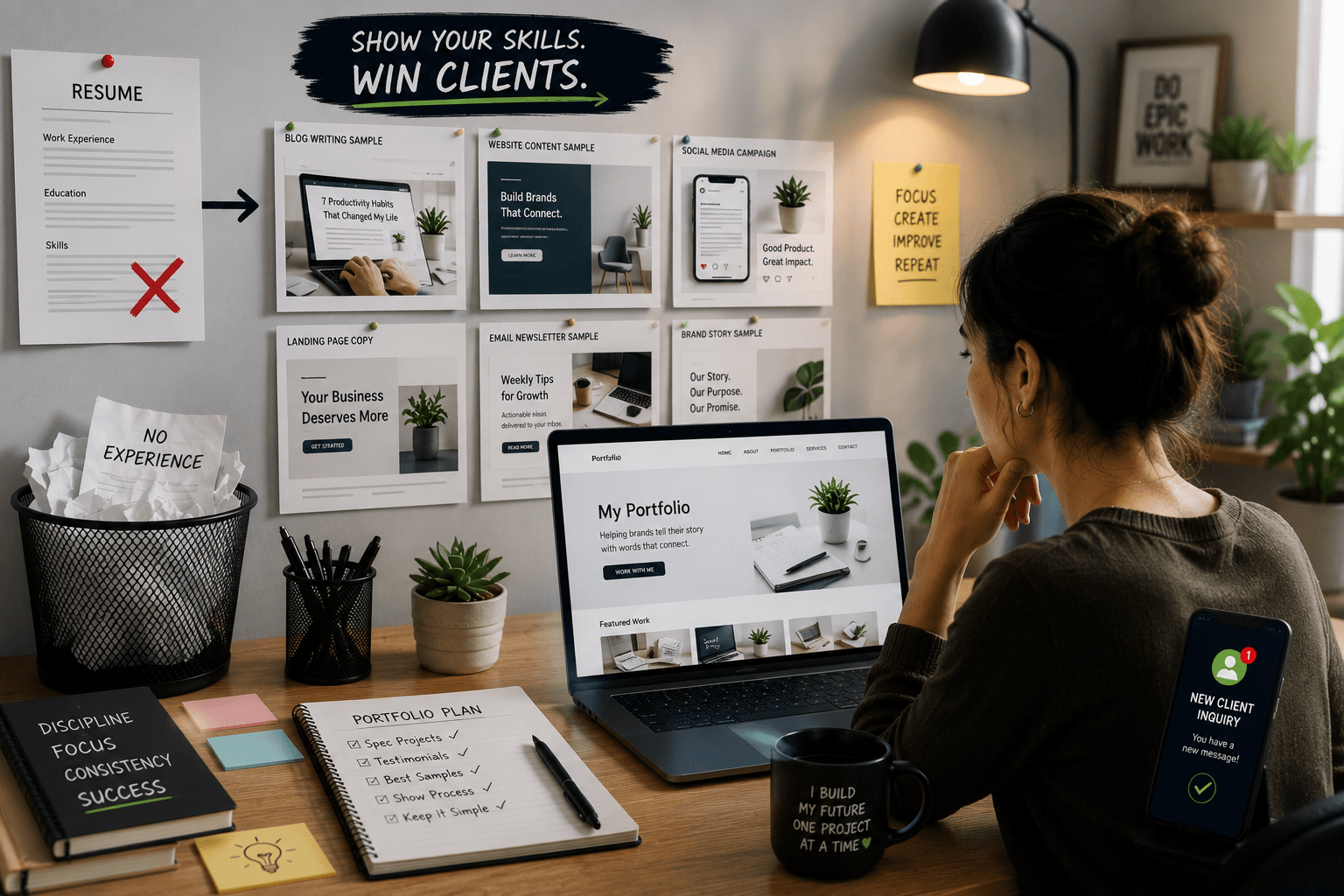
A resume lists where you’ve worked. A portfolio shows what you can actually do.
Here’s why this distinction matters so much for new freelancers:
- Clients want proof of skill, not just claims
- Portfolios show your style and approach, not just your history
- A resume gap looks worse than a small, strong body of work
Fatima realized clients weren’t asking about her past jobs. They were asking to see writing samples relevant to their industry.
Learn more
How to Choose the Right Freelancing Platform for Your Skills
How to Build a Freelance Portfolio With No Paid Experience
Here’s exactly what Fatima did to build a portfolio from scratch.
1. Create Spec Projects for Real Companies
A spec project means creating sample work for a real brand, without being hired by them.
Do this: Pick two or three companies you admire, and create sample work as if you were their freelancer.
2. Offer Free or Discounted Work for Testimonials
Early projects can trade a lower rate for real feedback and usable samples.
Do this: Offer a small number of discounted projects specifically to build your portfolio and gather testimonials.
3. Repurpose Personal or Passion Projects
Personal projects still demonstrate real skill, even without a paying client attached.
Do this: Include blog posts, personal designs, or side projects that show your actual ability.
4. Focus on Quality Over Quantity
A portfolio with three excellent pieces beats one with ten mediocre samples.
Do this: Choose your strongest three to five pieces, and remove anything weaker.
5. Show Your Process, Not Just the Final Result
Clients value understanding how you think, not just what you produced.
Do this: Add a short note explaining your approach or the problem each project solved.
Learn more
Top 10 Freelancing Websites for Beginners in 2026
The P.R.O.O.F Framework to Build a Freelance Portfolio That Wins Client
A simple way to remember what makes a portfolio effective is the P.R.O.O.F framework:
- Problem – show the challenge each project addressed
- Range – include variety, but stay within your niche
- Outcome – highlight the result, even if it’s a mock outcome for spec work
- Own voice – let your personal style come through clearly
- Focus – keep the portfolio simple and easy to navigate
Many new freelancers only discover the need for a real portfolio after facing repeated rejection, without realizing clients simply couldn’t picture their skill in action.
How Fatima Structured Her First Portfolio
Fatima didn’t wait for confidence. She built her portfolio piece by piece.
Here’s the process she followed:
- Created two spec projects for brands in her target niche.
- Offered three discounted projects specifically for testimonials.
- Selected her four strongest pieces for the final portfolio.
- Added a short process note to each project.
This small, focused portfolio became her main tool for landing her first paying clients.
What Changed After Fatima Built Her Portfolio
Since building this portfolio, Fatima noticed a clear shift in her client responses.
- Client replies became more common, since her samples matched what they were hiring for.
- Conversations moved faster, since clients could immediately see her writing style.
- Her confidence during outreach improved, since she finally had something concrete to share.
This mirrors what many freelance coaches describe: clients don’t hire potential, they hire proof, even if that proof comes from self-initiated work.
Conclusion: Start Your Freelance Portfolio Today, Not After Your First Client
A freelance portfolio doesn’t require paid experience to be effective. It requires clear, focused samples that show real skill.
Start with one small step, like creating a single spec project in your target niche.
Like Fatima, you can build a portfolio that wins real clients, long before your first official paycheck arrives.
FAQs
A. Yes. Spec projects, personal work, and discounted early projects can all create a strong portfolio without paid client history.
A. Three to five strong samples work better than a long list of average pieces. Quality matters more than quantity.
A. Yes, as long as you clearly label them as self-initiated samples, not actual client work.
A. A small number of discounted projects for testimonials can help, but avoid working entirely for free long-term.
A. Add a short note about the problem you solved and your process. This helps clients understand your thinking, not just the result.