Affiliate marketing without a website sounded like the easiest way to earn online. Three months later, I had no website, no sales, and no idea why. I had heard it was possible, so I skipped the site and jumped straight into posting links. The result was silence. If you’re stuck in that same quiet frustration, this case study will show you exactly what changed things.
Why Affiliate Marketing Without a Website Feels So Confusing
Most beginner guides assume you already own a blog. That leaves a huge gap for people who want to start without building anything technical first.
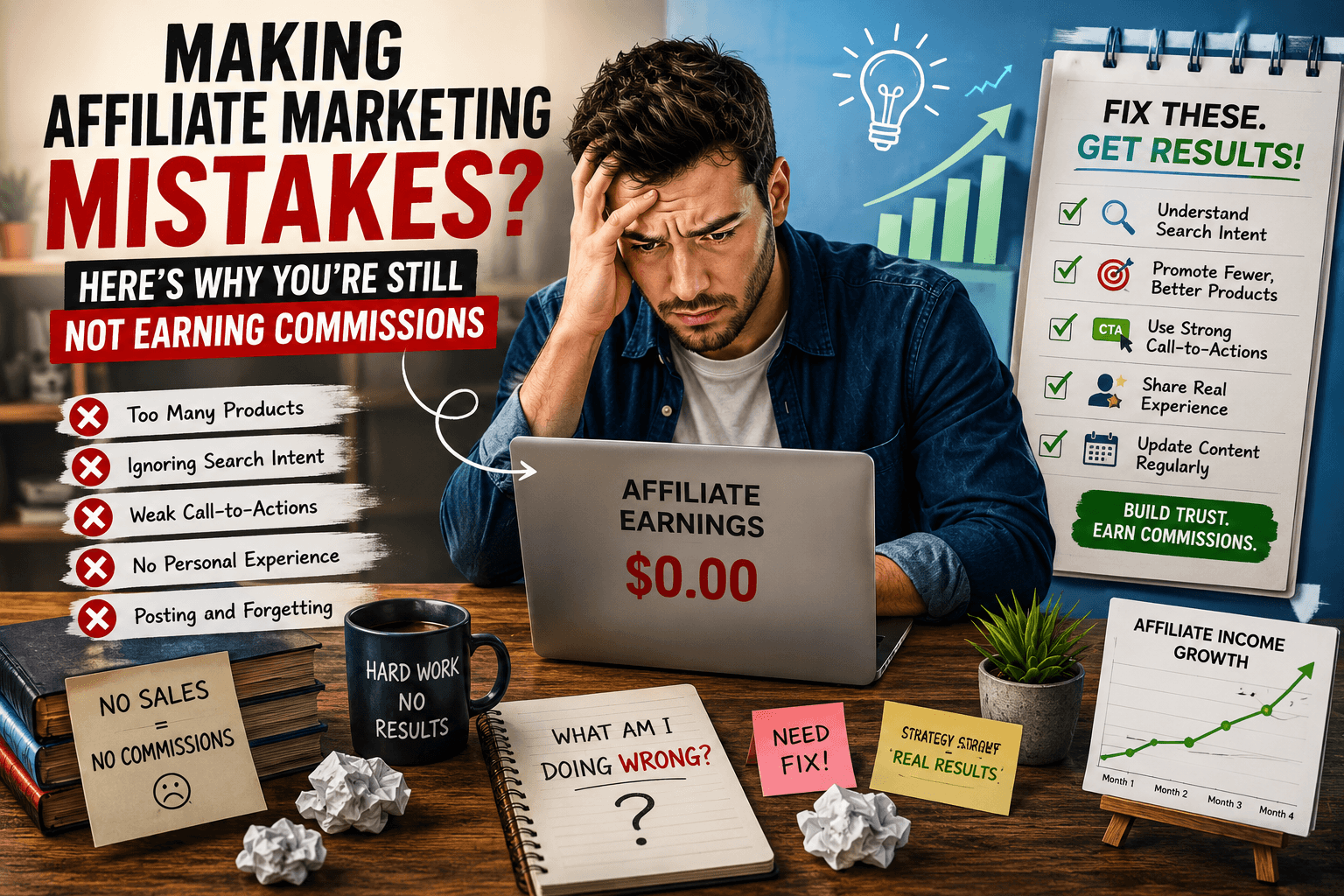
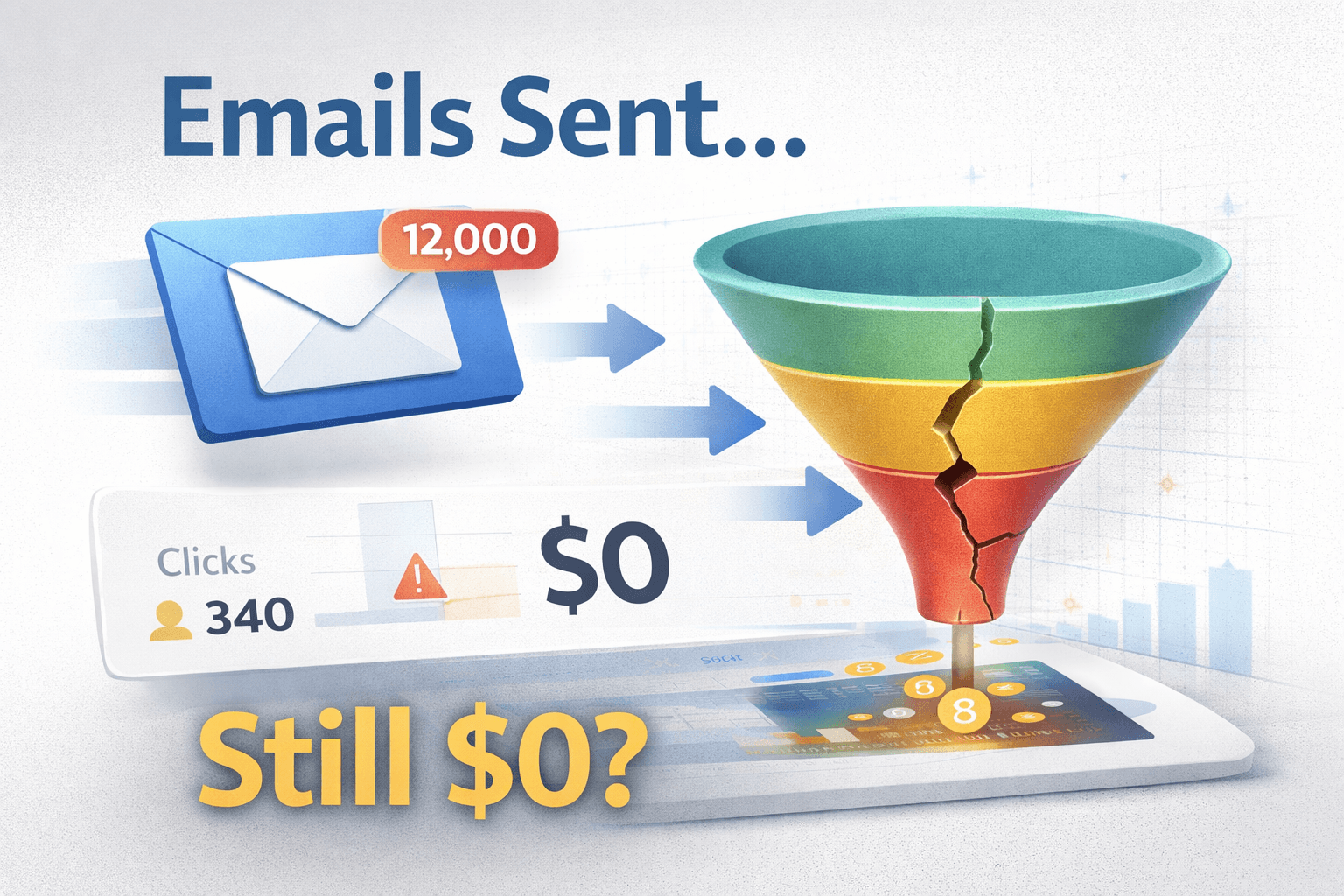
I tried posting raw links on social media. Nobody clicked. Platforms often hide posts with outside links, and readers don’t trust bare links anyway.
Common mistakes I made early on:
- Pasting links with no explanation or context
- Posting once and expecting instant sales
- Ignoring platform rules around affiliate links
- Never building any kind of audience first
Learn more
How to Start Affiliate Marketing as a Beginner (Step-by-Step Guide)
The Case Study: Starting Affiliate Marketing Without a Website From Zero
In 2026, I decided to test this properly. I picked one platform, Instagram, and one product I actually used every week. No website, no domain, no hosting fees.
Instead of dropping links, I started sharing short, honest videos about the product. Each video showed a real problem it solved for me.
Learn more
How to Join the Amazon Affiliate Program and Start Earning
The Three Changes That Made It Work
- I used link-in-bio tools. Free tools like Linktree let me share multiple affiliate links from one profile link.
- I built a small following first. I posted helpful tips for two weeks before adding any affiliate links.
- I focused on one platform. Instead of spreading thin across five apps, I mastered one audience deeply.
Best Platforms for Affiliate Marketing Without a Website
Choosing the right platform matters more than people expect. Each one has different strengths for beginners.
Where Beginners See the Fastest Results
- YouTube Shorts — Great for product demos and tutorials
- Instagram Reels — Strong for lifestyle and beauty niches
- Pinterest — Works well for evergreen buying-intent traffic
- TikTok — Fast growth potential for trending products
Email newsletters also work well here. A simple email list lets you promote affiliate links without needing any website at all.
Learn more
Why You’re Not Making Money with Amazon Affiliate (Even After Trying Everything) 2026 Fix
Building Trust in Affiliate Marketing Without a Website
Trust usually comes from a professional-looking site. Without one, you need a different approach.
I started replying to every comment personally. I answered questions honestly, even when the answer wasn’t flattering to the product. This built more trust than any polished page could.
Simple Trust-Building Habits
- Show your face or voice in content
- Share honest pros and cons, not just praise
- Reply quickly to comments and messages
- Always disclose affiliate relationships clearly
Real Results After 60 Days
Numbers rarely lie, and mine finally started moving.
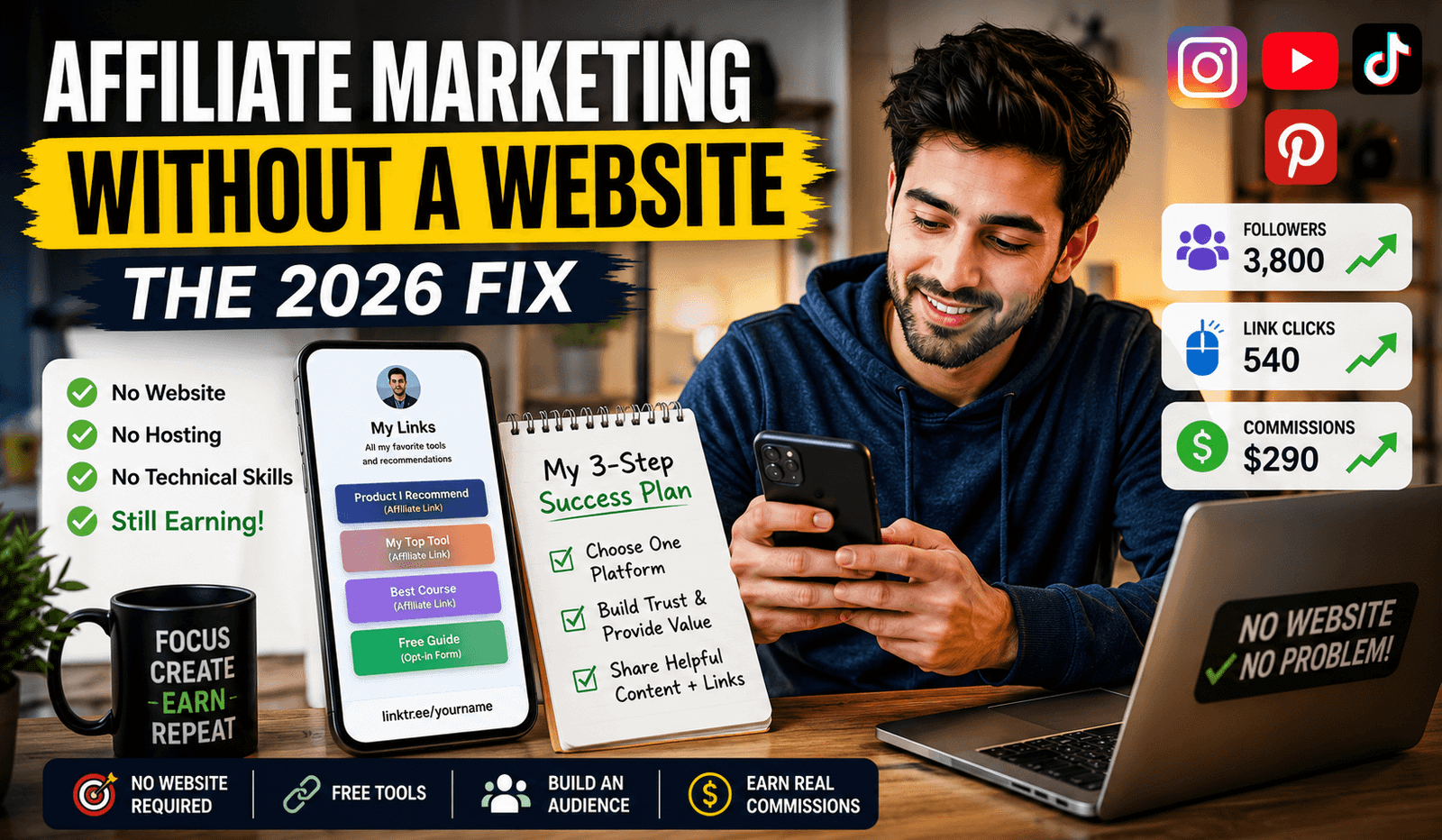
| Metric | Before | After 60 Days |
|---|---|---|
| Followers | 210 | 3,800 |
| Link clicks | 12 | 540 |
| Commissions earned | $0 | $290 |
This case study shows affiliate marketing without a website is not a myth. It just needs a different toolkit and a little patience.
Tools That Replace a Website
- Linktree or Beacons for organizing multiple links
- Canva for quick, professional-looking graphics
- Google Forms for collecting emails without a landing page
- Free email platforms like MailerLite for simple newsletters
Conclusion: You Don’t Need a Website to Start
Affiliate marketing without a website is fully possible in 2026, especially for beginners with limited budgets. Pick one platform, build trust with honest content, and use free tools to organize your links. Small, steady effort turns into real income faster than most people expect.
FAQs
A. Yes. Social media, YouTube, and email newsletters all support affiliate marketing without a website using free link tools.
A. Instagram Reels and YouTube Shorts work well for beginners because they favor short, engaging video content.
A. Use free tools like Linktree or Beacons to organize multiple links behind one simple profile link.
A. Yes. Disclosure rules still apply on social media, so always mention when a link earns you a commission.
A. Most beginners see early results within 30 to 60 days of consistent posting and honest audience engagement.