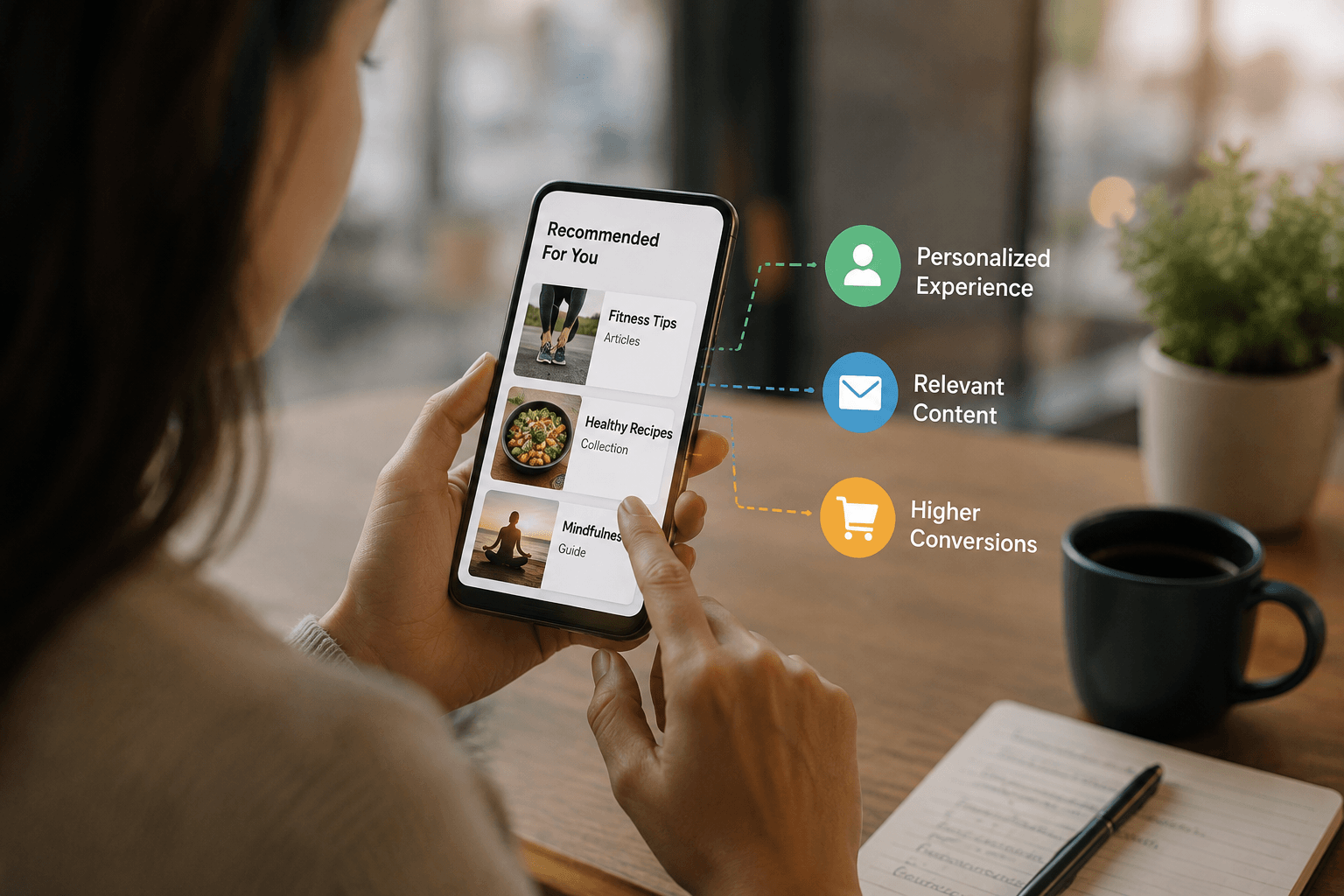
Content personalization can turn ignored emails into messages people actually open, read, and act on. Yet many businesses still send the same content to every customer, then wonder why engagement stays low and sales fail to grow.
Sara, a marketing manager, faced this exact challenge. Her team consistently published high-quality blog posts and sent regular newsletters, but email open rates remained flat, website engagement barely improved, and content marketing generated very few sales.
At first, Sara believed the problem was the quality of her content. After taking a closer look at her audience, she discovered the real issue: relevance. She was delivering one message to everyone, even though different readers had different interests, goals, and stages in the buying journey.
This article explains how content personalization helps businesses deliver the right message to the right audience at the right time. You’ll also learn the practical changes Sara made to increase engagement, build stronger customer relationships, and drive more sales without creating an entirely new content strategy.
Learn more
Content Marketing in 2026 (Complete Strategy Guide That Actually Works for Traffic & Sales)
Why Generic Content Struggles to Drive Engagement
Most readers skim content that doesn’t feel relevant to them specifically.
Here’s what generic, one-size-fits-all content usually misses:
- Different readers are at different stages of buying
- Interests and pain points vary widely across an audience
- A single message rarely speaks directly to anyone
Sara’s newsletter treated new subscribers the same as loyal, ready-to-buy customers. Neither group felt like the content was written for them.
Learn more
Content Distribution Strategy in 2026: The Repurposing System That Multiplies Your Reach
How Content Personalization Improves Engagement and Sales
Personalized content speaks to specific readers, not an imagined average person.
Here’s how this shift changes results:
1. Matching Content to Buyer Stage
New visitors and returning customers need very different information.
Fix it: Create separate content paths for awareness, consideration, and decision-stage readers.
2. Using Behavioral Data to Guide Recommendations
Past actions reveal real interests better than guesswork.
Fix it: Recommend content based on pages visited or past purchases, not generic popular posts.
3. Segmenting Email Lists by Interest
One newsletter for everyone often satisfies no one fully.
Fix it: Split your list into segments based on interests or behavior, and tailor subject lines accordingly.
4. Personalizing Based on Industry or Role
A single case study rarely resonates equally across every industry.
Fix it: Create industry-specific examples or landing pages for your top customer segments.
5. Adjusting Tone for Different Audience Segments
A formal tone might suit enterprise buyers, while a casual tone fits small business owners better.
Fix it: Adjust language and examples to match how each segment actually talks and thinks.
Learn more
Why Most Content Gets Traffic But No Leads in 2026 (Content Funnel Fix)
The R.E.A.C.H Framework for Content Personalization
A simple way to remember what drives personalized content is the R.E.A.C.H framework:
- Relevance – content matches the reader’s specific situation
- Everyday language – tone fits the audience segment, not a generic voice
- Actionable – content leads to one clear next step
- Context-aware – uses behavior or stage, not guesswork
- Human – feels written for a person, not a mass audience
Many marketers only discover the impact of personalization after noticing how differently segmented emails perform compared to generic blasts.
How Sara Applied Content Personalization to Her Strategy
Sara didn’t rebuild her entire content library. She restructured how it was delivered.
Here’s what she changed:
- Segmented her email list into three groups based on engagement history.
- Created separate content paths for new and returning readers.
- Added industry-specific examples to her top-performing articles.
- Adjusted subject lines and tone for each audience segment.
These changes made her existing content feel far more relevant, without requiring a complete rewrite.
What Changed After Sara Personalized Her Content
Since making these changes, Sara noticed a clear shift in reader behavior.
- Email open rates improved noticeably across her segmented campaigns.
- Readers spent more time engaging with content that matched their specific stage.
- Sales conversations referenced specific content pieces more often, showing deeper engagement before the call.
This reflects what many experienced marketers describe: content personalization doesn’t require more content, it requires smarter delivery of what already exists.
Conclusion: Make Content Personalization Part of Your Core Strategy
Content personalization isn’t about writing more. It’s about making sure the right message reaches the right reader at the right time.
Start with one small step, like segmenting your email list by interest or buyer stage.
Like Sara, you can turn flat, ignored content into messages that genuinely engage readers and drive real sales.
FAQs
A. It means tailoring content, tone, or recommendations to match a specific reader’s interests, behavior, or buying stage.
A. No. Often, segmenting delivery and adjusting tone for existing content improves results without a complete rewrite.
A. Begin with simple email segmentation based on interest or engagement history, then expand from there.
A. Yes. Relevant content builds trust faster, often leading to more engaged, better-informed prospects entering sales conversations.
A. Basic behavioral data, like pages visited or past purchases, is often enough to start meaningful personalization.