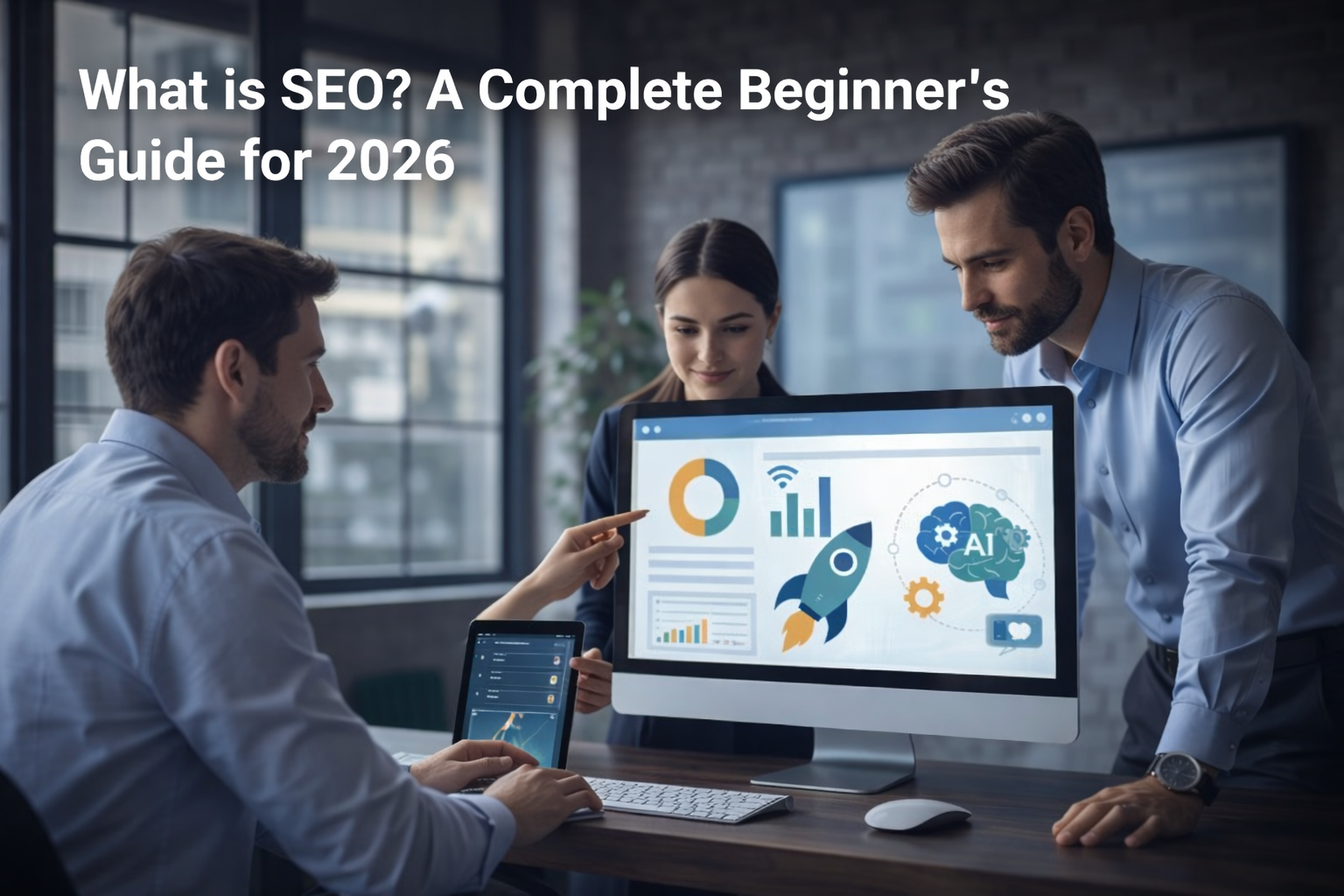
Have you ever wondered why some websites dominate Google results while others struggle to get noticed?
In 2026, SEO search engine optimization is no longer optional it’s the backbone of online visibility.
Search engines have become smarter, user-focused, and intent-driven. If your website does not align with modern SEO practices, it simply gets ignored. This beginner-friendly guide explains what SEO search engine optimization is, how it works in 2026, and how you can use it to attract consistent, high-quality traffic without relying on ads.
What is SEO (Search Engine Optimization)?
SEO, or Search Engine Optimization, means improving your website so it ranks higher on search engines like Google, Bing, and Yahoo.
When people search for something (like “best coffee shop near me”), search engines scan millions of pages to show the most relevant ones.
SEO helps your page appear among those top results bringing you free, organic traffic.
How Does SEO Search Engine Optimization Work?
Search engines use algorithms to rank websites based on hundreds of factors.
But don’t worry here are the main ones simplified:
- Keywords – Words people type in search engines (e.g., digital marketing tips).
- Content Quality – Helpful, unique, and easy-to-read content.
- Backlinks – Links from other trusted sites pointing to your site.
- User Experience (UX) – Fast loading, mobile-friendly design, and clear navigation.
- Technical SEO – Clean website structure, secure HTTPS, and sitemap optimization.
Each part works together to help Google understand your content and rank it higher.
ALSO READ
How SEO Digital Marketing Service Works: Google Algorithm Explained Simply
Types of SEO Search Engine Optimization You Should Know
1. On-Page SEO
Focuses on everything you can control on your website:
- Optimized keywords in titles, headings, and meta tags.
- Quality, original content.
- Internal links and images with alt text.
2. Off-Page SEO
Involves activities outside your site that build reputation:
- Backlinks from other websites.
- Social media signals.
- Brand mentions and guest posts.
3. Technical SEO
Deals with behind-the-scenes improvements:
- Fast page speed.
- Mobile optimization.
- Fixing broken links and crawl errors.
Why is SEO Search Engine Optimization Important for Every Website?
SEO isn’t just about traffic it’s about trust and credibility.
When your site ranks high, people see you as more reliable and professional.
Here’s what good SEO brings you:
- More visibility Be found when people search for your topic.
- Free traffic No need to pay for every click like ads.
- Better user experience A smoother, faster website.
- Long-term results SEO keeps working even after you stop optimizing daily.
Did you know? Over 68% of online experiences begin with a search engine (BrightEdge).
How SEO Search Engine Optimization Has Changed in 2026
SEO in 2026 is more about helpfulness, experience, and trust than tricks or keyword stuffing.
Here’s what matters most now:
1. Search Intent Over Keywords
Google now prioritizes why someone is searching, not just what they type.
Content that clearly solves a problem ranks higher than content stuffed with keywords.
2. Experience & Trust Signals
Websites that show real expertise, clear authorship, fast loading speed, and secure browsing gain more visibility.
Trust is a ranking factor in 2026.
3. AI & Human Content Balance
AI-assisted content is common, but human-written, experience-based content performs better.
Search engines reward originality and real insights.
4. Mobile & Core Web Vitals Matter More
Fast loading, mobile-first design, and smooth user interaction directly impact rankings.
In short: SEO search engine optimization in 2026 rewards clarity, value, and user satisfaction.
How to Start with SEO Search Engine Optimization (Step-by-Step)
You don’t need to be a tech expert start small and stay consistent.
- Research keywords using tools like Google Keyword Planner or Ahrefs.
- Write helpful content that answers real user questions.
- Optimize titles, meta descriptions, and images.
- Build backlinks by collaborating or guest posting.
- Track progress using Google Analytics and Search Console.
Remember: SEO is not a one-time fix. It’s an ongoing journey toward online growth.
ALSO READ
Difference Between On-Page, Off-Page, and Technical SEO
Conclusion
SEO search engine optimization is more than a digital buzzword it’s the foundation of online success.
By understanding and applying basic SEO principles, you can reach more people, grow your audience, and build lasting trust.
Start today. Small improvements made now can bring massive long-term rewards tomorrow.
FAQs: What Beginners Ask About SEO
A. SEO stands for Search Engine Optimization. It’s the process of improving your website’s ranking on search engines.
A. SEO is free it focuses on organic traffic. However, paid tools can help improve your strategy.
A. It usually takes 3 to 6 months to see noticeable improvements, depending on your niche and effort.
A. SEO gives free organic traffic, while PPC (Pay-Per-Click) is paid advertising for instant results.
A. Absolutely! With the right guidance, tools, and patience, anyone can start optimizing their website.