Social media content marketing has become one of the most effective ways to grow brand trust and visibility in 2026 but only when the right type of content is used strategically. Posting daily without a clear content plan often leads to low engagement and wasted effort.
Many businesses struggle on social media because they focus on quantity instead of relevance. Successful brands understand which content formats work best, when to use them, and how they support long-term growth.
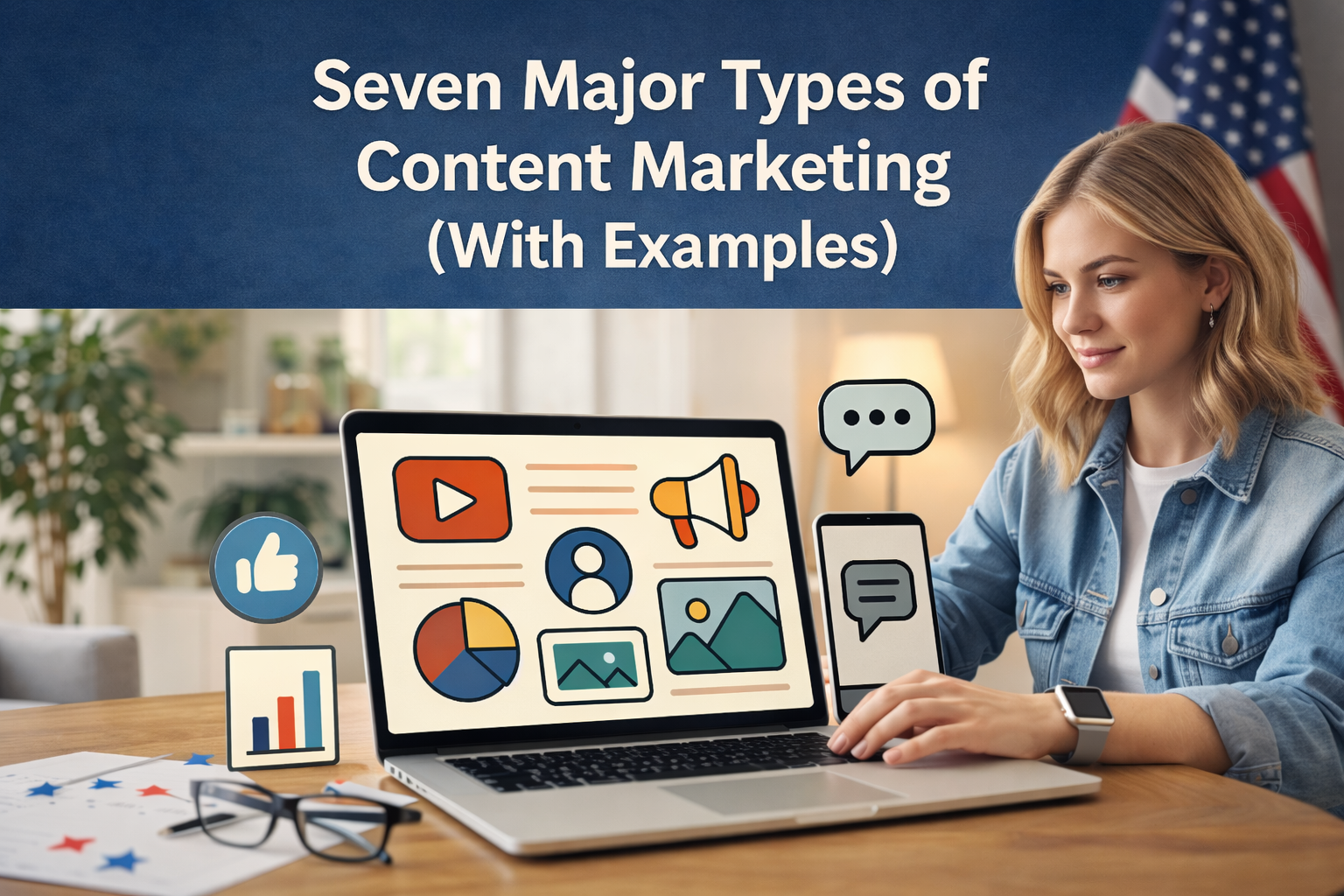
This guide explains the seven major types of content marketing, how each one supports social media content marketing, and practical examples you can apply to build authority and engagement over time.
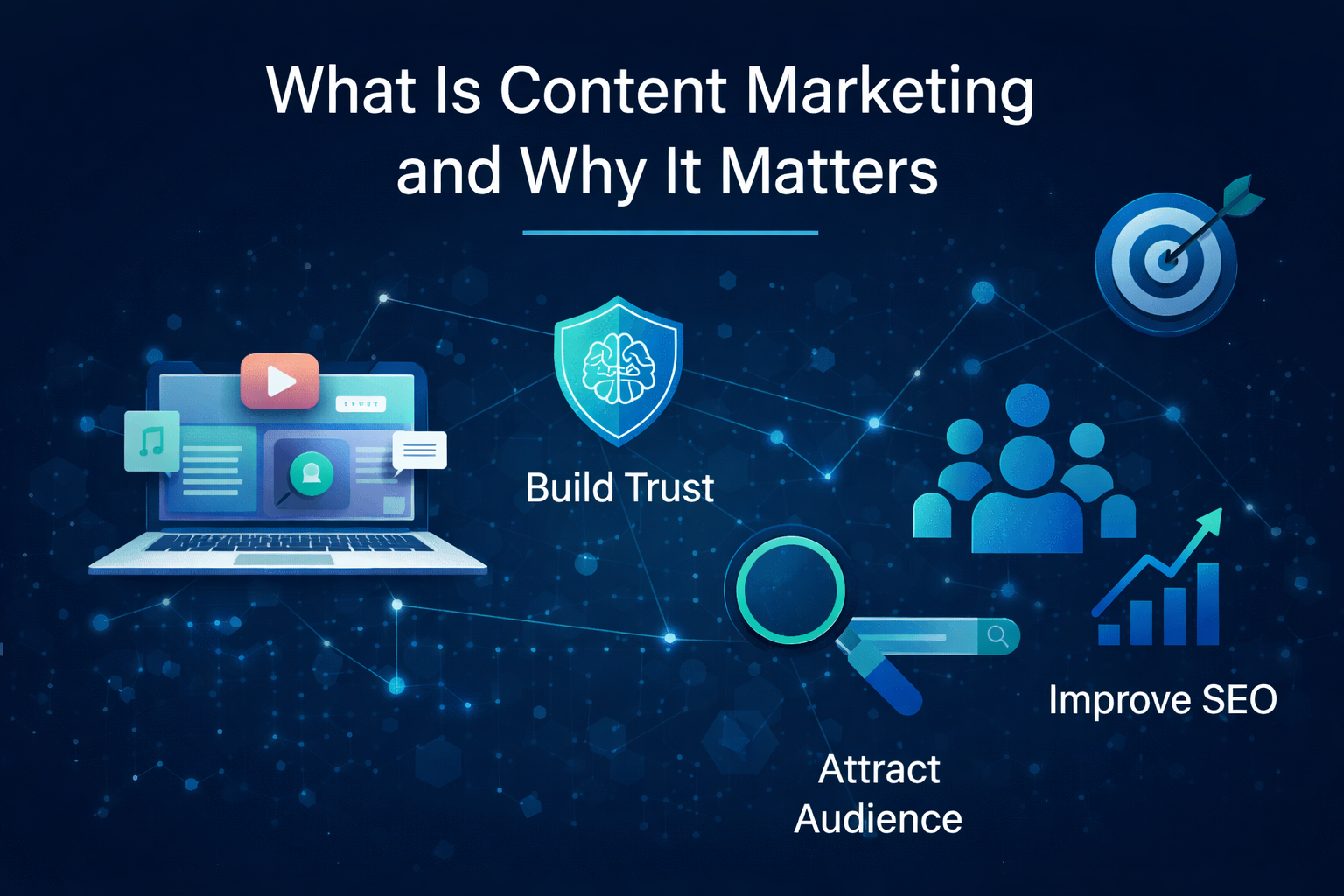
What Is Content Marketing and Why It Matters for Social Media Content Marketing
Content marketing is the practice of creating helpful, relevant content to attract and retain an audience.
Instead of selling directly, you educate, inspire, or entertain people first.
content on social platforms is one of the most powerful ways to do this because it puts your content directly in front of your audience.
ALSO READ
What Is Content Marketing | Why It Matters in 2026
Social Media Content Marketing in 2026: What Has Changed
In 2026, social media content marketing is driven by relevance, format selection, and audience intent rather than frequent posting. Platforms now prioritize content that encourages meaningful interaction, saves, and shares instead of passive likes.
Short-form video, carousel posts, and educational visuals perform better because they deliver value quickly. At the same time, audiences expect authenticity, clear messaging, and real experience from brands rather than overly polished promotions.
Another major shift is content repurposing. Successful brands create one strong piece of content and adapt it into blogs, videos, visuals, and social posts to stay consistent across platforms.
Because of these changes, social media content marketing in 2026 is most effective when brands focus on quality formats, smart distribution, and long-term audience trust instead of chasing trends.
1.Blog Content Marketing to Support Social Media Content Marketing
Blog posts are the backbone of content marketing.
They help you:
- Rank on Google
- Build authority
- Educate your audience
Example
A digital marketing blog that publishes guides like:
- “What Is social media strategy ?”
- “Beginner’s Guide to Content Strategy”
These blogs attract organic traffic and are often shared on social media platforms.
2. Social Media Content Marketing
Social media strategy focuses on creating platform-specific content for Facebook, Instagram, LinkedIn, and X.
This content builds trust, engagement, and brand visibility.
Common Formats
- Short posts
- Images and carousels
- Stories
- Short videos
Example
A brand sharing:
- Educational tips on Facebook
- Reels explaining marketing basics
- Visual quotes or stats
This keeps the audience engaged and drives traffic to blogs or websites.
3. Video Content Marketing
Video content is one of the fastest-growing content types.
People remember videos better than text. Videos also increase engagement on social platforms.
Example
- YouTube tutorials
- Short explainer videos
- Product demos
A simple 60-second video explaining social media content marketing can perform better than a long article for some audiences.
4. Email Content Marketing
Email marketing allows direct communication with your audience.
It is personal, cost-effective, and powerful when done correctly.
Example
A weekly newsletter that includes:
- New blog posts
- Helpful tips
- Case studies
Email content supports your social media and blog efforts by bringing users back.
5. Visual Content Marketing
Visual content includes:
- Infographics
- Images
- Charts
- Illustrations
Humans process visuals faster than text.
Example
An infographic showing:
- “7 Types of Content Marketing”
- “Steps of social media strategy”
These visuals are highly shareable on social media platforms.
6. User-Generated Content (UGC)
User-generated content is created by your audience, not your brand.
It builds strong trust because people trust people more than ads.
Example
- Customer reviews
- Testimonials
- Social media posts from users
Brands often repost user content to show real experiences.
7. Interactive Content Marketing
Interactive content encourages users to take action.
It increases time spent on your content and improves engagement.
Examples
- Polls
- Quizzes
- Surveys
- Interactive stories
A quiz like “Which Content Type Fits Your Brand?” works well on social media.
ALSO READ
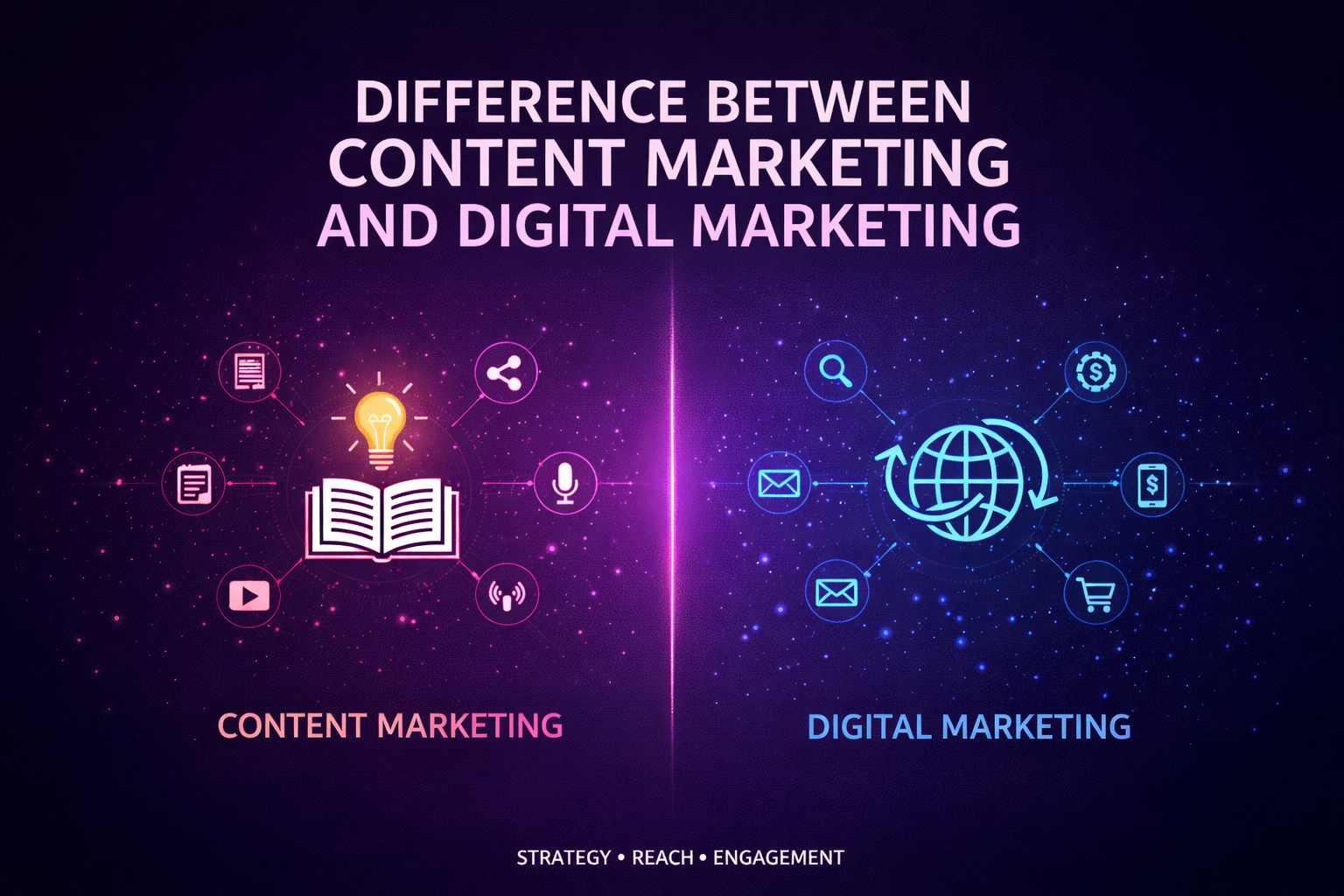
Difference Between Content Marketing and Digital Marketing
Why Social Media Content Marketing Matters Most
Social media content marketing connects all content types together.
It helps you:
- Distribute blog content
- Promote videos
- Share visuals
- Drive traffic
Without social media, even the best content may never be seen.
Conclusion Social Media Content Marketing
Content marketing is not about doing everything.
It is about doing the right type of content consistently.
Social media content marketing plays a central role in promoting blogs, videos, visuals, and user-generated content. When used correctly, it builds trust, authority, and long-term growth.
Start with one or two content types. Stay consistent. Measure results.
Then scale what works.
FAQs Social Media Content Marketing
A. Social media marketing approach is the use of posts, videos, and visuals on social platforms to engage and grow an audience.
A. Blog content and social media strategy are best for beginners because they are simple and cost-effective.
A. Posting 3–5 times per week is enough to stay consistent without overwhelming your audience.
A. Yes, but social media strategy helps distribute and amplify your content faster.
A. Most content strategies take 3–6 months to show consistent results when done properly.