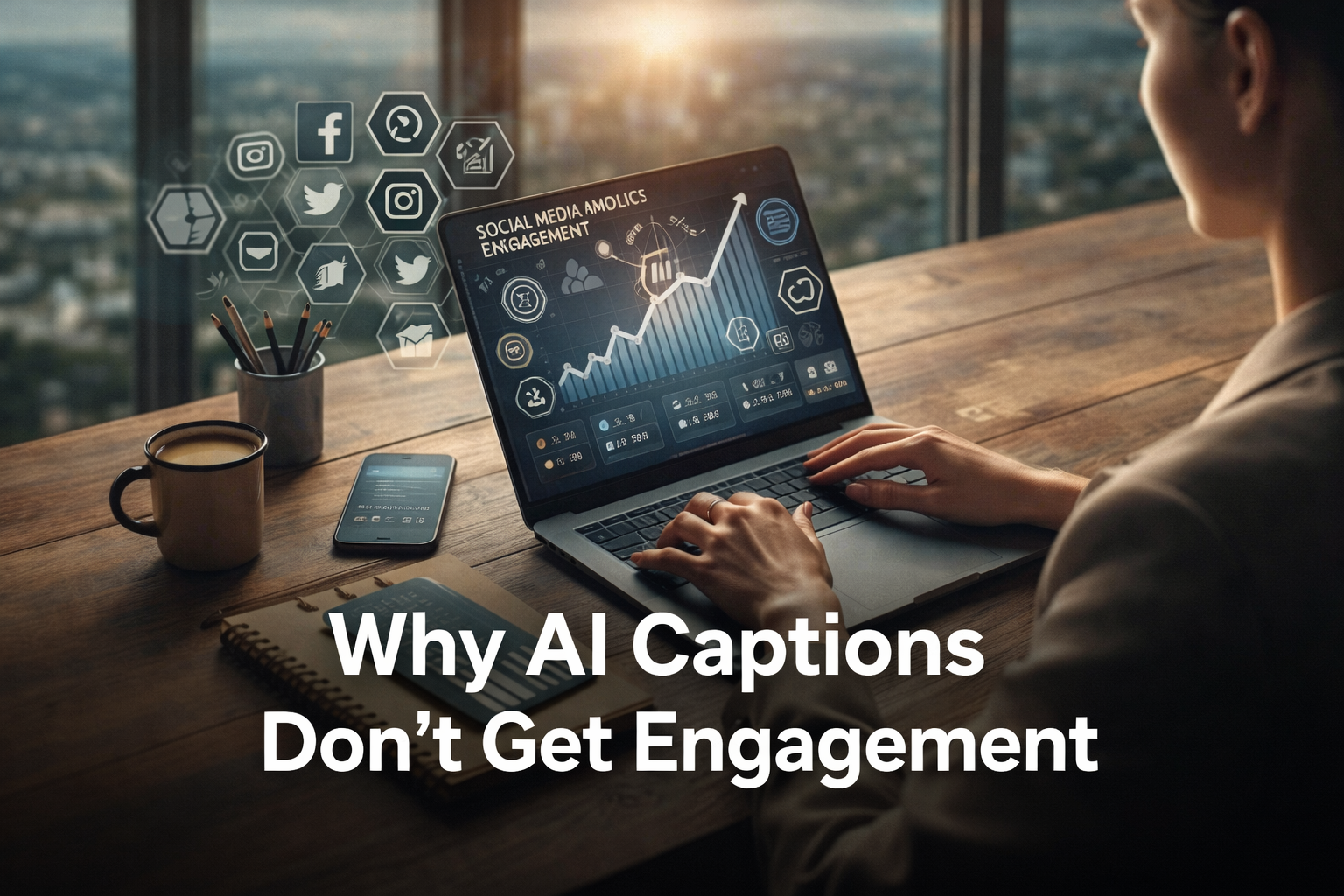
Social Media Caption AI tools promise quick, engaging captions for your posts.
Your content looks polished.
The captions sound fine.
Yet likes, comments, and shares barely move.
This is a common problem many marketers face when they rely on AI-generated captions. Let’s break down why this happens based on real usage and testing, not theory.
The Promise vs. Reality of Social Media Caption AI
Most tools promise fast, engaging captions.
In practice, results often feel disappointing.
After testing multiple AI caption tools across real brand pages, one thing became clear:
speed improved, engagement didn’t at least not by default.
ALSO READ
AI Advertising Tools Tested: Which One Actually Converts Better Ads?
Why Social Media Caption AI Often Misses Engagement
1. Captions Sound Correct, Not Human
AI tools are trained to be safe.
That’s the problem.
They often produce captions that are:
- Grammatically perfect
- Emotionally flat
- Lacking personality
Engagement on social media comes from voice, not correctness.
2. AI Doesn’t Understand Context the Way Humans Do
Social platforms depend heavily on timing and mood.
AI struggles with:
- Current trends
- Cultural moments
- Brand-specific humor
Even strong AI-generated captions can feel disconnected from what the audience expects right now.
3. Generic Hooks Kill Curiosity
Many AI captions open with predictable lines like:
- “Did you know…”
- “Looking for the best way to…”
These lines rarely stop scrolling.
High engagement captions usually:
- Ask a sharp question
- Trigger emotion
- Sound conversational
This is where most AI caption tools fall short.
ALSO READ
Top Benefits of Using AI in Marketing Automation (2026 Guide)
Real Example: What We Saw in Testing
In one test:
- Human-written caption = steady comments
- AI-only caption = fewer replies
- AI + human edit = best performance
The takeaway was clear:
AI works best as a draft partner, not the final voice.
Common Mistakes Marketers Make With Social Media Caption AI Tools
Many failures come from how tools are used, not the tools themselves.
Biggest mistakes:
- Posting AI captions without editing
- Using the same prompt every time
- Ignoring brand tone
- Chasing volume over connection
These habits reduce engagement fast.
Where Social Media Caption AI Actually Helps
Used correctly, these tools still have value.
They work well for:
- Brainstorming caption ideas
- Creating multiple variations
- Saving time during content planning
- Overcoming writer’s block
Think of Social Media Caption AI as a starting point, not the finish line.
How to Fix Low Engagement From Social Media Captions AI
Here’s what worked consistently during testing:
1. Add a Human Rewrite Layer
Even small edits improve tone and clarity.
2. Customize Prompts for Each Brand
Generic prompts = generic captions.
3. Focus on One Emotion per Caption
Confusion kills engagement.
4. Read Captions Out Loud
If it sounds robotic, it will perform like one.
AI vs Human Captions: A Quick Comparison
| Aspect | AI Only | Human Edited |
|---|---|---|
| Speed | Fast | Moderate |
| Emotion | Low | High |
| Brand Voice | Weak | Strong |
| Engagement | Inconsistent | Better |
The best results came from combining both.
Should You Stop Using Social Media Caption AI?
No.
But expectations must change.
These tools don’t replace creativity.
They support it.
When used with intention, Social Media Caption AI can help teams work faster without losing authenticity.
Conclusion
Most AI caption tools fail to drive engagement because they don’t think like people.
They write correctly, not connectively.
The fix isn’t abandoning AI.
It’s using it smarter with human judgment guiding the final message.
If you want engagement, let AI assist—but let humans lead.
FAQs
A. It’s software that generates social media captions using artificial intelligence to save time and spark ideas.
A. They often sound generic and lack emotional or contextual depth.
A. Yes. Human editing significantly improves tone, clarity, and engagement.
A. They help beginners learn structure but still require creative input.
A. Use them for drafts and ideas, then refine captions manually before posting.