Social media advertising in 2026 can grow a brand faster than ever or burn budgets just as quickly if the strategy is unclear.
Many businesses still struggle on social platforms not because content is weak, but because they don’t understand the real difference between organic social media marketing and paid social media advertising.
From hands-on experience managing social campaigns, one thing is clear: organic and paid social media serve very different purposes in modern digital marketing. Expecting both to deliver the same results leads to wasted time, money, and effort.
This guide explains the difference between organic and paid social media marketing in simple, practical terms, and shows how both should be used together in 2026 social media advertising strategie
What Is Social Media Marketing?
Social media marketing is the use of platforms like Facebook, Instagram, LinkedIn, and X to reach and engage people.
It has two main approaches:
- Organic social media marketing
- Paid social media advertising
Both are important, but they work very differently.
ALSO READ
What is Social Media Marketing Service? A Beginner’s Guide
What Is Organic Social Media Marketing?
Organic social media marketing focuses on free content shared with your audience.
It builds relationships, trust, and long-term engagement.
Key Features of Organic Social Media
- No ad spend
- Slower but steady growth
- Strong community building
- Higher trust over time
Example
A brand sharing helpful tips, behind-the-scenes posts, and stories regularly. Engagement grows naturally as people like, comment, and share.
Organic efforts support social media advertising by warming up your audience.
What Is Paid Social Media Advertising?
Paid social media advertising uses paid ads to reach specific audiences quickly.
It is ideal for fast traffic, leads, and sales.
Key Features of Paid Social Media Advertising
- Immediate reach
- Targeted audiences
- Scalable results
- Requires budget and testing
Example
Running a Facebook or Instagram ad to promote a product, blog, or service to a targeted audience based on interests or behavior.
Paid ads are a powerful part of modern digital marketing strategies.
Key Differences Between Organic and Paid Social Media Marketing
1. Cost
- Organic: Free, but time-consuming
- Paid: Requires budget, but delivers faster results
2. Speed of Results
- Organic: Slow and steady
- Paid: Immediate visibility
3. Audience Reach
- Organic: Limited by platform algorithms
- Paid: Wide and highly targeted reach
4. Trust and Engagement
- Organic: Higher trust over time
- Paid: High visibility, but trust must be earned
Both methods work best together, especially when social media advertising is supported by strong organic content.
When Should You Use Organic Social Media Marketing?
Organic marketing is best when you want to:
- Build brand authority
- Create long-term relationships
- Educate your audience
- Maintain consistent engagement
It forms the foundation of a strong social presence.
When Should You Use Paid Social Media Advertising?
Paid ads are best when you need to:
- Launch a new product
- Drive fast traffic
- Generate leads or sales
- Scale proven content
Social media advertising gives control and speed when timing matters.
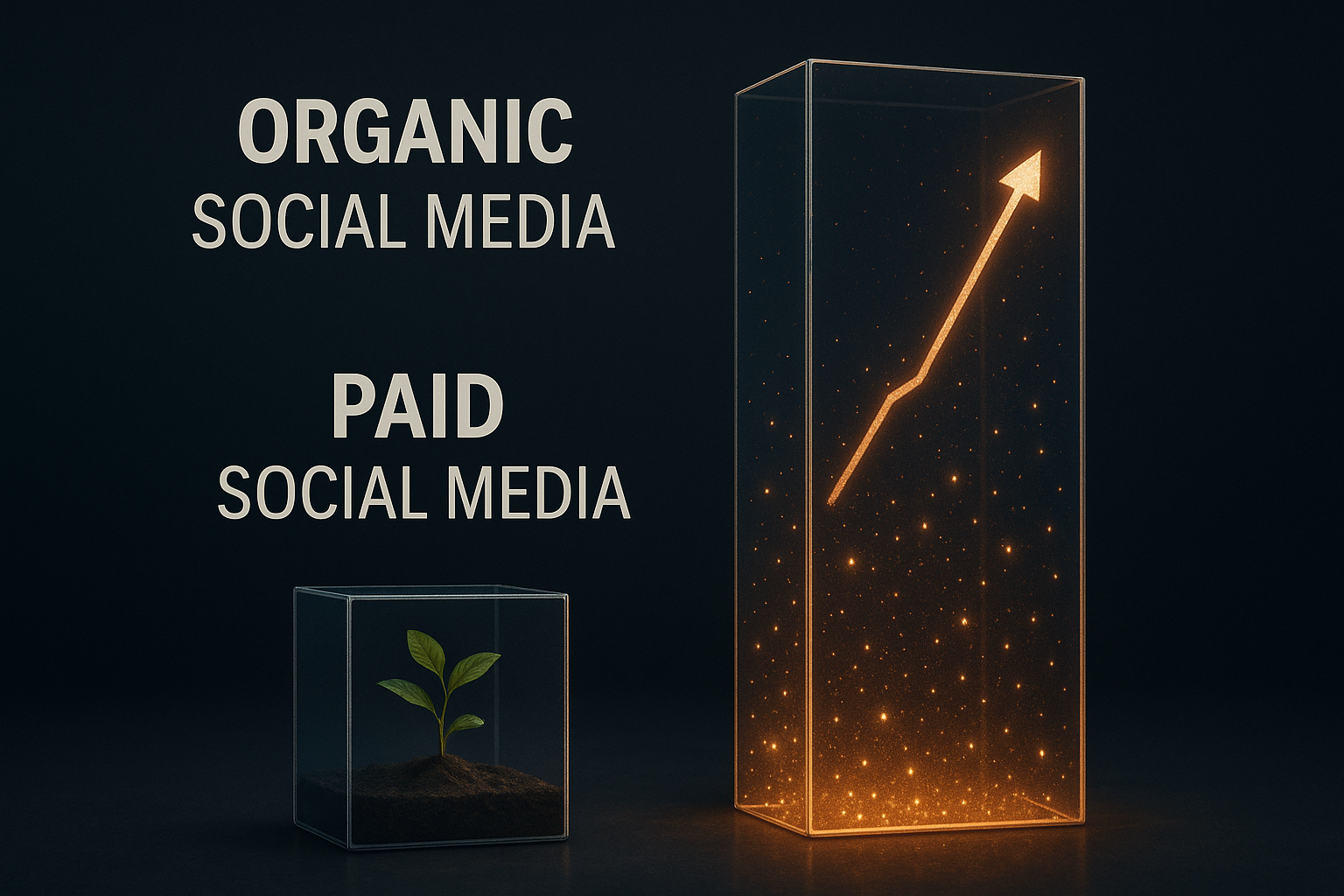
Organic vs Paid: Which One Is Better?
Neither is better alone.
Think of it this way:
- Organic is like planting seeds
- Paid is like adding fertilizer
The most successful brands combine organic content with smart social media advertising to grow faster and stronger.
ALSO READ
Why Social Media Marketing for Businesses is Important in 2026
How Social Media Advertising Works in 2026
In 2026, social media platforms rely heavily on AI-driven algorithms, user behavior, and content relevance. Organic reach alone is harder to scale, while paid advertising requires smarter targeting and creative testing.
Here’s how organic and paid social media marketing function today:
Organic Social Media in 2026
Organic content is evaluated based on:
- Meaningful engagement (comments, saves, shares)
- Consistency and content quality
- Audience interaction history
Organic social media marketing is now best used for:
- Building trust and brand authority
- Educating and nurturing your audience
- Supporting paid ad performance
Paid Social Media Advertising in 2026
Paid ads now depend on:
- Creative quality and relevance
- Audience signals and intent
- Landing page experience
Social media advertising works best when:
- Organic content is already performing well
- Ads amplify proven posts instead of random creatives
- Campaigns are optimized continuously, not set and forgotten
In modern social media advertising, organic content builds the foundation, and paid campaigns scale what already works.
ALSO READ
Seven Major Types of Content Marketing (With Examples)
Conclusion
Social media adsworks best when organic and paid strategies support each other.
Organic marketing builds trust and loyalty.
Paid advertising delivers speed and scale.
If you want long-term success, start with organic content and amplify it using paid campaigns. Balance both, track results, and improve over time.
That is how social media marketing truly works.
FAQs
A. Social media ads is the use of paid ads on social platforms to reach targeted audiences quickly
A. Yes. It builds trust, engagement, and long-term brand value
A. Not always. Many start with organic content and add paid ads when growth is needed.
A. Organic marketing is better for beginners because it is low-cost and builds skills.
A. Paid ads can show results within days, while organic efforts take weeks or months.