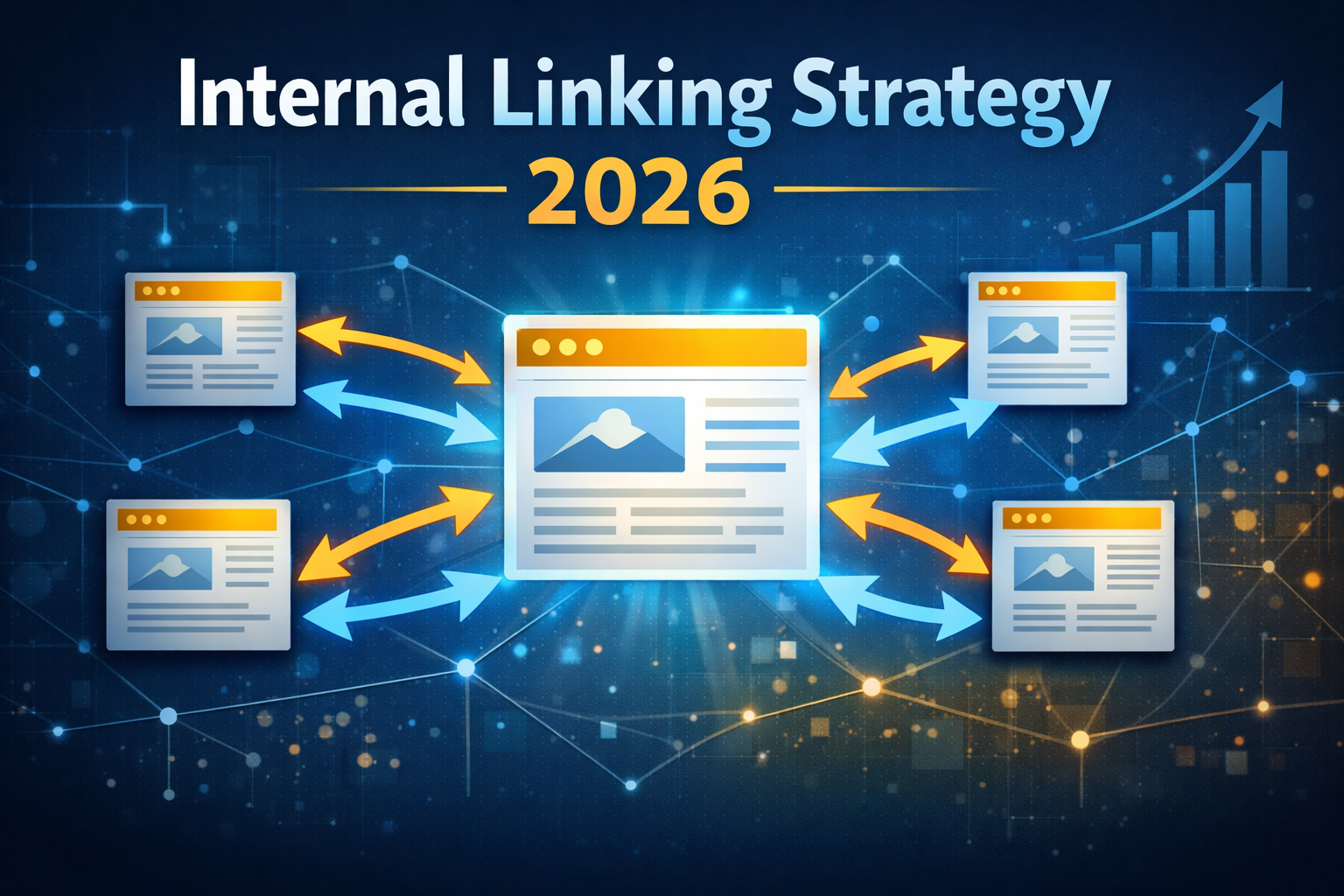
Internal linking SEO is one of the most powerful ranking strategies many websites still ignore.
Your content might be good. Your pages might be indexed. But if your site structure is weak, Google may struggle to understand which pages matter most.
That’s where internal linking becomes critical.
In 2026, Google relies heavily on site structure, topic connections, and content relationships. When pages link to each other correctly, search engines understand your website better—and rankings improve.
This guide explains a simple but powerful internal linking SEO strategy that helps websites gain visibility and authority.
Why Internal Linking SEO Still Matters in 2026
Search engines use links to discover and evaluate pages.
External links show popularity.
But internal links show structure and importance.
Google’s John Mueller has repeatedly confirmed that internal links help Google understand which pages are important within a website.
Internal linking helps Google:
- Discover new pages faster
- Understand topic relationships
- Pass authority between pages
- Improve crawling efficiency
Without a clear linking structure, even high-quality pages can stay invisible.
ALSO READ
How Small US Businesses Can Increase Website Traffic in 2026 (Proven Strategy)
Common Internal Linking SEO Mistakes
Many websites fail because they use internal links incorrectly.
Here are the most common mistakes.
1. Random Linking
Some sites add links without a plan.
This confuses search engines because it does not show clear topic relationships.
2. Using Weak Anchor Text
Bad example:
Click here
Good example:
Learn more about internal linking strategy for SEO
Anchor text should describe the linked page clearly.
3. Orphan Pages
An orphan page has no internal links pointing to it.
If Google cannot easily reach the page, rankings become difficult.
4. Linking Only From Navigation
Menus help users navigate, but Google needs contextual links within content too.
Contextual internal links carry stronger relevance signals.
Internal Linking SEO Strategy That Boosts Rankings
Now let’s look at the practical framework professionals use.
Step 1: Build Topic Clusters
Instead of publishing isolated articles, connect them through topic clusters.
Example:
Main topic: SEO Strategy
Supporting articles:
- internal linking strategy
- keyword research guide
- topical authority strategy
All these pages link to each other.
This structure builds topical authority.
Step 2: Link High Authority Pages to Important Pages
Some pages naturally gain more authority.
Examples include:
- homepage
- popular blog posts
- cornerstone guides
Use these pages to link toward important pages you want to rank.
This passes authority internally.
Step 3: Use Contextual Internal Links
Contextual links appear inside paragraphs.
These links are more powerful because they show strong relevance.
Example:
Instead of listing links at the bottom of a page, add them naturally within the text.
For example:
A strong internal linking SEO strategy helps search engines understand content relationships
This improves SEO signals.
Step 4: Maintain Logical Site Structure
A clear structure makes crawling easier.
A simple structure looks like this:
Homepage
→ Category pages
→ Blog articles
→ Supporting posts
Every important page should be reachable within three clicks or less.
Step 5: Audit Internal Links Regularly
As websites grow, internal links become messy.
Regular audits help maintain structure.
Check for:
- broken internal links
- orphan pages
- overlinked pages
- outdated anchor text
SEO tools or Google Search Console can help identify these issues.
ALSO READ
Difference Between On-Page, Off-Page, and Technical SEO
Real Example: How Internal Linking Improved Rankings
A marketing blog had over 80 articles but very little traffic.
After auditing the site, the team discovered several problems:
- many orphan pages
- weak anchor text
- no topic clusters
They implemented a structured internal linking SEO strategy.
Changes included:
- linking related articles
- building topic clusters
- adding contextual links
Within four months, organic traffic increased by 120%.
The content didn’t change much.
The site structure did.
Internal Linking Best Practices Checklist
If you want to improve rankings, follow this checklist.
- Link related content naturally
- Use descriptive anchor text
- Avoid orphan pages
- Create topic clusters
- Link from strong pages to important pages
Even small improvements in internal linking can have large SEO impact.
Conclusion
Many websites struggle with rankings even when their content is good. The missing piece is often internal linking SEO.
A strong internal linking strategy helps search engines understand your content, distribute authority, and discover important pages.
Remember these steps:
- Build topic clusters
- Use contextual internal links
- link high authority pages strategically
- maintain clear site structure
- audit links regularly
SEO success is rarely about one big change. Often it’s about fixing overlooked fundamentals.
And internal linking is one of the most powerful fundamentals you can improve today.
FAQs
A. Internal linking SEO refers to linking pages within the same website to help search engines understand structure and page importance.
A. Internal links distribute authority across pages, help search engines discover content, and strengthen topical relevance.
A. There is no fixed number. Focus on adding relevant internal links naturally where they help users and improve navigation.
A. Orphan pages are pages that have no internal links pointing to them, making them difficult for search engines to find and rank.
A. Yes. A strong internal linking structure improves crawlability and relevance, which can lead to better rankings and increased organic traffic.