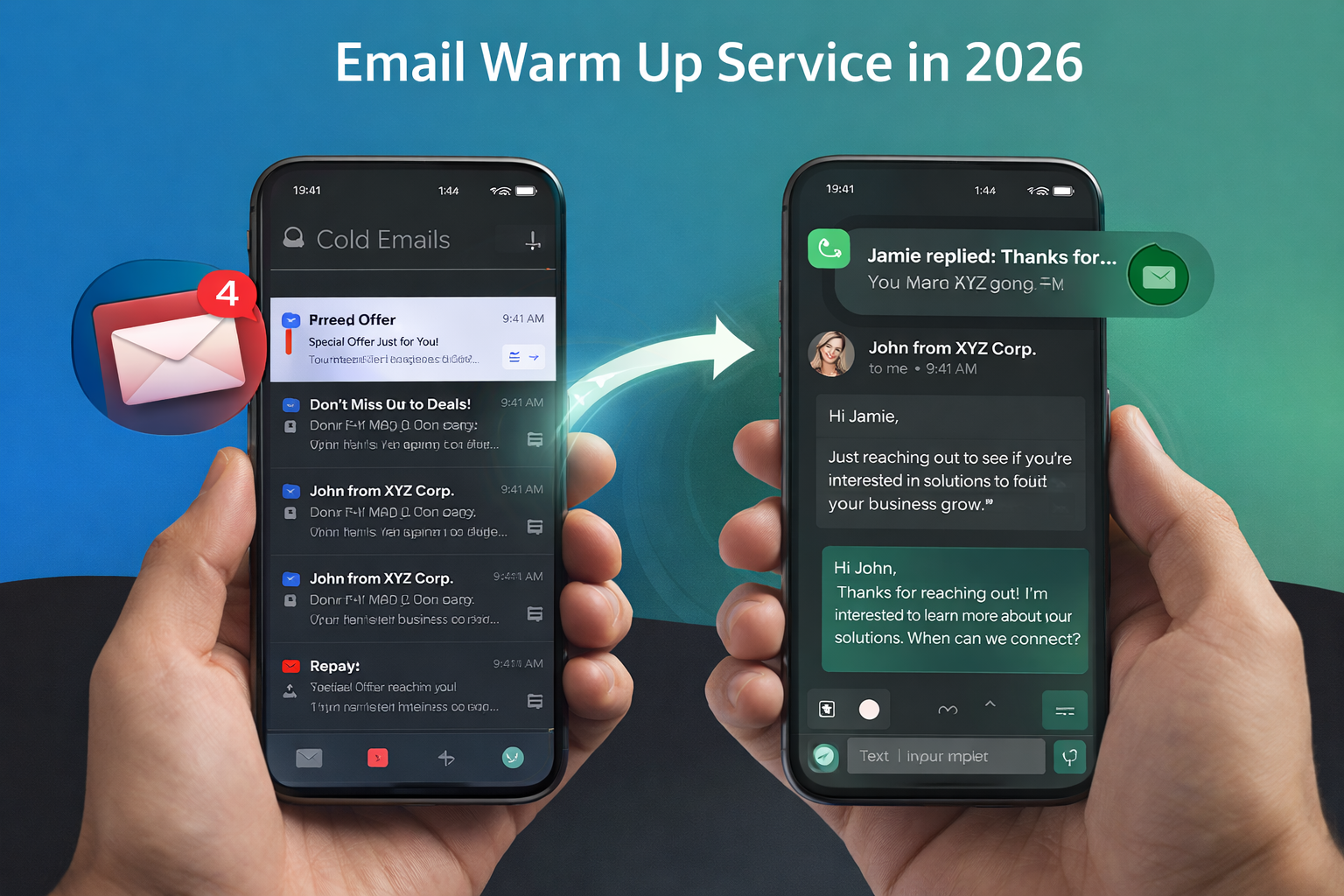
email warm up service is becoming essential in 2026 because many businesses struggle to get their emails into the inbox instead of the spam folder.
Imagine writing the perfect sales email, sending it to hundreds of prospects, and realizing most of them never even see it. That is the reality for many marketers today. The good news is that a proper email warm up service can fix this problem and dramatically improve deliverability.
When email systems trust your sender reputation, your messages reach real people—and that leads to more replies, more leads, and more sales.
Email Warm Up Service: Why Businesses Need It in 2026
An email warm up service gradually increases email activity to build trust with email providers like Gmail, Outlook, and Yahoo.
Email platforms track sender behavior. When a new domain suddenly sends hundreds of emails, it looks suspicious. That is why warm-up processes are important.
A proper email warm-up helps:
- build sender reputation
- improve inbox placement
- reduce spam flags
- increase email deliverability
Without warm-up, even legitimate sales emails may land in spam.
ALSO READ
Email Marketing Segmentation Strategy in 2026: How Small Businesses Double Revenue
Email Warm Up Service Mistakes That Hurt Deliverability
Many businesses try warming up emails but make mistakes that damage their sender reputation.
Email Warm Up Service Mistake: Sending Too Many Emails Too Quickly
Email providers monitor sudden spikes in activity.
If a new domain sends large volumes immediately, spam filters become suspicious.
A gradual increase in sending volume is always safer.
Email Warm Up Service Mistake: Ignoring Email Engagement Signals
Engagement signals are extremely important.
Email systems track actions such as:
- email opens
- replies
- clicks
A reliable email warm up service simulates natural engagement to improve credibility.
Using Unverified Email Domains
Sending emails from unverified domains increases the risk of spam filtering.
Businesses should always set up:
- SPF records
- DKIM authentication
- DMARC protection
These technical steps improve trust with email providers.
Email Warm Up Service Strategy: The 7-Day Warm-Up Plan
A successful email warm up service follows a gradual and consistent strategy. Here is a simplified 7-day plan used by many marketers.
Day 1–2: Start with Low Email Volume
Begin by sending a very small number of emails.
Example:
- 5–10 emails per day
- replies between accounts
- natural email conversations
This signals normal behavior to email providers.
Day 3–4: Increase Email Activity Slowly
At this stage, increase the sending volume gradually.
Focus on:
- natural conversations
- reply chains
- opening and reading emails
Engagement signals strengthen the domain reputation.
Day 5–6: Build Consistent Email Patterns
Consistency is key for sender reputation.
During these days:
- increase emails to 20–30 daily
- maintain replies and interactions
- avoid sudden spikes
This builds trust with spam filters.
Day 7: Prepare for Real Campaigns
By the seventh day, your email account should appear more trustworthy to email providers.
At this point you can begin sending real outreach campaigns.
However, it is still recommended to increase volume gradually.
Real Case Study: Small Business That Fixed Email Deliverability
A small SaaS startup launched a cold email campaign but faced a major problem.
Their metrics showed:
- inbox rate: 38%
- reply rate: 1%
Most emails were landing in spam.
The Warm-Up Solution
The company implemented an automated email warm up service before launching the next campaign.
The strategy included:
- daily warm-up conversations
- automated replies
- engagement simulation
Results After 30 Days
The results improved significantly:
- inbox rate increased to 84%
- reply rate tripled
- lead generation improved dramatically
This example shows how warming up email accounts can transform outreach campaigns.
Email Warm Up Service Tips for Better Results
Businesses can improve their results by following a few simple practices.
Use Dedicated Email Accounts
Cold outreach should not be sent from your primary business email.
Dedicated sending accounts reduce risk and protect your main domain reputation.
Keep Email Content Natural
Avoid spam triggers such as:
- excessive links
- aggressive sales language
- misleading subject lines
Natural conversations improve deliverability.
Monitor Email Deliverability Metrics
Successful email campaigns rely on data.
Track metrics such as:
- inbox placement rate
- open rates
- reply rates
Monitoring these numbers helps identify potential issues early.
ALSO READ
Why Your Email Subscribers Don’t Trust You in 2026 (And How to Fix It)
Conclusion
Email deliverability is one of the biggest challenges in modern outreach marketing. Without proper preparation, even valuable emails may never reach the inbox.
By using a reliable email warm up service, businesses can gradually build sender reputation and increase the chances of reaching real prospects.
A simple warm-up strategy combined with consistent engagement can dramatically improve campaign performance. When emails reach the inbox consistently, turning cold leads into buyers becomes much easier.
FAQs
An email warm up service gradually increases email activity and engagement to build sender reputation and improve inbox placement.
Spam filters have become more advanced. Warming up email accounts helps businesses avoid spam folders and improve email deliverability.
Most warm-up strategies take between 7 and 30 days depending on the email volume and campaign goals.
Yes. Small businesses using cold outreach or email marketing campaigns benefit greatly from improved deliverability and higher response rates.
Yes. When emails reach the inbox instead of spam folders, prospects are far more likely to open and respond to messages.