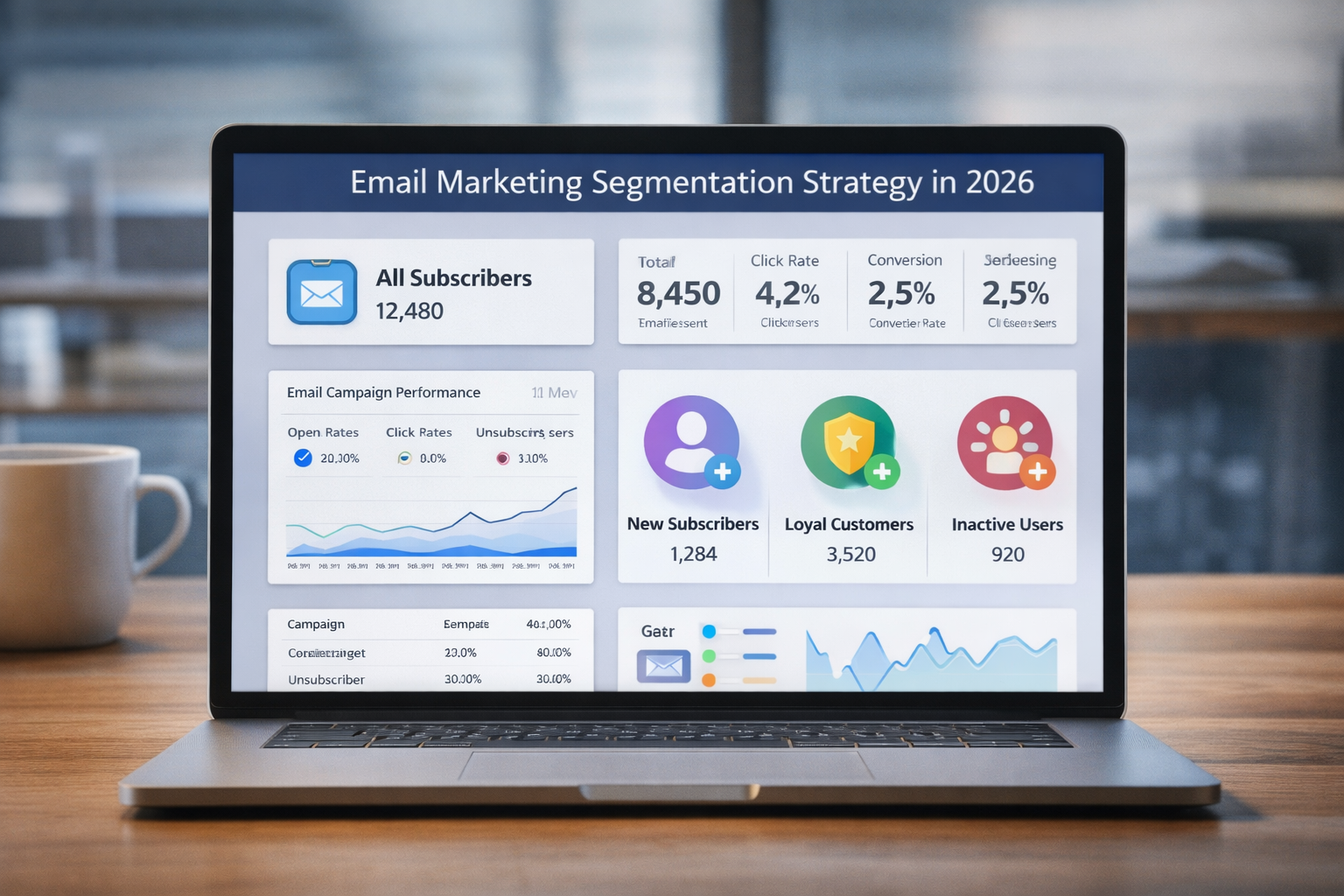
email marketing segmentation is one of the most powerful strategies small businesses use in 2026 to increase conversions and revenue.
Imagine sending the same email to thousands of subscribers and expecting everyone to respond the same way. It rarely works. Modern audiences expect relevant messages. That is why smart businesses rely on email segmentation strategy to send the right message to the right people.
When emails match the reader’s interests, engagement increases, trust grows, and sales follow.
Email Marketing Segmentation: Why Businesses Use It in 2026
email marketing segmentation means dividing your email list into smaller groups based on behavior, interests, or demographics.
Instead of sending one message to everyone, businesses create targeted emails for different audiences.
Common segmentation factors include:
- purchase history
- location
- browsing behavior
- customer interests
- engagement level
This approach improves email personalization and creates better user experiences.
ALSO READ
Why Your Email Subscribers Don’t Trust You in 2026 (And How to Fix It)
Email Marketing Segmentation Mistakes That Reduce Revenue
Many businesses try segmentation but still fail because of common mistakes.
Email Marketing Segmentation Mistake: Sending the Same Content to Every Segment
Creating segments is pointless if every group receives the same email.
Each segment should receive content tailored to their needs.
For example:
- new subscribers need education
- existing customers want offers
- inactive users need re-engagement campaigns
Email Marketing Segmentation Mistake: Ignoring Subscriber Behavior
Behavioral data is one of the most valuable sources of segmentation.
Examples include:
- pages visited
- products viewed
- links clicked in emails
When marketers ignore this data, they miss valuable opportunities to personalize campaigns.
Overcomplicating Segmentation
Some businesses create too many segments.
Too many categories make campaigns difficult to manage.
Instead, focus on a few high-impact segments that drive real results.
Email Marketing Segmentation Strategy That Works
A successful email segmentation strategy follows a clear process.
Step 1: Identify Key Customer Groups
Start by identifying the most important audience groups.
Examples include:
- new subscribers
- repeat customers
- inactive subscribers
- high-value customers
These groups often respond differently to email content.
Step 2: Personalize Email Content
Personalized content increases engagement dramatically.
Instead of generic emails, use:
- personalized subject lines
- product recommendations
- location-based offers
This helps readers feel the email was written specifically for them.
Step 3: Test and Optimize Campaigns
Successful marketers constantly test their strategies.
Common tests include:
- subject line variations
- send times
- different email offers
Data-driven decisions are key to improving segmentation results.
Real Case Study: How Segmentation Increased Revenue
A small online clothing store struggled with low email engagement.
Their emails were sent to all subscribers with the same promotions.
The Problem
Metrics showed:
- open rate: 11%
- click rate: 2%
Subscribers ignored most campaigns.
The Segmentation Strategy
The company introduced email segmentation strategy based on customer behavior.
Segments included:
- new subscribers
- repeat buyers
- customers interested in specific product categories
Each group received different offers and recommendations.
Results After Three Months
The results were dramatic:
- open rate increased to 31%
- click rate doubled
- email-driven sales increased significantly
Segmentation allowed the company to deliver relevant messages, which improved both engagement and revenue.
Email Marketing Segmentation Tips for Small Businesses
Small businesses can start segmentation without complicated tools.
Here are simple strategies that work.
Use Basic Customer Data
Start with simple segments such as:
- location
- purchase history
- engagement level
Even basic segmentation improves campaign performance.
Automate Segmented Campaigns
Marketing automation tools help businesses send targeted emails automatically.
Examples include:
- welcome sequences
- abandoned cart reminders
- product recommendation emails
Automation saves time and increases conversions.
Focus on Subscriber Value
Always prioritize helpful content.
Subscribers respond better to emails that offer:
- solutions
- insights
- useful resources
Building trust leads to long-term relationships and higher sales.
ALSO READ
Email Marketing Funnel in 2026: How US Brands Turn 500 Leads Into Paying Clients
Conclusion
In today’s competitive digital world, sending generic emails is no longer effective. Businesses must focus on personalization and relevance.
By implementing email segmentation strategy, small businesses can deliver targeted messages that match subscriber interests and behavior.
This strategy improves engagement, builds trust, and ultimately increases revenue. Even simple segmentation methods can transform email marketing results.
Start small, test your campaigns, and refine your strategy. The right segmentation approach can turn your email list into a powerful growth engine.
FAQs
Email marketing segmentation is the process of dividing an email list into smaller groups based on behavior, interests, or demographics to send more relevant messages.
Modern audiences expect personalized content. Segmentation helps businesses deliver relevant emails, which increases open rates, engagement, and conversions.
Small businesses can begin with simple segments such as location, purchase history, and subscriber activity.
Yes. Targeted emails often generate higher engagement and more sales compared to generic campaigns.
Many email marketing platforms offer segmentation features, including automation tools that allow businesses to send personalized campaigns efficiently.