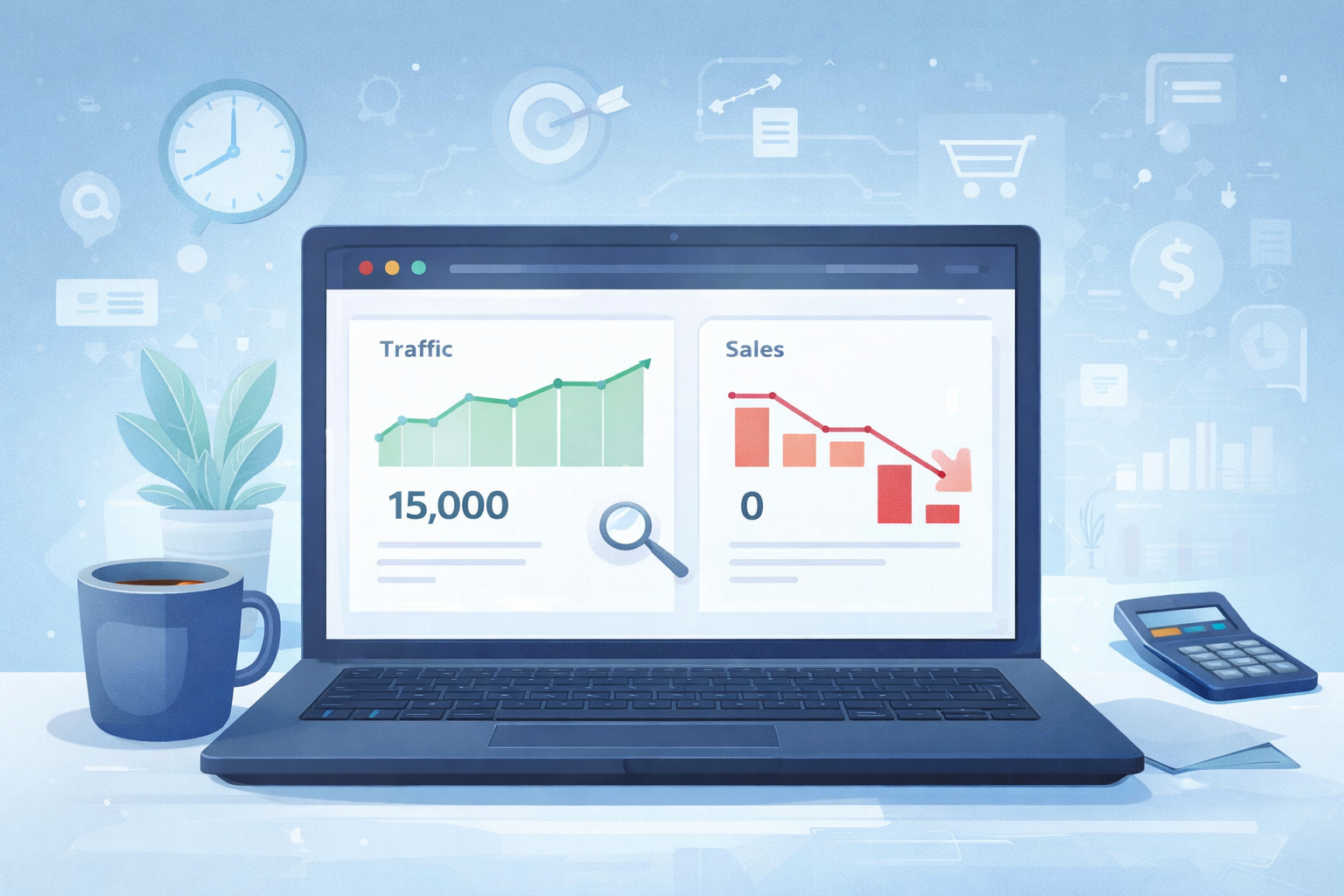
conversion rate optimization is one of the biggest challenges website owners face in 2026. You check your analytics and see hundreds or even thousands of visitors, but when you check your sales, nothing happens.
This frustrating gap between traffic and sales is common today. Many websites attract visitors but fail to turn them into customers. With the right strategy, you can fix this gap and start converting traffic into real revenue.
What Is Conversion Rate Optimization?
Conversion rate optimization (CRO) is the process of improving your website so more visitors take action.
That action could be:
- Buying a product
- Signing up for a newsletter
- Downloading a guide
- Filling out a contact form
For example, if 1,000 people visit your website and 20 buy something, your conversion rate is 2%.
Small improvements can make a big difference.
Example:
- 2% conversion → 20 sales
- 4% conversion → 40 sales
That means double the sales with the same traffic.
ALSO READ
Conversion Rate Optimization for Websites That Get Traffic But No Sales
Many websites attract visitors but fail to convert them. Here are the most common reasons.
1. Wrong Audience Traffic
Not all traffic is good traffic.
If visitors come from the wrong keywords or ads, they may not be interested in your offer.
Example:
Someone searching “free marketing tips” is not ready to buy an expensive course.
But someone searching “best SEO course for beginners” might be ready to purchase.
Targeting the right search intent is critical.
2. Weak or Confusing Call-to-Action (CTA)
Visitors need clear guidance.
If your page does not tell them what to do next, they will leave.
Good CTAs include:
- “Start Your Free Trial”
- “Download the Guide”
- “Get Instant Access”
Bad CTAs are vague or hidden.
A simple button change can increase conversions significantly.
3. Slow Website Speed
Speed matters more than ever.
Research shows that users often leave if a page takes more than 3 seconds to load.
A slow site creates:
- frustration
- poor user experience
- lower trust
To improve speed:
- compress images
- use faster hosting
- reduce heavy scripts
These improvements directly support conversion rate optimization.
4. No Trust Signals
People do not buy from websites they do not trust.
Visitors look for proof before they spend money.
Important trust signals include:
- customer reviews
- testimonials
- secure payment badges
- real photos or case studies
For example, an online store with 50 positive reviews will usually convert better than one with none.
5. Poor Landing Page Design
Your landing page should guide visitors step by step.
If the design is messy or confusing, visitors leave quickly.
Good landing pages include:
- a clear headline
- a simple explanation of benefits
- strong visuals
- one clear action button
Think of a landing page like a sales conversation. It should answer questions and remove doubts.
ALSO READ
SEO Content Writing in 2026: How US Freelancers Can Use AI Without Getting Penalized
Conversion Rate Optimization Example: Traffic Without Conversions
A small online business blog received 15,000 monthly visitors from search engines.
But sales were extremely low.
After analyzing the site, three problems appeared:
- no clear CTA
- slow page speed
- weak product explanation
After fixing these issues:
- the conversion rate increased from 0.6% to 2.5%
Traffic stayed the same, but revenue increased dramatically.
This is the power of conversion rate optimization.
Conversion Rate Optimization Strategies That Work in 2026
Here are proven CRO strategies that help turn traffic into customers.
1. Improve Your Value Proposition
Your visitors should quickly understand:
- what you offer
- who it helps
- why it is better
Use simple language and focus on benefits.
Example:
Instead of saying
“Advanced SEO Training Program”
Say
“Learn SEO and rank your website in 60 days.”
2. Optimize for User Experience
User experience affects conversion more than most people think.
Improve your website by:
- simplifying navigation
- removing distractions
- using readable fonts
- adding clear headings
When users feel comfortable, they stay longer and trust your brand.
3. Use Data and Testing
Successful websites constantly test new ideas.
Use A/B testing to experiment with:
- headlines
- CTA buttons
- page layouts
- images
Even small changes can increase conversions.
Data-driven decisions are a core part of conversion rate optimization.
4. Capture Leads Before Visitors Leave
Not every visitor is ready to buy immediately.
Instead of losing them, capture their contact information.
Effective lead magnets include:
- free guides
- checklists
- email courses
- discount codes
This helps build a relationship and increases future sales.
5. Focus on High-Intent Pages
Some pages naturally convert better than others.
Examples include:
- product pages
- comparison articles
- pricing pages
Optimize these pages first.
They often generate the fastest results in website conversion rate improvements.
Conversion Rate Optimization Key Lesson for Website Owners
Traffic alone does not create revenue.
What matters is turning visitors into customers.
By improving trust, user experience, and messaging, your website can convert more visitors without increasing traffic.
This is why conversion rate optimization is one of the most powerful digital marketing strategies in 2026.
Conclusion
Many website owners chase more traffic, thinking it will solve their sales problem. In reality, the real solution is conversion rate optimization.
By improving your call-to-action, page design, trust signals, and user experience, you can turn existing visitors into paying customers.
Instead of asking, “How do I get more traffic?” start asking, “How can I convert the traffic I already have?”
Small improvements today can lead to big growth tomorrow.
FAQs
A. Conversion rate optimization means improving your website so more visitors take action, such as buying a product or signing up for an email list.
A. This usually happens because of poor targeting, weak calls-to-action, slow website speed, or lack of trust signals on your pages.
A. You can improve your website conversion rate by optimizing landing pages, improving user experience, adding trust signals, and using clear calls-to-action.
A. Most websites have a conversion rate between 2% and 5%. However, well-optimized websites can achieve higher rates.
A. Often yes. Improving conversions means you generate more sales from the same traffic, which can be faster and more cost-effective.