Content marketing vs digital marketing sounds simple — until you try to use them and see no results.
Many people spend months creating content but get no traffic. Others run ads and burn money without conversions.
The problem isn’t the strategy. It’s choosing the wrong approach at the wrong time.
In this guide, I’ll explain the real difference between content marketing and digital marketing — and when each one actually works based on real scenarios.
Why Most People Get This Wrong
Most beginners think content marketing and digital marketing are two completely different things.
They’re not.
Content marketing is a part of digital marketing — but using only one without a proper strategy leads to failure.
Here’s where people go wrong:
- They expect content to bring instant results
- They run ads without strong content
- They don’t match the strategy with their goal
This confusion is why most people don’t see results — even after putting in effort.
What is Digital Marketing?
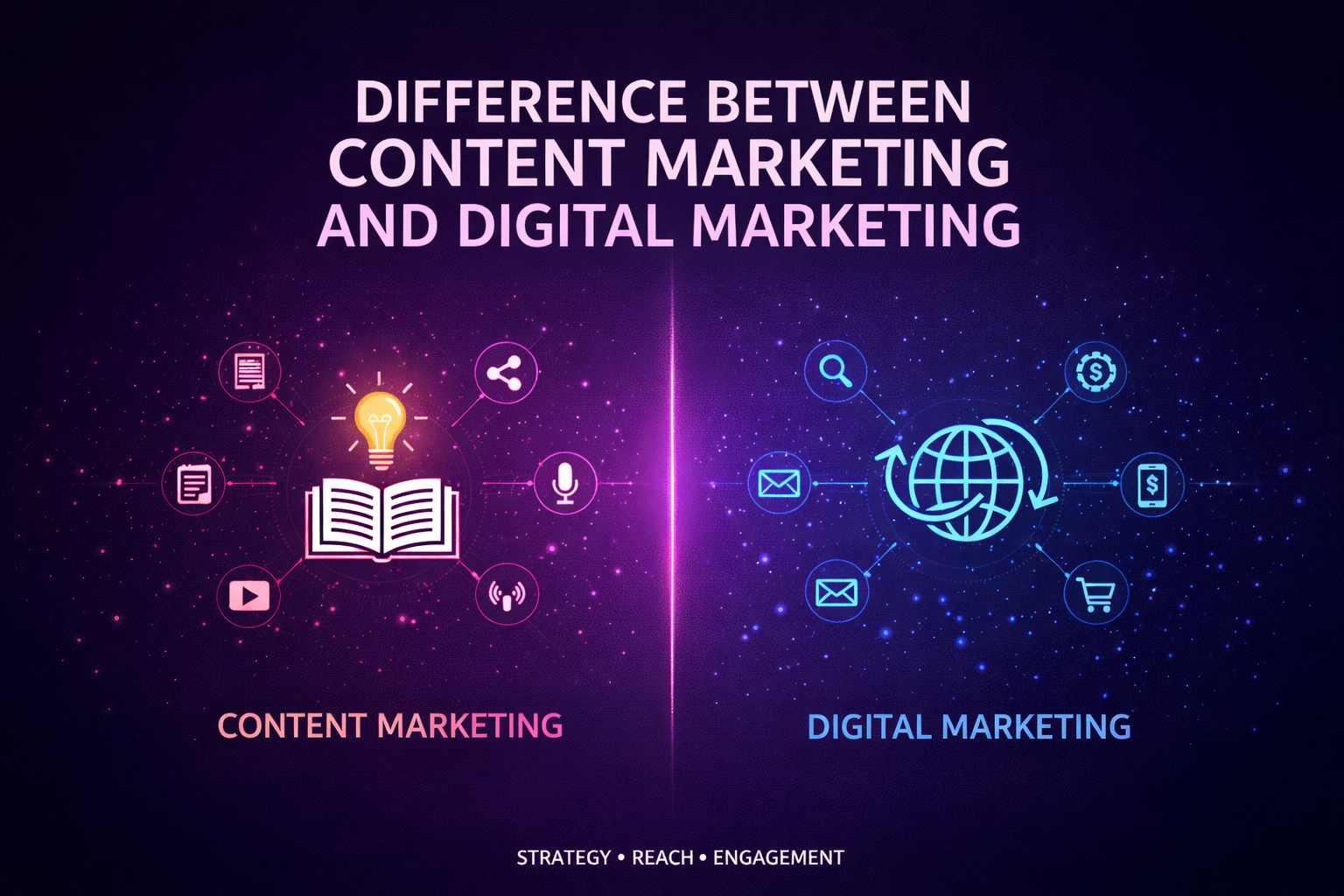
Digital marketing is like a full toolbox for promoting your business online. It includes every online method to reach your audience and increase sales.
Key channels of digital marketing include:
- Social media marketing (Facebook, Instagram, LinkedIn)
- Email marketing
- Search engine optimization (SEO)
- Pay-per-click advertising (PPC)
- Online PR and influencer marketing
Think of digital marketing as the highway, while different channels are the lanes. Your brand can drive traffic, generate leads, and increase sales using this highway.
This usually happens because of poor strategy — something I’ve explained in detail here.
Seven Major Types of Content Marketing (With Examples)
What is Content Marketing?
Content marketing is one of the lanes on the digital marketing highway. It focuses on creating valuable content that attracts, educates, and retains your audience. Instead of directly selling, it builds trust and loyalty over time.
Examples of content marketing:
- Blog posts and articles
- Videos and webinars
- Infographics and eBooks
- Podcasts and social media posts
For instance, a fitness brand writing a weekly blog about workout tips isn’t directly selling its products. Instead, it builds trust, making readers more likely to buy their products later.
Content Marketing vs Digital Marketing in 2026: What Has Changed
In 2026, the gap between content marketing and digital marketing has become clearer as audience behavior continues to evolve. Digital marketing now relies heavily on data, automation, and performance tracking across multiple platforms, while content marketing emphasizes depth, relevance, and real user value.
Search engines and social platforms increasingly prioritize helpful content created with real experience and intent. As a result, content marketing plays a larger role in supporting SEO, email campaigns, social media, and even paid advertising.
Another key change is longevity. Digital marketing tactics such as ads may bring quick traffic, but content marketing delivers long-term visibility and trust when done consistently.
Because of these shifts, businesses in 2026 succeed by aligning content marketing as the foundation and digital marketing as the distribution and amplification system.
What Actually Works (Real Scenario)
When I focused only on content, I expected traffic quickly — but nothing happened.
Growth was slow, and results were frustrating.
Then I combined both:
- Created problem-solving content
- Optimized it for SEO
- Used digital marketing channels to distribute it
That’s when results started coming.
This is the part most guides don’t explain.
Content without distribution is invisible. Digital marketing without content is empty.
Key Differences Between Content Strategy and Digital Strategy
| Feature | Content Strategy | Marketing Strategy |
|---|---|---|
| Goal | Educate, inform, and engage | Promote and sell products/services |
| Focus | Quality content | Multiple channels & strategies |
| Approach | Long-term relationship building | Short-term & long-term strategies |
| Example | Blog, video tutorials | Social media ads, email campaigns |
Tip: You cannot have effective marketing strategy without content strategy. Content is the fuel that powers all digital channels.
Why Content Strategy Matters in Marketing
- Builds Trust: High-quality content positions your brand as an expert.
- Boosts SEO: Search engines love fresh and relevant content.
- Generates Leads: Engaging content attracts potential customers.
- Supports Other Channels: Social media posts, email campaigns, and ads work better with strong content.
In short, content strategy is the backbone of any marketing strategy. Without it, even the best ad campaigns may fail to connect with your audience.
How to Integrate Content in Your Digital Strategy
- Identify your audience and their needs.
- Create content that solves problems or entertains.
- Use multiple channels to distribute your content.
- Analyze results and refine your strategy regularly.
For example, a travel agency can write blog posts about destinations, share videos on Instagram, and use email campaigns to convert readers into customers.
This usually happens because of poor strategy — something I’ve explained in detail here.
What Is Content Marketing | Why It Matters in 2026
Conclusion
Understanding the difference between Content strategy and Marketing strategy is crucial for any business. While marketing strategy covers all online promotion strategies, content strategy focuses on creating meaningful, valuable content that builds trust.
Invest in content strategy vs marketing strategy today, and you’ll see better engagement, stronger brand authority, and higher conversions. Remember, content is not just king it’s the foundation of your digital kingdom.
FAQs
A. Digital marketing is the overall strategy for online promotion, while content marketing focuses on creating valuable content to engage your audience.
A. It builds trust, boosts SEO, generates leads, and supports campaigns across social media, email, and ads.
A. Technically yes, but results will be weaker because content fuels engagement and conversions across all channels.
A. Blogs, videos, social media posts, infographics, podcasts, and eBooks are all content marketing examples.
A. Because quality content drives traffic, builds trust, and enhances the performance of all digital channels.