AI writing prompt mistakes can turn a simple task into a frustrating experience. You ask an AI tool for one thing, but the result comes back completely different.
Many bloggers and content creators face this problem. They expect accurate results, yet the AI produces confusing or irrelevant content.
The truth is simple: most problems with AI tools are not caused by the technology itself. They happen because the AI writing prompt is unclear or poorly structured. Once you learn how prompt optimization works, AI tools become far more reliable.
What Is an AI Writing Prompt?
An AI writing prompt is the instruction you give an AI tool to generate content.
It tells the system:
- what topic to write about
- what format to use
- how long the content should be
- who the audience is
In simple terms, a prompt is like giving directions. If the directions are vague, the result will likely be wrong.
This is why prompt engineering has become an important skill for bloggers and marketers.
ALSO READ
AI Writing Tools vs Human Writers Which Is Better? (2026 Guide)
Why AI Writing Tools Misinterpret Prompts
AI tools analyze prompts and generate responses based on patterns in their training data. If a prompt lacks clarity, the AI must guess what the user wants.
That guess is often incorrect.
Here are the most common reasons this happens.
1. The AI Writing Prompt Is Too Vague
A vague prompt gives the AI little guidance.
Example of a weak prompt:
Write an article about blogging.
This prompt does not specify:
- audience
- tone
- length
- structure
The AI must fill in the gaps, which often leads to unexpected results.
2. Missing Context Confuses AI Tools
AI tools rely heavily on context. Without enough detail, the system may misunderstand the goal.
For example:
Write about SEO tools.
The AI might generate:
- a list of tools
- a beginner guide
- a product review
Because the prompt lacks context, the result may not match the user’s expectations.
3. Multiple Instructions in One Prompt
Many users overload prompts with too many instructions.
For example:
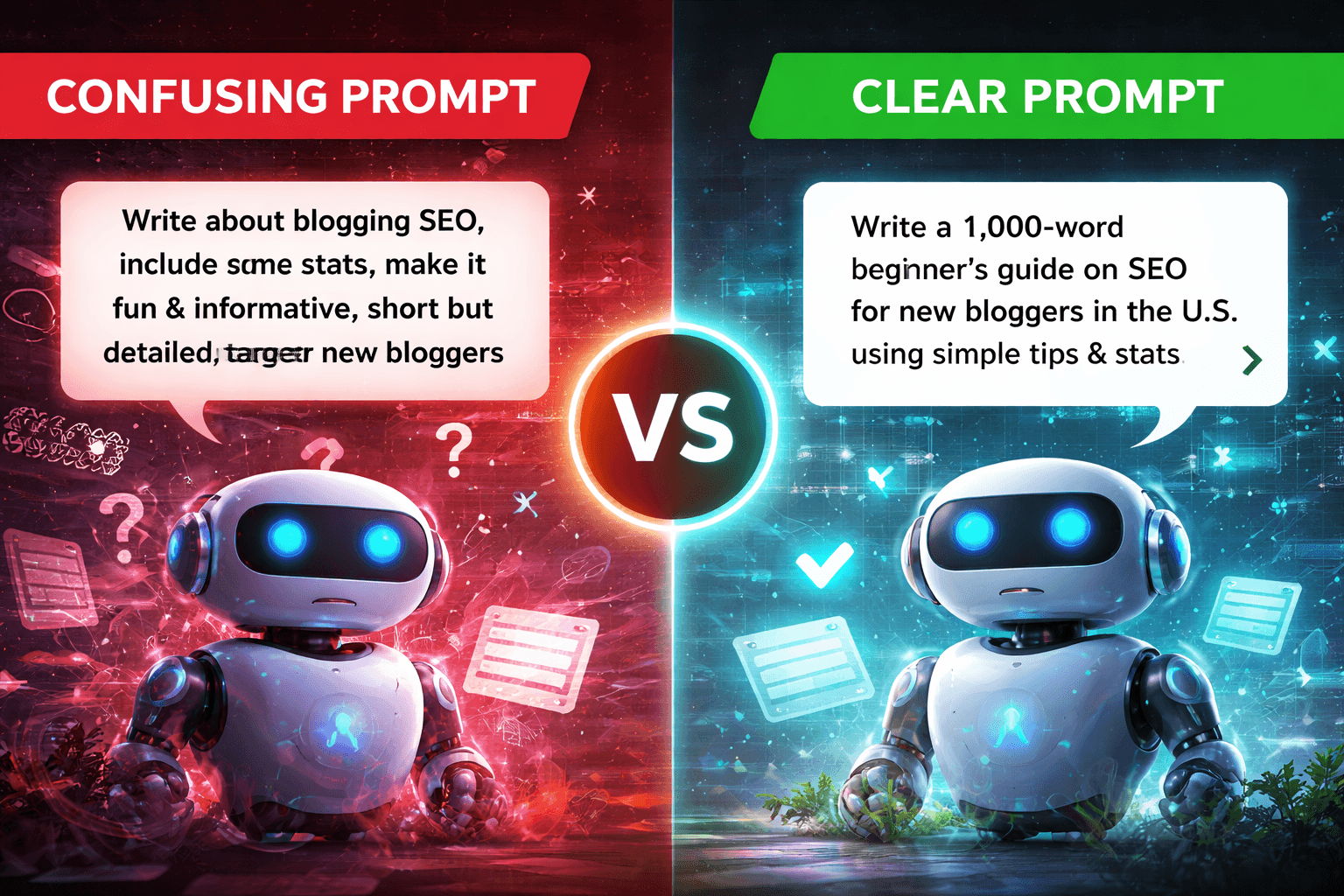
Write a blog post about SEO tools, include statistics, keep it short, make it beginner friendly, and target advanced marketers.
These mixed instructions can confuse the AI model.
ALSO READ
Best AI Powered Writing Assistant: What Are AI Writing Tools and How Do They Work?
Case Study: How Prompt Optimization Fixed the Problem
A U.S. blogger who writes about digital marketing experienced repeated problems with AI-generated articles.
The blogger used this prompt:
Write a blog post about content marketing.
The AI generated a long article that did not match the blog’s style or audience.
Instead of abandoning the AI tool, the blogger improved the AI writing prompt.
The optimized prompt looked like this:
Write a 1,000-word blog post for beginner bloggers in the U.S. explaining content marketing basics. Use short paragraphs, bullet points, and simple language.
The results improved immediately.
The AI produced:
- clearer structure
- better readability
- content that matched the target audience
Editing time dropped significantly. This simple change demonstrated how prompt optimization can dramatically improve AI-generated content.
How Bloggers Optimize an AI Writing Prompt
Experienced bloggers follow simple rules when writing prompts.
1. Be Specific About the Task
Clear instructions reduce confusion.
Instead of:
Write about SEO.
Use:
Write a beginner-friendly guide explaining SEO basics for small business owners in the U.S.
2. Define the Content Structure
Adding structure improves the output.
Example:
Write a blog post with five headings, bullet points, and a short conclusion.
This helps AI tools organize content properly.
3. Specify the Audience
Audience clarity improves relevance.
For example:
- beginner bloggers
- digital marketers
- small business owners
AI tools perform better when they know who the content is for.
4. Set Length and Tone
Length and tone help AI generate content that fits your needs.
Example prompt:
Write a 900-word friendly blog post with simple language and short paragraphs.
Simple Formula for Writing Better AI Prompts
Bloggers often use a basic formula to improve results.
Topic + Audience + Structure + Length
Example:
Write a 1,000-word beginner guide for bloggers explaining how to improve website SEO using simple language and clear headings.
This approach reduces misunderstandings and improves output quality.
Why Prompt Optimization Is a Valuable Skill
Prompt optimization is becoming an essential skill for modern content creators.
It helps bloggers:
- produce better AI-generated content
- reduce editing time
- maintain consistent quality
- improve productivity
Instead of blaming the tool, successful writers focus on improving the AI writing prompt itself.
Conclusion
Many people think AI writing tools make mistakes randomly. In reality, the problem often starts with the AI writing prompt.
When prompts are vague or unclear, AI tools must guess what the user wants. This leads to inaccurate or confusing results.
The solution is simple: write better prompts. By adding context, structure, and audience details, bloggers can dramatically improve the quality of AI-generated content.
When used correctly, AI writing prompts become powerful tools that help writers create faster, clearer, and more effective content.
FAQs
AI tools misunderstand prompts when instructions are vague or lack context. Clear prompts help the AI produce more accurate results.
An AI writing prompt is the instruction given to an AI tool to generate content, including topic, audience, structure, and tone.
You can improve prompts by adding clear details about the topic, target audience, structure, and desired content length.
Prompt optimization is the process of refining prompts so AI tools produce better and more accurate responses.
Yes. A well-written AI writing prompt helps ensure the AI generates relevant, clear, and useful content.