An AI video editor can cut clips, add captions, and even create entire videos automatically. Tasks that once took hours can now be done in minutes.
But can an AI video editor really replace human video editors? To answer this question, we ran a real experiment in 2026 using several popular AI editing tools. The results were surprising.
What Is an AI Video Editor?
An AI video editor is software that uses artificial intelligence to automate video editing tasks.
Instead of editing footage manually, these tools can:
- trim clips automatically
- remove silence from recordings
- generate captions and subtitles
- add transitions and music
- adjust colors and lighting
Many creators now use AI video editing tools, automated video editors, and AI video software to speed up production.
ALSO READ
How AI Is Revolutionizing Video Creation in 2026
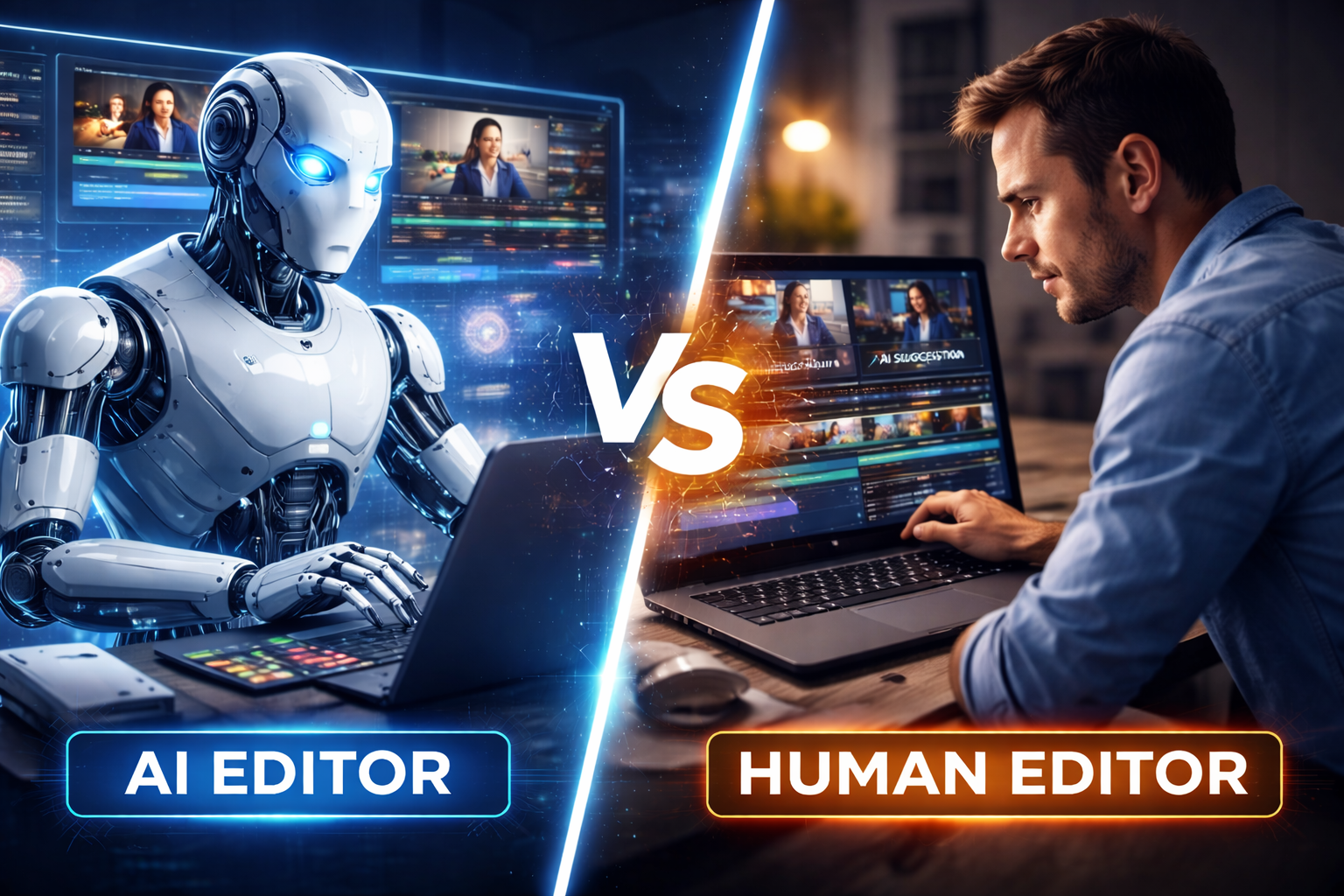
The Real Experiment: AI vs Human Editing
To test the capability of an AI video editor, we compared two workflows.
Test Setup
We used the same raw footage and created two videos:
- Video edited using an AI tool
- Video edited manually by a professional editor
Both videos were 3 minutes long and designed for social media marketing.
Experiment Results
The differences were clear.
AI edited video
- finished in 6 minutes
- basic transitions and cuts
- captions generated automatically
Human edited video
- took about 40 minutes
- better storytelling flow
- smoother pacing and timing
The AI video editor was faster, but the human editor produced a more polished final video.
Where AI Video Editors Perform Well
AI editing tools are extremely helpful for certain tasks.
Best use cases
- trimming long recordings
- creating social media clips
- auto-caption generation
- removing filler words
For repetitive tasks, an AI video editor can save a lot of time.
Where AI Video Editors Still Struggle
Despite impressive automation, AI still has limitations.
Common weaknesses
- weak storytelling decisions
- poor scene selection
- limited creative direction
- robotic transitions
Video editing is not just technical work. It also requires creativity and emotional understanding.
Real Example From Content Creators
A YouTube creator tested an AI video editor to produce daily short videos.
The AI tool handled tasks such as:
- cutting silent sections
- generating subtitles
- adding background music
However, the creator still edited the final video manually to improve pacing and storytelling.
This shows that AI tools work best when combined with human creativity.
How Creators Use AI Video Editors Today
Most professionals do not replace editors with AI. Instead, they combine both.
Typical workflow
- AI handles repetitive editing tasks
- The human editor reviews and improves the video
- Final adjustments enhance storytelling and quality
This hybrid approach produces the best results.
ALSO READ
What Are AI Video Tools? A Beginner’s Guide
Conclusion
The rise of the AI video editor has changed the video production process. These tools can automate many editing tasks and dramatically speed up workflow.
However, our real experiment shows that AI cannot fully replace human video editors. Creativity, storytelling, and emotional timing still require human judgment.
The future of video editing is not AI versus humans. Instead, the most successful creators use an AI video editing software as a powerful assistant while humans guide the creative process.
FAQs
An AI video editor is software that uses artificial intelligence to automatically edit videos by trimming clips, adding captions, and applying effects.
No. AI can automate basic tasks, but human editors are still needed for storytelling, creativity, and final adjustments.
Yes. Many AI editing tools are beginner-friendly and help users create videos quickly without advanced editing skills.
Popular options include Descript, Runway ML, Pictory, and Adobe Premiere Pro’s AI features.
Yes. Many professionals use AI tools to speed up repetitive editing tasks while maintaining creative control over the final video.