
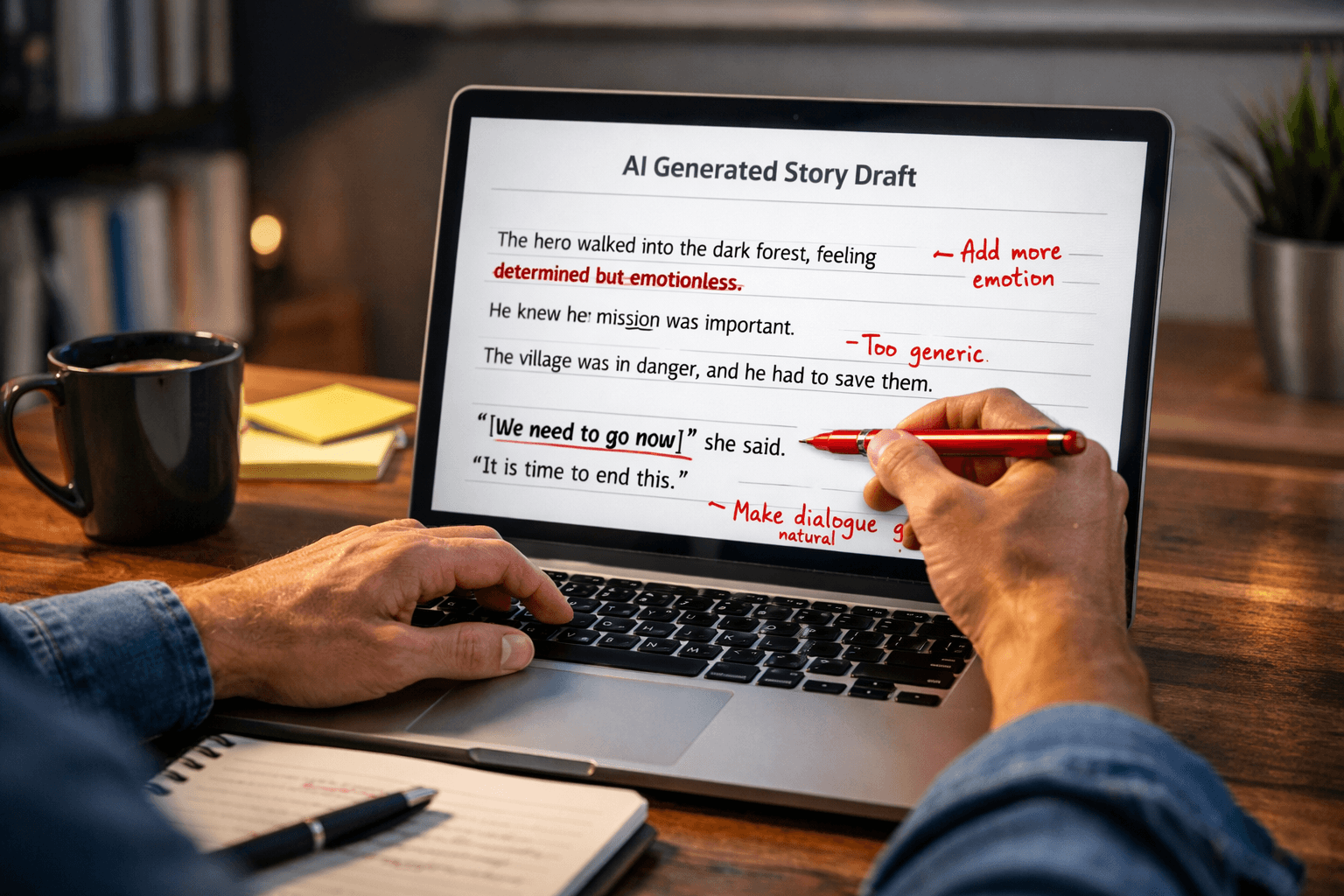
AI storytelling promises fast and easy content creation. But many writers feel disappointed after reading the results.
The story may be grammatically correct, yet it feels cold, robotic, and predictable. If you have tried AI content generation and felt something was missing, you are not alone.
Writers across the U.S. face the same issue. The good news is that once you understand the problem, fixing it becomes much easier.
What Is AI Storytelling?
AI storytelling means using artificial intelligence tools to generate stories, scripts, or creative content.
These tools analyze large datasets of books, blogs, and online text. Then they predict the next word based on patterns.
This technology helps writers:
- generate story ideas
- create outlines
- overcome writer’s block
- draft content faster
However, storytelling is more than predicting words. It requires emotion, experience, and creativity.
ALSO READ
AI Tools for Content Writing: Benefits in 2026
Why AI Storytelling Struggles With Creative Writing
AI writing tools are powerful, but storytelling presents unique challenges.
Here are the most common reasons why AI stories often feel unnatural.
1. AI Lacks Real Human Experience
Great stories often come from personal experiences.
A novelist may write about grief after losing a loved one. A screenwriter may build a character inspired by someone they met.
AI does not experience life. It only learns patterns from existing text.
This is why AI storytelling sometimes lacks emotional depth.
2. AI Uses Predictable Story Patterns
AI models generate text based on probability. They often choose the most common patterns.
This leads to stories that feel repetitive.
Typical problems include:
- cliché plot twists
- predictable endings
- generic characters
Readers who consume modern books, movies, and streaming content quickly notice these patterns.
3. AI Struggles With Emotional Dialogue
Dialogue is a key part of storytelling.
AI-generated dialogue may sound technically correct but emotionally weak.
Example:
AI version
“I feel sad that you are leaving.”
Improved storytelling version
“You can’t just leave like this,” she said, fighting back tears.
The second version creates a stronger emotional connection with the reader.
Real Scenario: How Writers Improve AI Storytelling
Many professional writers now combine AI tools with human creativity.
For example, a freelance writer in New York used AI to generate a short story outline.
The AI created:
- a basic plot
- three main characters
- a simple conflict
However, the story lacked emotion.
The writer improved it by:
- rewriting emotional scenes
- adding realistic dialogue
- developing deeper character motivations
The result was a story that felt far more human and engaging.
This approach shows that AI content generation works best when guided by real writers.
ALSO READ
Best AI Powered Writing Assistant: What Are AI Writing Tools and How Do They Work?
Practical Ways Writers Fix AI Storytelling
If your AI-generated stories feel robotic, try these proven strategies.
1. Write Better Prompts
Clear prompts lead to better results.
Instead of writing:
Write a story about a hero.
Try a more detailed prompt:
Write a suspense story about a retired firefighter in Chicago who must save his neighborhood during a dangerous wildfire.
Specific prompts give AI stronger direction.
2. Add Human Emotion
AI drafts often need emotional improvement.
Focus on:
- character thoughts
- body language
- internal conflict
These details make stories feel authentic.
3. Rewrite Dialogue
Many writers edit AI dialogue completely.
Good dialogue should:
- sound natural
- reveal personality
- create tension
Small changes can transform a flat scene into a powerful moment.
4. Use AI for Brainstorming
AI storytelling works best as a creative partner.
Use AI tools to:
- generate ideas
- explore story concepts
- build outlines
Then apply your own creativity to finish the story.
The Future of AI Storytelling
Technology continues to evolve rapidly.
Researchers and developers are improving AI models to better understand narrative structure and emotional context.
However, storytelling will always rely on human imagination.
Writers bring empathy, culture, and personal experiences that machines cannot replicate.
Conclusion
Many writers struggle with AI storytelling because AI lacks real-life experiences, emotional understanding, and creative intuition.
But the solution is simple. Use AI as a tool rather than a replacement for human creativity.
When writers combine AI-generated ideas with human emotion and storytelling skills, AI content generation becomes more engaging, natural, and powerful.
The future of storytelling will not be AI alone. It will be humans and AI working together.
FAQs
AI storytelling often feels robotic because AI predicts words based on patterns rather than real emotions or life experiences.
.
No. AI can assist with ideas and outlines, but human creativity and emotional depth remain essential for powerful storytelling.
Writers can improve AI content generation by writing better prompts, adding emotional details, and editing AI-generated dialogue.
Yes. Beginners can use AI tools to generate ideas, learn story structure, and overcome writer’s block.
Yes. AI models continue to evolve, but human creativity will always play a critical role in meaningful storytelling.