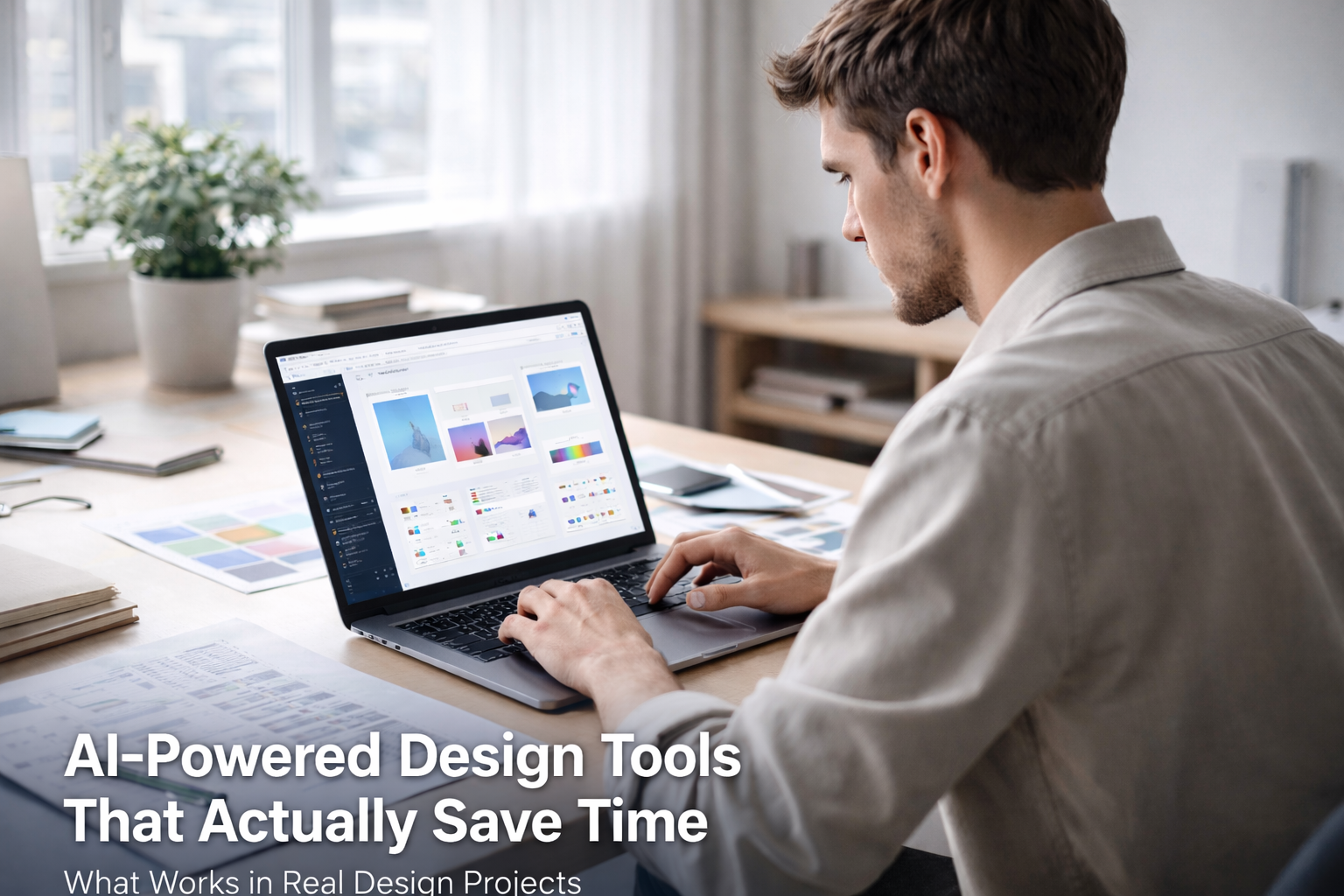
Deadlines are tighter than ever, but design work keeps growing.
Many designers try new tools every week, yet still feel behind. So the real question is simple: which ai powered design tools actually save time in real projects?
This article is based on real project use, not demos.
No hype. No long tool lists. Just what works—and why.
Why Designers Feel Overwhelmed by AI Tools
AI tools promise speed. But most designers face the opposite.
Common problems include:
- Too many tools to test
- Extra cleanup work after AI output
- Broken brand consistency
- Learning time that kills momentum
That’s why ai powered design tools only help when used the right way.
ALSO READ
How Canva’s AI Performs in Real Design Projects (My Experience)
What “Saving Time” Really Means in Design Work
Saving time does not mean:
- One-click perfect designs
- No human input
Real time savings mean:
- Faster first drafts
- Less repetitive work
- Quicker revisions
- Clear starting points
The best ai powered design tools focus on support, not replacement.
AI-Powered Design Tools That Work in Real Projects
Below are patterns we’ve seen across real design workflows.
This is not a “top 20 tools” list. It’s about how tools are used.
1. AI for First Drafts (Biggest Time Saver)
AI works best at the start.
Designers use AI to:
- Generate layout ideas
- Create rough visuals
- Explore styles fast
This removes the “blank canvas” problem.
Human designers still polish the final output.
2. AI for Repetitive Tasks
Repetitive work eats time.
Good ai powered design tools help with:
- Background removal
- Image resizing
- Asset variations
These tasks don’t need creativity.
AI handles them well and saves hours weekly.
3. AI for Inspiration, Not Final Design
Designers trust AI more as a helper.
AI is used to:
- Explore color ideas
- Test typography combinations
- Get quick mood-board visuals
Final decisions stay human.
This balance keeps quality high.
Where AI Design Tools Often Fail
Being honest builds trust.
AI struggles with:
- Brand consistency
- Complex design systems
- Emotional storytelling
That’s why real teams never rely fully on AI.
They use it inside clear workflows.
How Real Designers Use AI Without Wasting Time
Here’s what successful teams do differently:
- They limit tools (2–3 max)
- They define brand rules first
- They use AI only at specific steps
- They always review outputs
This approach makes AI-driven design tools effective, not distracting.
AI Design Tools vs Traditional Workflow
| Task | Traditional | With AI |
|---|---|---|
| First concept | Slow | Fast |
| Revisions | Manual | Assisted |
| Repetitive work | Time-heavy | Automated |
| Final polish | Human | Human |
AI speeds the process but humans keep control.
Are AI-Powered Design Tools Worth Using in 2026?
Yes but only with the right mindset.
They are worth it if you:
- Work on tight deadlines
- Handle repeated design tasks
- Need fast ideas, not final art
They are not worth it if you:
- Expect perfect results
- Skip brand guidelines
- Replace human review
Used wisely, AI-driven design tools save real time.
ALSO READ
Adobe Photoshop Graphic Design vs AI Tools: Best Choice in 2026
Conclusion
AI is not here to replace designers.
It is here to remove friction.
The designers who win in 2026:
- Use AI early in the process
- Keep humans in control
- Focus on speed and quality
If you want faster projects without losing standards,
start using ai powered design tools with purpose—not pressure.
FAQs
A. These are tools that use AI to assist with design tasks like layouts, images, and repetitive work.
A. No. They support designers by speeding up tasks but still need human decisions.
A. Yes, when used for drafts, variations, and repetitive tasks—not final delivery.
A. They reduce manual work, speed up ideation, and simplify revisions.
A. Some are helpful for basic tasks, but professional results still need human control.