AI marketing campaigns promise smarter targeting, automated ads, and higher conversions. Many businesses launch AI marketing campaigns expecting instant results.
But the reality is often different. Some campaigns get almost no clicks, poor conversions, and wasted budget. This happens more often than people admit. Many AI marketing campaigns fail because marketers trust automation without understanding strategy.
After working with several digital marketing teams and testing AI tools in real projects, one thing is clear: AI can boost campaigns but only when used correctly. In this guide, we’ll explore why AI marketing campaigns fail and how experts fix them in 2026.
ALSO READ
Top Benefits of Using AI in Marketing Automation (2026 Guide)
What Are AI Marketing Campaigns?
AI marketing campaigns use artificial intelligence to automate and optimize marketing tasks.
These campaigns use tools that analyze data and predict customer behavior.
Examples include:
- AI-powered ad targeting
- automated email marketing
- AI-generated marketing content
- predictive customer analytics
Popular platforms like Google Ads AI, HubSpot, and Meta AI tools help marketers automate decisions that once took hours.
However, automation alone does not guarantee success.
Why Many AI Marketing Campaigns Fail
Despite powerful tools, many campaigns still struggle to deliver results.
Here are the most common reasons.
1. Poor Data Quality
AI depends on data. If the data is inaccurate, results suffer.
Common problems include:
- outdated customer lists
- incomplete user data
- incorrect audience targeting
Bad data leads to poor campaign decisions.
2. Over-Automation
Some marketers rely entirely on automation.
They allow AI tools to control:
- ad targeting
- content generation
- budget allocation
Without human oversight, campaigns lose strategic direction.
3. Generic AI-Generated Content
AI-generated marketing copy often lacks personality.
This causes:
- weak engagement
- low trust from audiences
- poor click-through rates
People respond better to authentic messaging.
4. Wrong Audience Targeting
AI tools analyze patterns, but they still need guidance.
When targeting settings are wrong, campaigns reach the wrong users.
This results in:
- wasted ad spend
- irrelevant impressions
- low conversions
Real Case Study: A Failed AI Marketing Campaign
A small e-commerce brand launched an automated ad campaign using AI advertising tools.
Their goal was simple: increase product sales.
They used AI to:
- generate ad copy
- choose audiences
- manage budget
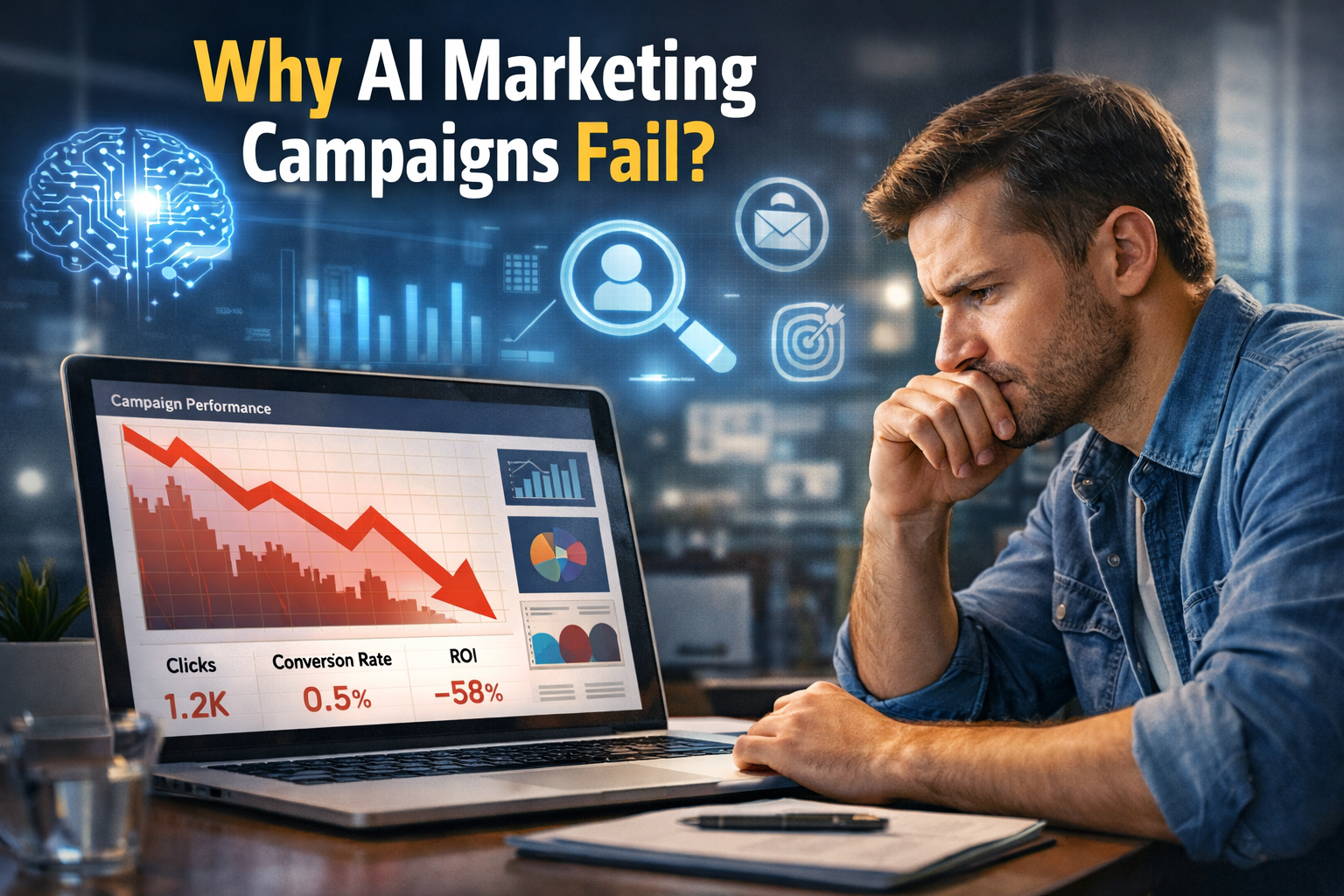
However, after two weeks the results were disappointing.
ALSO READ
What Are AI Marketing Tools? A Beginner’s Guide
Campaign Results
- Low click-through rate
- Poor conversion rate
- High ad costs
The AI system targeted broad audiences who had little interest in the product.
How Experts Fixed the Campaign
The marketing team analyzed the problem and made several improvements.
Step 1: Refine Audience Segments in AI Marketing Campaigns
Instead of broad targeting, they focused on:
- niche interest groups
- previous website visitors
- lookalike audiences
This improved relevance immediately.
Step 2: Combine AI With Human Creativity
The team replaced generic AI content with human-edited messaging.
They improved:
- storytelling
- emotional triggers
- brand voice
Engagement increased significantly.
Step 3: Test Multiple Campaign Variations
Successful marketers rarely rely on one campaign.
They tested multiple versions of:
- headlines
- ad images
- landing pages
This A/B testing allowed AI to optimize results more effectively.
Step 4: Monitor Campaign Data Regularly
Instead of letting AI run independently, the team reviewed campaign data weekly.
They adjusted:
- budget allocation
- targeting settings
- ad creatives
Within a month, conversions improved dramatically.
Best Tools for Running Successful AI Marketing Campaigns
In 2026, several platforms help marketers manage smarter campaigns.
Google Ads AI
Helps optimize bidding and targeting automatically.
HubSpot AI Marketing Tools
Offers automation for email, CRM, and lead nurturing.
Meta AI Advertising Tools
Uses machine learning to improve social media ad targeting.
Jasper AI
Helps create marketing copy and ad messaging faster.
These tools work best when combined with human strategy.
Key Lessons From Successful AI Marketing Campaigns
To improve campaign performance, marketers should follow these principles:
- Use clean, accurate data
- Combine AI insights with human creativity
- Test multiple campaign variations
- Monitor performance regularly
- Focus on audience relevance
When these steps are followed, automated marketing campaigns become far more effective.
Conclusion
AI technology is transforming digital marketing. But technology alone does not guarantee success.
Many AI marketing campaigns fail because marketers rely too heavily on automation without strategic oversight. The most successful teams combine AI tools with human creativity, data analysis, and careful testing.
If you want better results in 2026, remember this simple rule:
AI should support your marketing strategy not replace it.
Use AI wisely, monitor your campaigns, and keep optimizing your approach.
FAQs
AI marketing campaigns often fail due to poor data quality, weak targeting, or over-reliance on automation without human strategy.
Yes. When combined with strong marketing strategy and quality data, AI campaigns can improve targeting, personalization, and conversions.
Popular tools include Google Ads AI, HubSpot AI marketing tools, Meta advertising AI, and Jasper AI for content creation.
No. AI assists with automation and analysis, but human creativity and strategy remain essential for successful marketing.
Marketers should refine audience targeting, test multiple ad versions, analyze performance data, and combine AI insights with human creativity.