
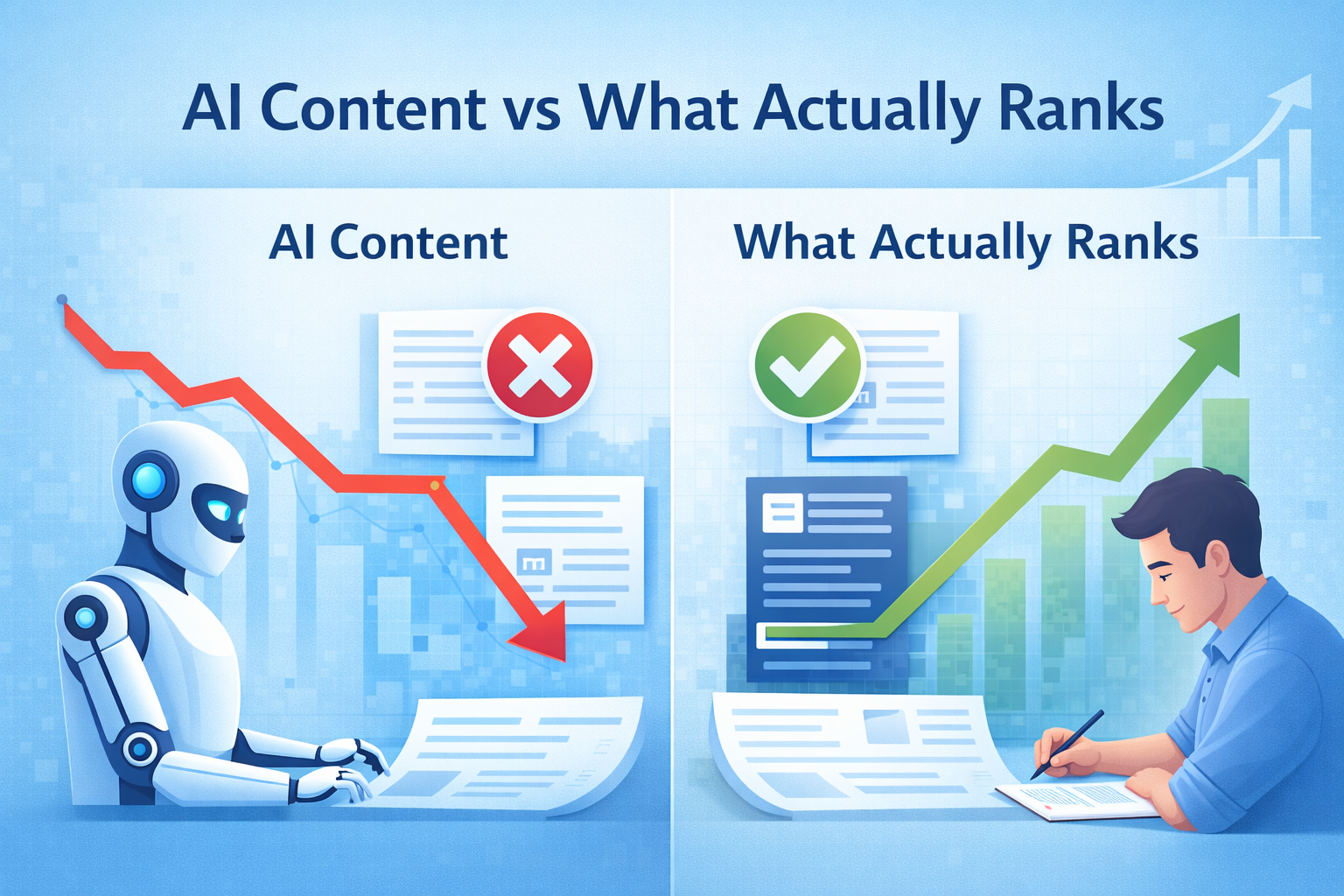
AI generated content exploded across the internet in the last few years. Blogs, websites, and businesses began publishing hundreds of AI-written articles.
But many site owners are now facing a frustrating problem.
Their AI generated content is not ranking on Google.
Traffic drops. Pages stay indexed but invisible. And competitors with fewer articles outrank them.
So what changed?
In 2026, Google focuses heavily on content quality, real expertise, and helpful information. AI tools can assist writing, but content that lacks originality and insight often struggles to rank.
This guide explains why AI generated content is failing and what actually ranks now.
ALSO READ
How SEO Digital Marketing Service Works: Google Algorithm Explained Simply
Why AI Generated Content Is Struggling to Rank
AI tools are powerful, but they also create several SEO challenges.
Google’s algorithms now evaluate more than just keywords.
They analyze:
- content usefulness
- topic expertise
- originality
- user experience
If content lacks these signals, rankings may drop.
Thin and Generic Information
Many AI articles repeat information already available online.
When dozens of websites publish similar content, Google chooses the most helpful and authoritative version.
Generic articles rarely stand out.
Example:
An AI article about SEO may simply repeat basic tips.
But an expert guide with real examples and insights will rank higher.
Lack of Real Experience
Google’s quality guidelines emphasize experience and expertise.
Content that includes real-world knowledge is more trustworthy.
For example:
A marketing expert writing about email campaigns can share:
- real campaign results
- tested strategies
- practical lessons
Pure AI generated content often lacks this depth.
Weak Content Structure
AI sometimes creates content that looks long but lacks clarity.
Problems include:
- repeated ideas
- shallow explanations
- poor topic coverage
Search engines prefer well-structured articles that solve problems clearly.
What Actually Ranks in 2026
Ranking today requires more than automated writing.
Successful websites combine AI tools with human expertise.
Here are the strategies that work.
Helpful and Problem-Solving Content
Google prioritizes content that genuinely helps users.
Strong articles answer questions clearly and completely.
Effective content usually includes:
- step-by-step explanations
- examples and case studies
- practical solutions
When readers feel their problem is solved, rankings improve.
Deep Topical Authority
Websites that cover topics deeply build trust.
Instead of writing random articles, successful sites create topic clusters.
For example, an SEO blog may publish articles about:
- keyword research
- internal linking strategy
- topical authority
- technical SEO
This shows Google that the site is an expert on the subject.
Human Editing and Expertise
AI tools are best used as assistants.
Smart content creators use AI to:
- generate ideas
- create outlines
- draft basic content
Then humans improve the article by adding:
- expert insights
- examples
- clearer explanations
This combination creates powerful content.
ALSO READ
Why Your Website Is Indexed But Not Ranking in 2026 (Real SEO Diagnosis Framework)
Real Example: AI Content That Failed
A website once published over 200 AI-generated blog posts in just a few months.
At first, the site gained traffic.
But after a Google update, most articles lost rankings.
Why?
The content lacked:
- original insights
- deep explanations
- expert perspective
After rewriting key articles with real examples and stronger structure, traffic slowly recovered.
This shows that AI generated content alone is rarely enough for long-term SEO success.
How to Use AI Content the Right Way
AI can still be a valuable tool when used properly.
Follow these best practices.
- Use AI for research and outlines
- add personal insights and examples
- improve structure and clarity
- focus on solving real problems
- update content regularly
This approach combines efficiency with expertise.
Signs Your AI Content Needs Improvement
If your pages are not ranking, check for these issues.
- content feels generic
- articles repeat common information
- no original examples
- weak internal linking
- poor topic coverage
Fixing these issues can improve rankings over time.
Conclusion
The rise of AI generated content changed the internet. But Google’s goal remains the same: show the most helpful information to users.
Content that lacks originality, expertise, and depth often struggles to rank.
The websites winning in 2026 follow a smarter approach:
- combine AI tools with human expertise
- focus on solving real problems
- build topical authority
- create clear and helpful content
AI is not the problem. The strategy is.
When used wisely, AI can help create better content but real knowledge and value are what truly rank.
FAQs
Yes, AI generated content can rank if it provides helpful information and is improved with human expertise and original insights.
AI content often fails because it is generic, lacks real experience, or does not fully solve the user’s problem.
Google does not ban AI content, but it prioritizes helpful, high-quality content regardless of how it is created.
Add expert insights, real examples, better structure, and deeper explanations to make the content more useful.
No. AI tools can be helpful for research and drafting, but human editing and expertise are essential for strong SEO content.