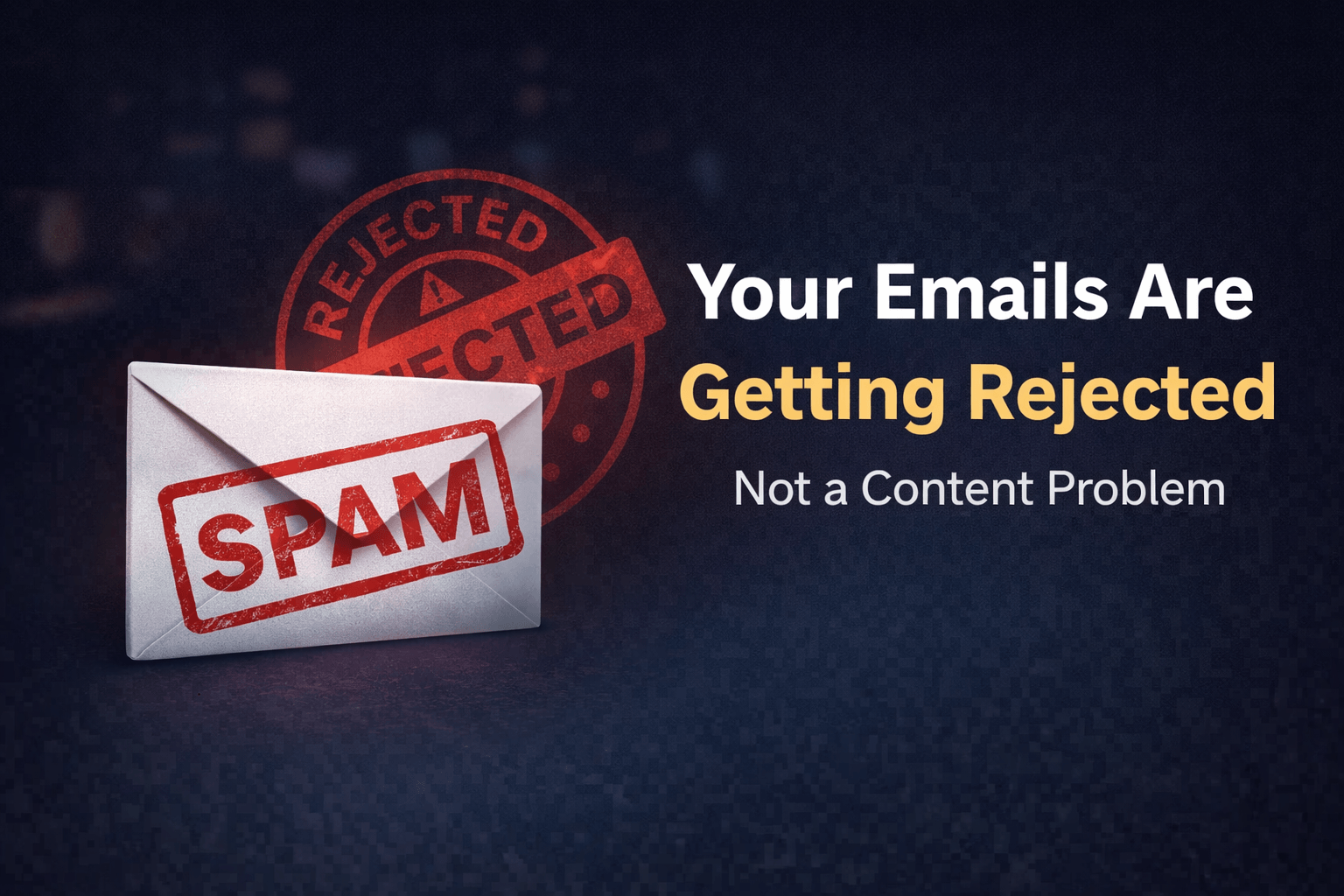
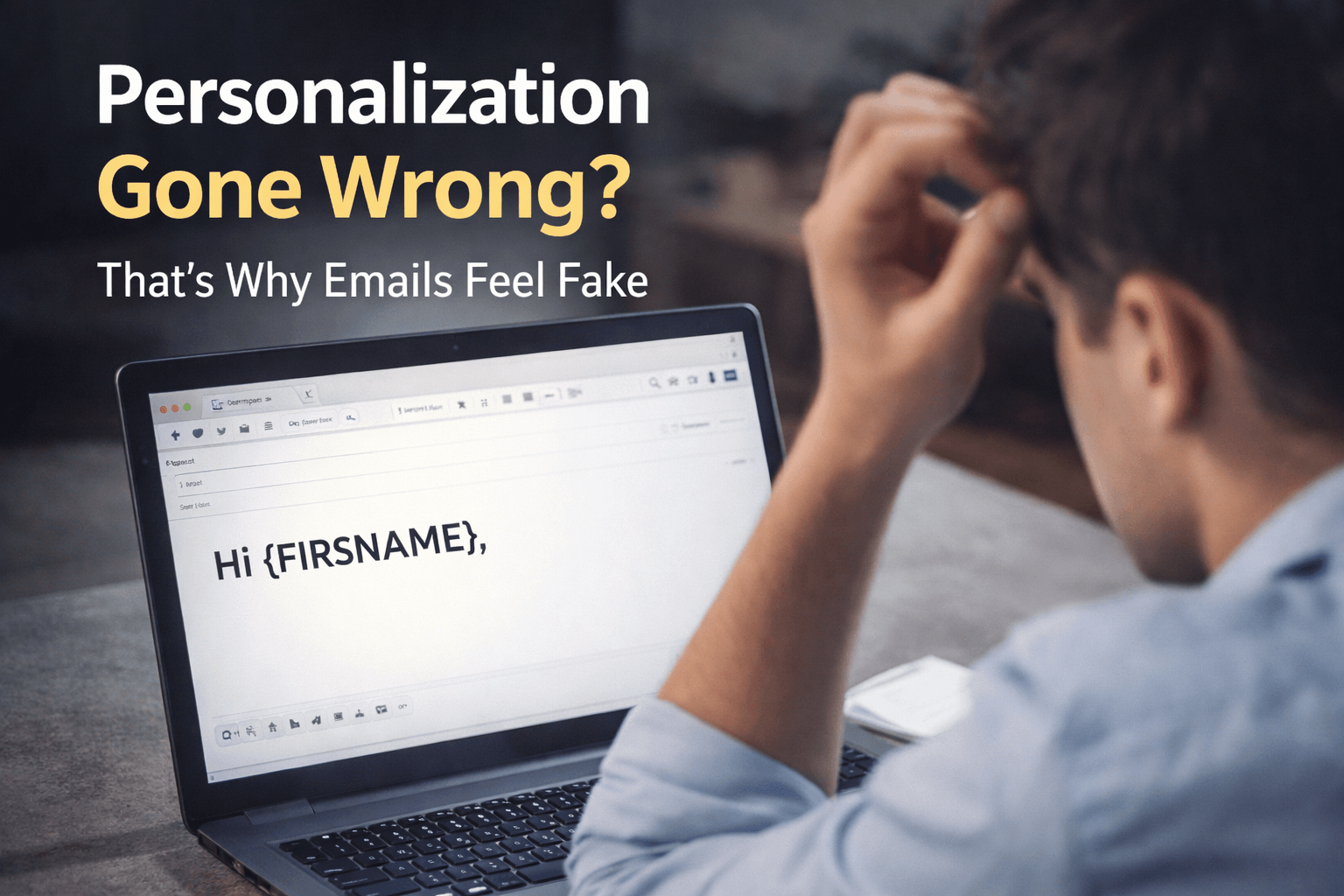
Email personalization gone wrong is more common than you think.
Your emails look personalized but they feel fake.
You use names, segment your list, and automate campaigns.
Still, nothing works people don’t click, reply, or care.
If this sounds familiar, the problem is not your tools.
It’s how personalization is being used.
The Real Problem Behind Email Personalization Gone Wrong
Most marketers believe:
“Adding a first name makes an email personal.”
That worked before. Not anymore.
In 2026, users expect:
- Real relevance
- Context-based messaging
- Human tone
If your email:
- Feels automated
- Sounds generic
- Lacks timing
It fails.
Personalization today is not about data. It’s about understanding.
Learn more
Email Marketing in 2026 Complete Guide from Setup to Automation and Conversions
Email Personalization Gone Wrong Case Study: Personalized Emails but Zero Engagement
We analyzed a U.S.-focused campaign.
What they were doing:
- First-name personalization
- Basic segmentation
- Automated sequences
Results:
- Good open rate
- Low click-through rate
- Almost no replies
The real issue:
- No behavioral targeting
- No context
- No emotional connection
After fixing this, engagement increased by 2–3x in two weeks.
ALSO READ
Email Marketing Click Through Rate Is Low in 2026? Here’s What’s Killing Your Clicks
Common Reasons for Email Personalization Gone Wrong
1. Fake Personalization (Name Only)
Using just a name is not real personalization.
Bad:
- “Hi John”
Better:
- “Struggling with low email clicks?”
Focus on the problem, not the name.
2. Poor Segmentation Causing Email Personalization Gone Wrong
If your audience segments are wrong, your message will feel irrelevant.
Examples:
- Sending beginner tips to experts
- Promoting wrong offers
Relevance = clicks
3. Wrong Timing Causing Email Personalization Gone Wrong
Even a good message fails if it comes at the wrong time.
Examples:
- Sending sales emails too early
- Ignoring user behavior
Timing matters.
4. Over-Automation
Too much automation removes the human touch.
Signs:
- Repetitive structure
- Robotic tone
- Predictable emails
Automation should support, not replace, human messaging.
5. “Creepy” Personalization
Overusing personal data can feel uncomfortable.
Example:
- Referencing private browsing behavior
Users want relevance not surveillance.
Learn more
Email Marketing Segmentation Strategy in 2026: How Small Businesses Double Revenue
How to Fix Email Personalization Gone Wrong (Step-by-Step)
Step 1: Focus on User Intent
Ask:
“What does this person need right now?”
Write emails based on that.
Step 2: Use Behavioral Data
Track:
- Clicks
- Page visits
- Actions
Then send relevant messages.
Step 3: Write Like a Human
Avoid corporate language.
Use:
- Simple words
- Conversational tone
- Clear message
Make it feel real.
Step 4: Simplify Your Emails
Use:
- Short paragraphs
- One clear idea
- One CTA
Less confusion = more engagement
Step 5: Test and Improve
Always test:
- Subject lines
- Content style
- CTA placement
Small changes = big results
Signs Your Email Personalization Is Failing
Look for these:
- High open rate but low clicks
- No replies
- Unsubscribes increasing
- Emails being ignored
These are warning signs.
The Shift That Works in 2026
Old personalization:
Name + segmentation
New personalization:
Behavior + intent + timing
That’s the difference between ignored and engaging emails.
Conclusion
If your email personalization gone wrong, the issue is not your strategy—it’s your execution.
Stop relying on surface-level personalization.
Start focusing on real user intent.
Write better emails.
Use context.
Add human touch.
And everything changes.
Emails will connect, your audience will engage, and results will improve.
FAQs
A. It means emails appear personalized but feel generic or irrelevant, leading to low engagement.
A. Because they rely on names instead of behavior, context, and real user needs.
A. Focus on user intent, use behavioral data, and write in a natural, human tone.
A. Sending the right message to the right person at the right time based on their actions.
A. Yes. Over-personalization can feel intrusive and reduce trust.