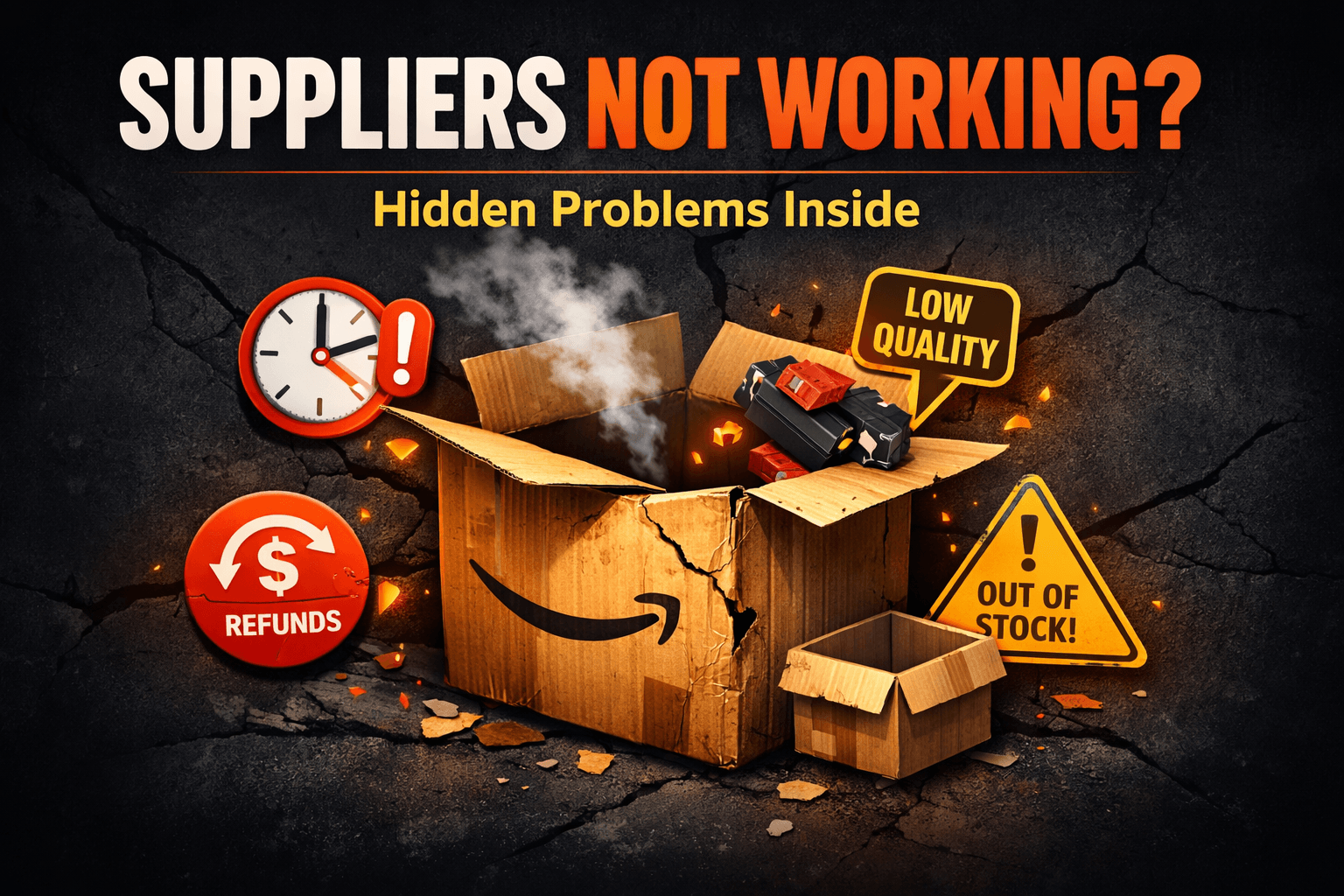
Amazon dropshipping suppliers not working is one of the most frustrating problems new sellers face today.
You find a supplier. Prices look good. Everything seems easy.
But after a few orders, problems start showing up.
Late shipping. Poor quality. Customer complaints.
If this sounds familiar, you are not alone. Many sellers fail not because of effort, but because of the wrong supplier decisions.
When Amazon Dropshipping Suppliers Turn Into a Problem
At first, most suppliers look perfect.
They promise:
- Fast shipping
- Low prices
- Easy order handling
But reality is different.
A beginner seller I worked with chose a cheap supplier.
First week went fine. Then delays started. Refund requests increased.
Within a month, his account health dropped.
This is where most Amazon dropshipping journeys break.
LEARN MORE
Too Many Returns in Your Dropshipping Store? Here’s What’s Going Wrong in 2026
The Reality of Amazon Dropshipping Suppliers in 2026
Amazon is stricter now.
You can’t rely on random suppliers anymore.
Here’s what changed:
- Amazon requires reliable fulfillment
- Late delivery can hurt your account
- Customer experience matters more than price
This means your supplier is not just a source it’s your business backbone.
ALSO READ
What Is Dropshipping and How It Differs from Traditional E-Commerce
Mistakes That Quietly Destroy Your Amazon Dropshipping Results
Most sellers don’t fail loudly.
They fail slowly because of small decisions.
Choosing Based Only on Price
Cheap suppliers often mean:
- Slow shipping
- Poor packaging
- Low-quality products
Low cost leads to high problems.
Skipping Product Testing
Many sellers never test what they sell.
This leads to:
- Unexpected defects
- High return rates
- Negative reviews
Ignoring Shipping Time
Customers expect fast delivery.
If your supplier takes 10–20 days:
- Orders get canceled
- Trust breaks quickly
No Backup Supplier Plan
Relying on one supplier is risky.
If they:
- Run out of stock
- Delay orders
Your business stops instantly.
ALSO READ
Top 10 E Commerce Business Models Explained
Amazon Dropshipping Supplier Issues You Don’t Notice Early
Some problems don’t appear immediately.
They grow over time.
Inventory Problems
Products go out of stock without warning.
You keep selling but can’t fulfill.
Communication Gaps
Some suppliers reply late or not at all.
This delays orders and creates confusion.
Return and Refund Chaos
Handling returns becomes difficult when:
- Supplier policies are unclear
- Refunds take too long
How to Choose Better Amazon Dropshipping Suppliers
You don’t need perfect suppliers.
You need reliable ones.
Here’s what works in 2026:
1. Check Supplier History
- Look for consistent performance
- Avoid newly listed unknown suppliers
2. Test Before Scaling
- Order products yourself
- Check delivery time and quality
3. Focus on Shipping Speed
- Choose suppliers with faster delivery
- Prefer US-based or local warehouses
4. Build Backup Options
- Always have 2–3 suppliers
- Switch quickly if needed
5. Prioritize Communication
- Choose responsive suppliers
- Fast replies = smoother operations
What Successful Amazon Dropshipping Sellers Do Differently
Top sellers don’t chase cheap deals.
They:
- Build supplier relationships
- Focus on customer experience
- Test everything before scaling
They treat suppliers as partners, not shortcuts.
Conclusion
If your amazon dropshipping suppliers are not working, the issue is not luck — it’s selection.
Fix your supplier strategy, and your business will improve.
Start small. Test smart. Choose wisely.
The right supplier can turn your store around.
FAQs
A. Many suppliers look good at first but fail due to poor logistics, slow shipping, or lack of quality control.
A. Focus on verified suppliers, test products yourself, and choose those with fast and consistent delivery.
A. It is risky. Always keep backup suppliers to avoid stock or delivery issues.
A. Choosing based only on low price without checking quality and shipping time.
A. Yes. Faster shipping improves customer satisfaction and reduces cancellations.