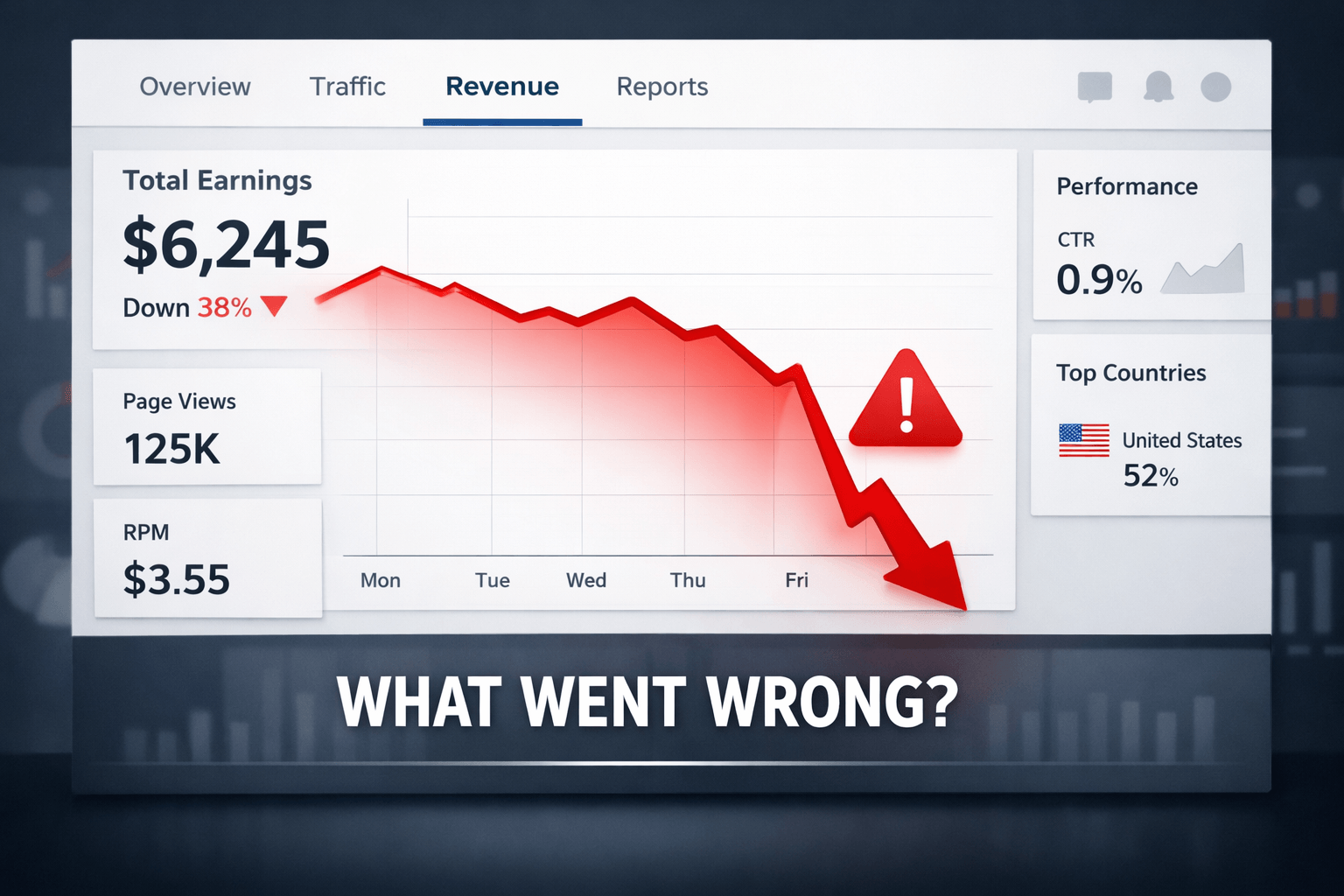
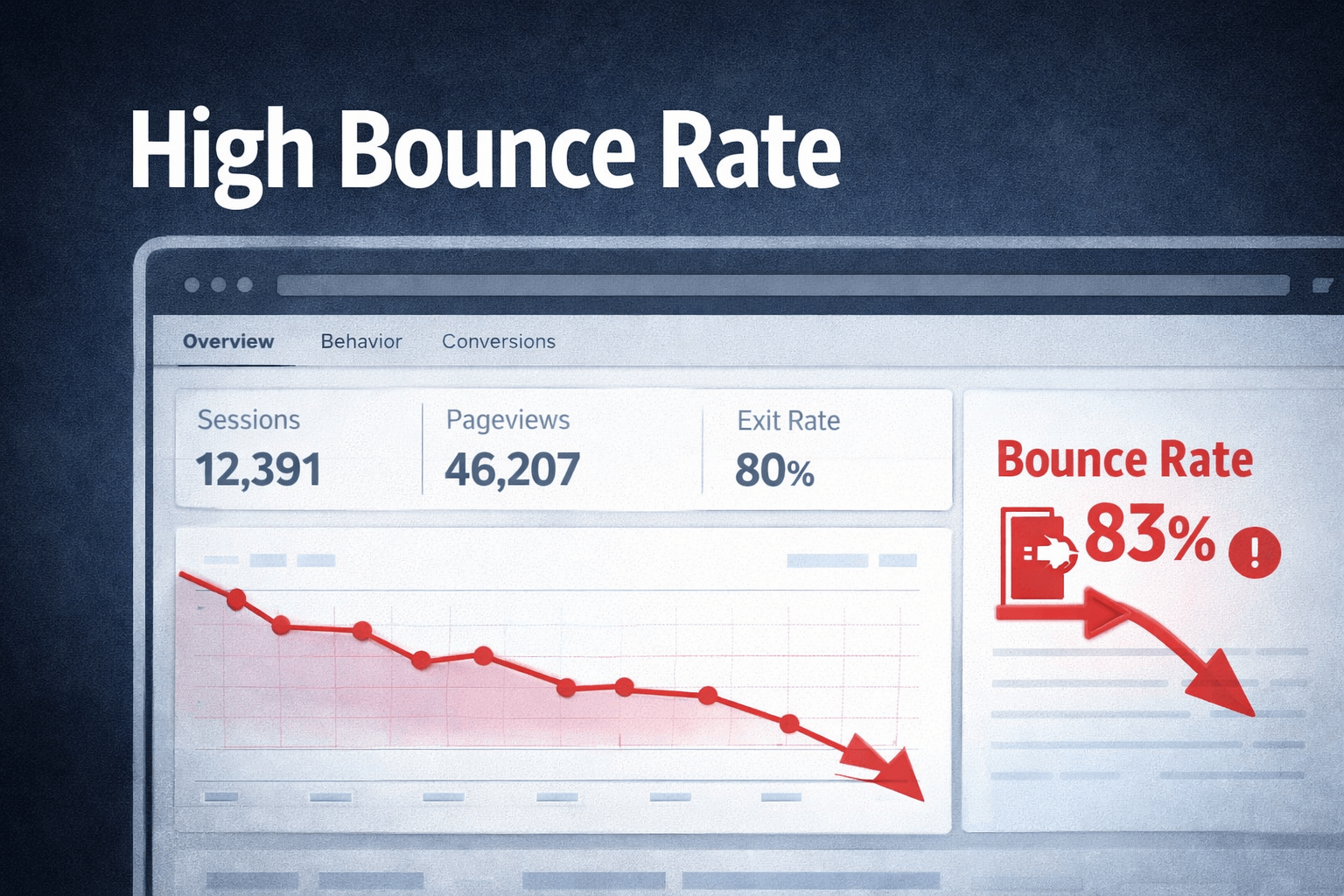
High bounce rate is killing your blog even when traffic is coming in.
You open your analytics and see it again. Visitors are leaving within seconds.
This is not just a number problem. It means people are not finding what they expected. I faced the same issue on one of my blogs targeting a US audience, and fixing it changed everything.
Let me break down what actually causes this and how you can fix it in a real way.
What High Bounce Rate Really Means
A high bounce rate means users land on your page and leave without taking action.
Users do not scroll.
They do not click on anything.
Most leave without even reading a single line.
This usually happens when your content does not match user intent or fails to grab attention fast.
Related terms you should know
- user engagement
- dwell time
- content relevance
These are directly connected to how your blog performs.
ALSO READ
Start Blogging for Money in 2026: Beginner Guide
High Bounce Rate Problem What Is Actually Causing It
I had a blog post that was getting traffic from Pinterest and Google.
Traffic looked good.
But bounce rate was above 85 percent.
After checking behavior, I noticed something simple.
People were leaving within 5 seconds.
What went wrong
- The intro was slow and generic
- It did not match the headline promise
- The first paragraph felt like AI generated text
- No clear problem was addressed early
People clicked expecting help but saw fluff.
They left.
Weak First Impression
Your first few lines decide everything.
If your intro does not hit the problem instantly, users will leave.
Fix
- Start with a real pain point
- Use simple language
- Avoid generic phrases
Example
Bad
Many bloggers struggle with content performance
Better
You are getting traffic but no one is reading your blog
That one line can reduce your high bounce rate fast.
Mismatch Between Title and Content
If your title promises one thing and content delivers something else, trust breaks.
Signs of this issue
- High bounce rate with good CTR
- Low average time on page
Fix
- Align your content with the exact promise of the title
- Answer the main question in the first 100 words
Why Slow or Confusing Structure Increases High Bounce Rate
People do not read word by word. They scan.
If your content looks heavy, they leave.
Fix structure like this
- Short paragraphs
- Clear headings
- Bullet points
- Simple flow
Make it easy for someone to understand in seconds.
Why Lack of Real Value Increases High Bounce Rate
In 2026, generic content does not work.
People can tell if you are just rewriting information.
Fix with experience
- Add what you personally tested
- Share results
- Explain what failed before success
Example
Instead of saying
Improve your content quality
Say
I changed my intro style and reduced bounce rate from 85 percent to 52 percent
That builds trust.
Learn More
Low AdSense RPM Even with Traffic? Here’s How to Increase Your Earnings in 2026
Why Poor Mobile Experience Increases High Bounce Rate
Most US traffic comes from mobile.
If your blog is not easy to read on a phone, users leave instantly.
Fix checklist
- Fast loading speed
- Readable font size
- Clean layout
- No clutter
Even a 2 second delay can increase low engagement problem.
No Clear Next Step
If users do not know what to do next, they exit.
Fix
Guide them clearly
- Add internal links
- Suggest related posts
- Use simple calls to action
Example
Read this next to fix your traffic problem
ALSO READ
Web Hosting WordPress: How to Choose the Best Domain and Hosting for Blogging
Quick Action Plan to Reduce High Bounce Rate
Follow this simple system
- Rewrite your introduction
- Match your title with content
- Improve structure for scanning
- Add real experience and proof
- Optimize for mobile users
- Guide users to the next step
This is exactly what worked for me and many others.
Conclusion
A high bounce rate is not random. It is a clear signal.
Your content is either not connecting or not delivering.
Once you fix your introduction, structure, and intent, everything starts improving.
More time on page. Better engagement. Higher trust.
Start with one article today and fix it properly. You will see the difference.
FAQs
A bounce rate above 70 percent is usually considered high, but it depends on your niche and content type.
Yes, indirectly. If users leave quickly, it signals low engagement which can hurt rankings over time.
Improve your introduction, match search intent, and make your content easier to read and scan.
Yes, because users are less patient. Poor mobile experience increases low engagement problem fast.
Yes, it helps users explore more pages and increases overall engagement on your site.